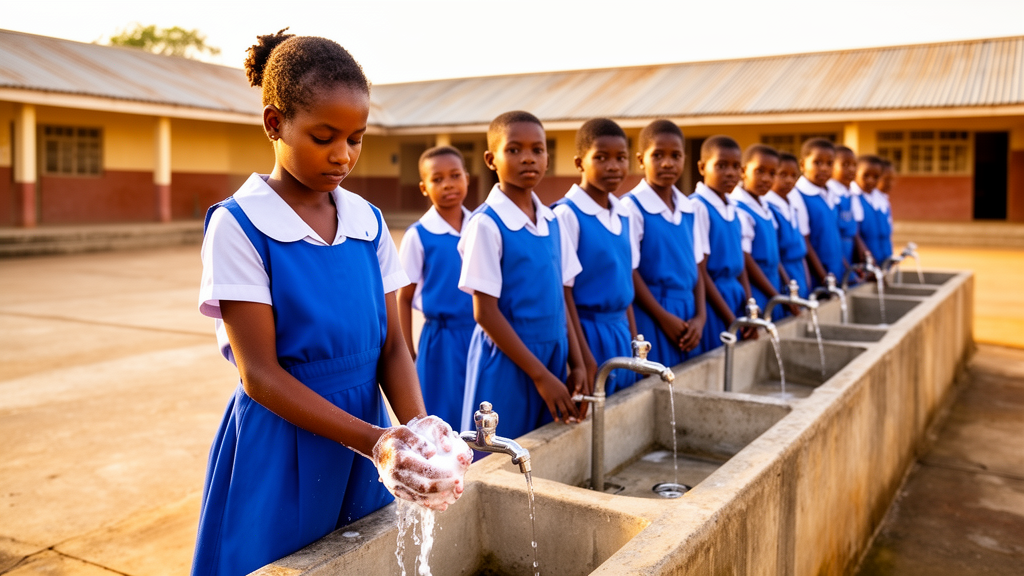
Fewer than four in ten primary school children in Ethiopia wash their hands properly, according to a systematic review and meta-analysis published in BMC Pediatrics. Pooling ten primary studies covering 5,693 schoolchildren, researchers led by Habtamu Roba estimated a national pooled prevalence of proper handwashing practice of 39.24 percent, with a 95 percent confidence interval spanning 30.23 percent to 48.25 percent. The finding implies that more than 60 percent of Ethiopian primary school children do not practice adequate hand hygiene, a gap with direct consequences for fecal-oral disease transmission, childhood illness, and school absenteeism in a low-income setting.
The review followed PRISMA 2020 guidelines and searched PubMed/MEDLINE, HINARI, African Journals Online, CINAHL, Web of Science, and Google Scholar for studies published through 2024. The team extracted data into Microsoft Excel and analyzed it in Stata version 17, using a DerSimonian-Laird random-effects model to estimate pooled prevalence and odds ratios with 95 percent confidence intervals. Heterogeneity was quantified with the I² statistic and publication bias was evaluated using Egger’s regression test and funnel plots, with meta-regression and subgroup analyses deployed to explore sources of variation across studies.
That heterogeneity proved substantial: I² reached 97.32 percent (p < 0.001), meaning the ten studies differed far more than chance would explain. Subgroup analysis located the highest pooled prevalence of proper handwashing in a combined urban and northern cluster encompassing Addis Ababa, Harar, Amhara, and Tigray, at 47.87 percent (95 percent CI: 34.42 percent to 61.31 percent), and the lowest in Southern Ethiopia, at 27.41 percent (95 percent CI: 23.79 percent to 31.02 percent). These geographic contrasts describe differences across regions rather than a decline over time, but they map a clear gradient in hygiene practice between the capital and northern urban centers and the country’s south.
Beyond geography, the multivariable meta-analysis identified three factors significantly associated with proper handwashing. Children with good hygiene knowledge had roughly three times the odds of practicing proper handwashing (adjusted odds ratio 3.09; 95 percent CI: 1.67 to 4.50). Attending an urban school more than doubled the odds (AOR 2.54; 95 percent CI: 1.42 to 3.67), and active participation in school WASH clubs, which focus on water, sanitation, and hygiene, raised the odds by more than twofold (AOR 2.32; 95 percent CI: 1.27 to 3.37). Because the underlying studies are observational, these associations indicate correlation rather than proven causal effects, though they converge on a consistent picture in which knowledge, resources, and structured school programs travel together.
The authors’ conclusion frames the pooled estimate as a measure of a preventable hygiene gap rather than a clinical outcome, and their recommendations stay within what the evidence supports. Closing that gap, they argue, requires integrating infrastructure investments such as reliable access to water and soap with targeted, peer-led behavioral interventions, including school WASH clubs. The review was registered prospectively in PROSPERO under number CRD42026143662, and the analysis was published as an open-access systematic review in BMC Pediatrics, dated 23 October 2026.
Subject of Research: Handwashing practices and associated factors among primary school children in Ethiopia
Article Title: Handwashing practices and associated factors among primary school children in Ethiopia: a systematic review and meta-analysis
Article References: Roba, H., Lemma, H., Gemechu, T., Dube, G. N., Gelchu, M., & Asefa, L. (2026). Handwashing practices and associated factors among primary school children in Ethiopia: a systematic review and meta-analysis. BMC Pediatrics. https://doi.org/10.1186/s12887-026-07933-w
Image Credits: AI Generated
DOI: 10.1186/s12887-026-07933-w
Keywords: handwashing, hand hygiene, Ethiopia, primary school children, systematic review, meta-analysis, WASH, public health, school health, fecal-oral transmission, practices, associated
News Source: Ophelia Keating. (October 23, 2026). More Than Half of Ethiopian Primary Schoolchildren Fail to Wash Hands Properly. Scienmag.