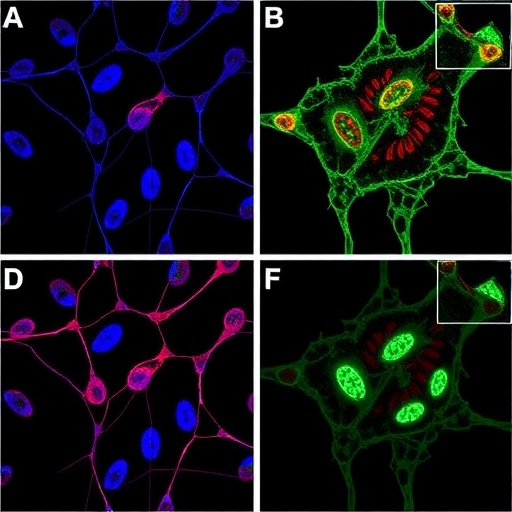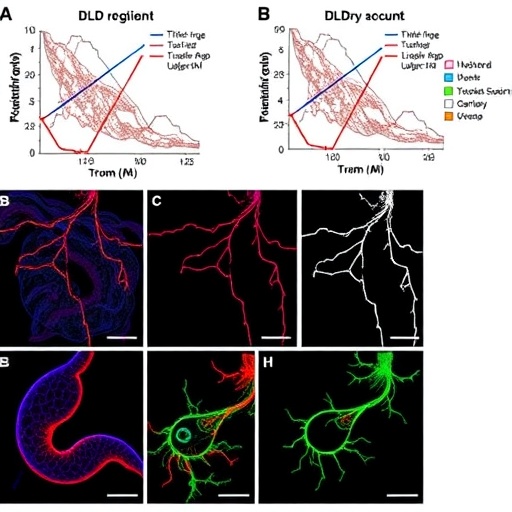
In the realm of cancer research, a pivotal study has shed light on the role of mixed lineage kinase (MLK) in tumor development and angiogenesis, broadening our understanding of the complex biological processes underlying cancer progression. Conducted by a team of researchers led by Kant, S., this research takes a close look at the molecular players involved in tumorigenesis, emphasizing how the deregulation of MLK can lead to uncontrolled cell growth and the subsequent formation of new blood vessels, a process essential for tumor survival and metastasis.
The study begins by outlining the fundamental characteristics of mixed lineage kinases, which are a family of serine/threonine kinases that play critical roles in various cellular processes, including proliferation, differentiation, and apoptosis. The researchers emphasized that these kinases are not merely ancillary components; they are heavyweights in the signaling cascades that dictate cellular fate, especially in the context of malignancy. The investigation of MLK’s function offers a glimpse into an intricate signaling network that can potentially be harnessed for therapeutic advantage.
Tumors require a rich supply of nutrients and oxygen to sustain their rapid growth, which is where angiogenesis, the physiological process through which new blood vessels form, becomes crucial. The study articulates that MLK not only supports tumor proliferation but also actively participates in the angiogenic response. By elucidating the mechanisms by which MLK influences both tumor cells and the vascular environment, the researchers highlight a duality that could be exploited for targeted cancer therapies.
The experimental design employed in this research was rigorous and multifaceted, employing both in vitro and in vivo models to portray a comprehensive picture of MLK’s role in cancer biology. Researchers utilized sophisticated gene-editing techniques to manipulate MLK expression levels in various cell lines. By creating models of differentiated and undifferentiated tumors, the team was able to observe the differential effects of MLK modulation on tumor growth and vascularization. This methodological thoroughness ultimately contributes to the reliability and relevance of the findings.
One of the striking revelations from this study was the observation that heightened MLK activity correlates with increased tumor viability and robust angiogenic signaling. Specifically, the team identified key downstream targets of MLK that are integral to the angiogenic cascade. These include various growth factors and their respective receptors that facilitate endothelial cell migration and proliferation. The data suggests that MLK is pivotal in both driving tumor growth and orchestrating the supportive vascular environment, creating a feedback loop that perpetuates malignancy.
The discussion section of the paper delves into the potential implications of targeting MLK within therapeutic frameworks. With a wealth of data supporting its central role, the study argues for the exploration of MLK inhibitors as a novel class of anticancer agents. Targeting MLK could disrupt the intricate signaling network that allows tumors to thrive in hostile microenvironments. The authors speculate that MLK inhibitors, used alone or in combination with existing chemotherapeutic agents, could enhance treatment efficacy and combat resistance.
Moreover, the concept of biomarker discovery is underscored as researchers advocate for the identification of MLK activity as a prognostic indicator in cancers exhibiting aggressive angiogenesis. The study posits that measuring MLK expression levels could become a valuable tool in tailoring treatment protocols for individual patients, leading to more personalized and effective cancer therapies.
This publication also calls for future investigations to validate these findings across diverse cancer types. Although the current results provide compelling evidence for MLK’s role, there remains much to explore regarding its interplay with other oncogenic pathways. Understanding the nuances of MLK-related signaling could illuminate additional therapeutic vulnerabilities and facilitate the development of combination therapies that target multiple aspects of tumor biology.
In an era where personalized medicine is becoming increasingly important, such insights are invaluable. The researchers stress the necessity of interdisciplinary collaboration to bridge basic science with clinical applications, thereby fostering the translation of these findings from the laboratory to the bedside. By integrating molecular biology with clinical oncology, there is potential to create a framework that supports the development of innovative cancer therapies based on the inhibition of MLK and its associated pathways.
The enthusiasm surrounding this study is palpable, as it resonates with ongoing efforts to demystify cancer biology and identify actionable targets that could bring about a paradigm shift in cancer treatment. By delineating the multifaceted roles that MLK plays in both tumor development and angiogenesis, this research paves the way for a hopeful future where targeted therapies become a reality for cancer patients worldwide.
As the scientific community rallies around these findings, one thing is clear: understanding the role of kinases in cancer is not just an academic pursuit; it is a crucial step toward unlocking new avenues for treatment. The implications of MLK research stretch far beyond the lab and into therapeutic contexts where they may offer hope to millions battling cancer.
In conclusion, this study represents a significant stride in cancer research, highlighting mixed lineage kinase as a key player in tumor biology. As researchers build upon these findings, the quest for effective cancer treatments will undoubtedly gain momentum, fueled by the promise of innovative therapies that stem from a deeper understanding of the molecular underpinnings of malignancy.
Subject of Research: Mixed lineage kinase (MLK) in tumor development and angiogenesis.
Article Title: Mixed lineage kinase (MLK) controls tumor development and angiogenesis.
Article References: Kant, S., Caliz, A.D., Yoo, HJ. et al. Mixed lineage kinase (MLK) controls tumor development and angiogenesis. Angiogenesis 28, 29 (2025). https://doi.org/10.1007/s10456-025-09978-4
Image Credits: AI Generated
DOI: https://doi.org/10.1007/s10456-025-09978-4
Keywords: Mixed Lineage Kinase, Tumor Development, Angiogenesis, Cancer Research, Therapeutic Targets, Signal Transduction, Personalized Medicine, Inhibitors, Biomarkers.
Tags: angiogenesis and cancer progressionblood vessel formation in malignancycellular processes in tumor developmentderegulation of MLK in tumorsimplications of MLK in cancer therapyimportance of angiogenesis in metastasismixed lineage kinase role in cancerresearch on tumor microenvironmentserine/threonine kinases in cancersignaling pathways in tumorigenesistherapeutic targets in cancer researchtumor growth regulation mechanisms