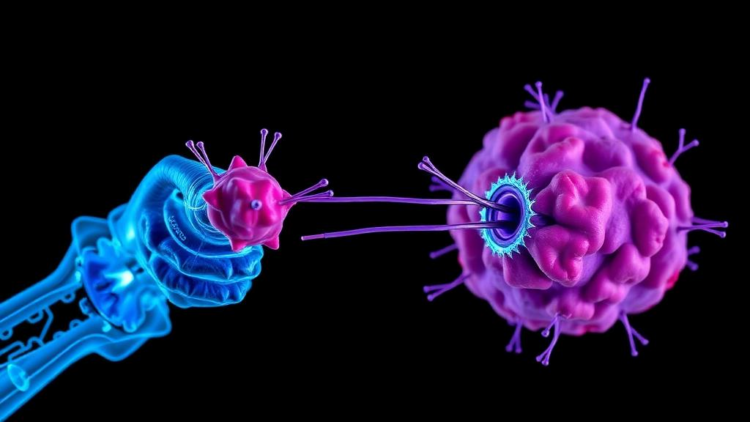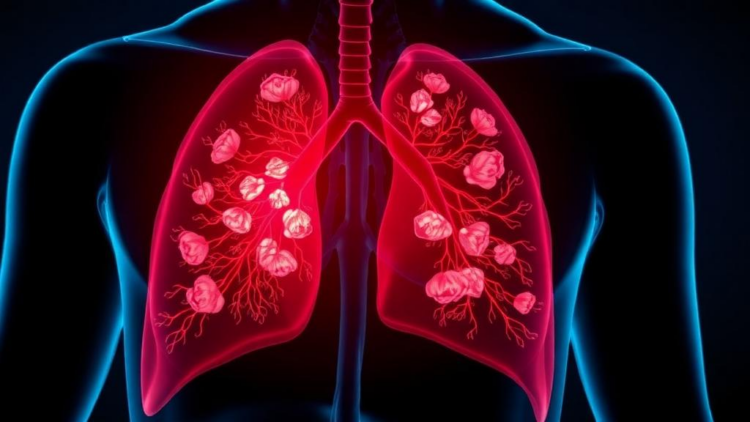
Chronic obstructive pulmonary disease, or COPD, remains one of the world’s leading causes of death, yet the molecular events that slowly dismantle the lung’s delicate air sacs have stubbornly resisted explanation. Now a team of researchers in Shanghai has identified a surprising culprit in the destruction: the loss of a little-known structural protein called mimecan, produced by fibroblasts in the lung’s supporting tissue. According to a study published in the Journal of Translational Medicine, when mimecan disappears, a signaling molecule known as Wnt5a rises unchecked, damaging the alveolar epithelial cells that keep the lung’s microscopic air pockets intact. The finding not only reframes emphysema as a disease of broken communication between cell types, but also points to a concrete therapeutic target that, in animal experiments, could be blocked with an antibody to rescue damaged lungs.
The research, led by Yu Liu, Zixin Geng, and Jinping Wang of Yangpu Hospital at Tongji University School of Medicine, together with colleagues including corresponding authors Zhifang Wang and Cuixia Zheng, began with a straightforward question: what distinguishes the lungs of COPD patients at the molecular level? Mimecan, also known as osteoglycin, belongs to a family of small leucine-rich proteoglycans, proteins that decorate the extracellular matrix and help regulate tissue architecture and cell behavior. Although mimecan has been implicated in maintaining homeostasis in other organs, its role in the lung had never been systematically explored. Mining public gene-expression datasets from COPD patients, the team found that mimecan was significantly downregulated in diseased lung tissue, and that the loss correlated with declining lung function. The same depletion appeared in mice chronically exposed to cigarette smoke, the standard laboratory model of COPD.
Crucially, single-cell and localization analyses showed that the protein was produced almost entirely by fibroblasts, the connective-tissue cells that weave the scaffold on which alveoli are built. This positioning matters. Fibroblasts are not passive bystanders in the lung; they secrete factors that tell epithelial cells when to divide, when to differentiate, and when to die. The new study suggests that mimecan is one of the messages fibroblasts send to keep the epithelium healthy, and that cigarette smoke silences that message. When the researchers examined where mimecan expression fell, the drop tracked with the regions of greatest alveolar damage, reinforcing the idea that the protein’s loss is not a byproduct of tissue destruction but an active participant in it.
To test causality rather than mere correlation, the team turned to genetically engineered mice lacking the mimecan gene. The results were striking. Even without any exposure to cigarette smoke, these knockout animals developed spontaneous emphysema-like changes: their lung function measurably declined, the walls between adjacent air sacs thinned and ruptured, and histological examination revealed widespread alveolar enlargement. Deeper analysis of the lung tissue showed a cascade of cellular damage. Alveolar epithelial cells were dying by apoptosis at elevated rates, oxidative stress markers climbed, epithelial proliferation slowed, and the overall number of alveolar epithelial cells dropped. In other words, deleting a single matrix protein was enough to reproduce the essential pathology of emphysema, the hallmark of COPD in which the lung’s exchange surface progressively erodes.
The next challenge was to trace the mechanism connecting a missing fibroblast protein to dying epithelial cells. The researchers performed single-cell RNA sequencing on lung tissue from the knockout mice, profiling gene expression in every major cell population. The screen pointed to one conspicuous change: in the absence of mimecan, fibroblasts ramped up production of Wnt5a, a secreted signaling molecule from the Wnt family. Wnt signaling is famous in developmental biology for orchestrating organ formation, but specific branches of the pathway, including the non-canonical signaling driven by Wnt5a, can behave very differently in adult tissue, sometimes promoting inflammation and cell death rather than repair. The sequencing data suggested that mimecan normally acts as a brake on this pathway, restraining how much Wnt5a fibroblasts release into their surroundings.
Laboratory experiments with cultured cells confirmed the mechanism. When the researchers exposed alveolar epithelial cells to purified Wnt5a, the cells proliferated less and showed impaired differentiation, undermining their ability to mature into the gas-exchange lining of the alveoli. More telling still, conditioned medium harvested from mimecan-deficient fibroblasts induced apoptosis in epithelial cells, and this toxic effect could be reversed by adding a Wnt5a inhibitor to the culture. The chain of evidence was now complete at the cellular level: remove mimecan, Wnt5a rises, epithelial cells die and fail to regenerate. The fibroblast, long viewed as scaffolding, had been recast as a guardian of the alveolar epithelium, with mimecan as its protective emissary.
The most clinically consequential experiment came last. If excess Wnt5a was driving emphysema in the knockout mice, could blocking Wnt5a undo the damage? The team administered a Wnt5a-neutralizing antibody to the mimecan-deficient animals and monitored their lungs over time. The treatment significantly ameliorated the emphysematous phenotype: lung function improved, alveolar destruction eased, and the population of alveolar epithelial cells recovered toward a healthier balance of survival and renewal. This in vivo rescue provides what the authors describe as preclinical proof-of-concept that intercepting the Wnt5a signal can counteract emphysema driven by mimecan loss, a result that transforms the Mimecan–Wnt5a axis from an observational correlation into a plausible drug target.
The implications reach beyond a single protein pair. COPD therapy has long been dominated by bronchodilators and inhaled steroids, which relieve symptoms but do little to halt the structural destruction of emphysema. A pathway that protects and restores the alveolar epithelium addresses the disease at its anatomical root. The study also adds to a growing appreciation that stromal cells, the fibroblasts and other supporting cells of the lung, actively regulate epithelial fate, and that proteoglycans once dismissed as mere structural filler carry potent signaling functions. If mimecan levels in fibroblasts prove to be a reliable biomarker, clinicians might one day identify patients whose lungs are silently losing this protection before irreversible damage accumulates, and intervene with Wnt5a-directed therapies while regeneration is still possible.
Important caveats remain before the laboratory findings can translate into bedside practice. The work relied on mouse models and in vitro systems, and the gap between a rescued mouse and a treated patient is notoriously wide in respiratory medicine. Wnt5a itself plays varied roles in different tissues, and systemically blocking it could carry off-target effects that future studies must map carefully. The published paper, which was released as an open-access article in the Journal of Translational Medicine with a permanent DOI, notes that the work was supported by the National Natural Science Foundation of China and the Yangpu District Health Commission of Shanghai, and that all animal procedures were approved by the Medical Ethics Committee of Yangpu Hospital, Tongji University. The authors declare no competing financial interests.
Even with those qualifications, the study marks a genuine advance in understanding why emphysema progresses and offers a fresh conceptual frame: COPD as a failure of fibroblast-epithelial communication, in which the loss of a protective matrix protein unleashes a death signal against the lung’s most vulnerable cells. For the millions of people living with COPD worldwide, most of them current or former smokers, the identification of the Mimecan–Wnt5a axis provides something the field has lacked for decades, a specific, druggable molecular link between cigarette-smoke exposure and the collapse of the alveolar wall. Whether neutralizing Wnt5a in human lungs can achieve what it achieved in mice will now become one of the most closely watched questions in respiratory research.
Subject of Research: The role of fibroblast-derived mimecan and Wnt5a signaling in the pathogenesis of COPD emphysema
Article Title: Fibroblast-derived Mimecan deficiency drives COPD pathogenesis via Wnt5a-mediated alveolar epithelial cell dysfunction
Article References: Liu, Y., Geng, Z., Wang, J., Nulali, J., Han, C., Li, L., Wang, Z., & Zheng, C. (2026). Fibroblast-derived Mimecan deficiency drives COPD pathogenesis via Wnt5a-mediated alveolar epithelial cell dysfunction. Journal of Translational Medicine. https://doi.org/10.1186/s12967-026-08938-w
Image Credits: AI Generated
DOI: 10.1186/s12967-026-08938-w
Keywords: COPD, emphysema, mimecan, Wnt5a, fibroblasts, alveolar epithelial cells, apoptosis, oxidative stress, single-cell RNA sequencing, proteoglycan, lung function, therapeutic antibody
Cite Scienmag News
APA MLA Chicago
Ophelia Keating. (October 3, 2026). Missing Lung Protein Mimecan Emerges as Hidden Driver of COPD Emphysema. Scienmag. https://scienmag.com/missing-lung-protein-mimecan-emerges-as-hidden-driver-of-copd-emphysema/
Ophelia Keating. “Missing Lung Protein Mimecan Emerges as Hidden Driver of COPD Emphysema.” Scienmag, 3 October 2026, https://scienmag.com/missing-lung-protein-mimecan-emerges-as-hidden-driver-of-copd-emphysema/. Accessed 3 October 2026.
Ophelia Keating. “Missing Lung Protein Mimecan Emerges as Hidden Driver of COPD Emphysema.” Scienmag. October 3, 2026. https://scienmag.com/missing-lung-protein-mimecan-emerges-as-hidden-driver-of-copd-emphysema/
Copy citation Download RIS
Tags: alveolar epithelial cell damagealveolar epithelial cellsanimal models of lung injuryapoptosiscell communication in lung healthCOPDCOPD molecular mechanismsemphysemaemphysema pathogenesisextracellular matrix in lung diseasefibroblast-derived proteinsfibroblastslung functionlung protein mimecanlung tissue remodelingmimecanmolecular biomarkers for emphysemaOxidative stressproteoglycanSingle-Cell RNA Sequencingtherapeutic antibodytherapeutic targets for COPDWnt5aWnt5a signaling pathway