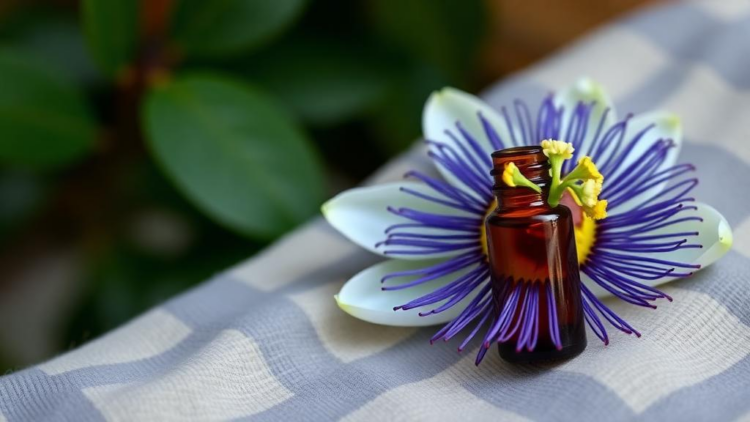
For the millions of people worldwide who depend on hemodialysis to stay alive, the nights are often the hardest part. Sleep disorders are strikingly common in this population, with many patients lying awake for hours, waking repeatedly, or dragging themselves through the day in a fog of exhaustion. The problem is not merely uncomfortable; poor sleep in dialysis patients is linked to worse mood, reduced quality of life, and poorer health outcomes overall. Yet the usual pharmacological fixes are frequently off the table, because the kidneys that would normally clear sedative drugs and their metabolites from the blood are no longer doing their job. Into this therapeutic gap steps a humble candidate drawn from traditional herbal medicine: the passionflower, Passiflora, now tested not as a pill or a tea but as a fragrance.
A new randomized controlled trial published in BMC Complementary Medicine and Therapies reports that aromatherapy with Passiflora oil significantly improved sleep quality in patients undergoing hemodialysis. The study, led by Marzieh Dolatshahi of Sabzevar University of Medical Sciences with colleagues at institutions across northeastern Iran, was conducted in dialysis centers in the cities of Kashmar, Bardeskan, and Khalilabad in the Razavi Khorasan region between May and June 2023. The team enrolled 65 patients, assigning 33 to the intervention group and 32 to a control group, and followed them through a six-week course of nightly aromatherapy using a simple, low-cost delivery method: cotton pads soaked in oil and tucked beside the pillow.
The rigor of the design is what makes the result noteworthy. This was a two-group, triple-blind clinical trial with a parallel pretest-posttest structure, meaning that neither the patients, nor the people administering the intervention, nor the analysts assessing the outcomes knew who was receiving the active oil and who was receiving the placebo. That placebo was itself a clever piece of trial engineering: sweet almond oil, chosen because it resembles Passiflora oil in appearance and scent profile closely enough to preserve the blinding. Participants in the intervention group placed two cotton pieces infused with seven drops of Passiflora oil on either side of their pillow, while the control group did exactly the same with almond oil. The symmetry of the procedure means that any expectation effects, the powerful psychological boost of believing one is being treated, should have been distributed evenly between the two arms.
Sleep quality was measured with the Pittsburgh Sleep Quality Index, or PSQI, one of the most widely used and best-validated instruments in sleep research. The PSQI does not simply ask whether someone slept well; it generates a composite score from seven components, including subjective sleep quality, sleep onset latency (how long it takes to fall asleep), sleep duration, sleep efficiency (the proportion of time in bed actually spent asleep), sleep disturbances, use of sleep medication, and daytime dysfunction. Scores range from zero to 21, with higher numbers indicating worse sleep. Each participant completed the questionnaire before the intervention began and again after the six-week period, allowing the researchers to track change within individuals and compare it between groups.
The statistical analysis was appropriately thorough for a trial of this size. The researchers used chi-square and Fisher’s exact tests to compare categorical baseline characteristics, and t-tests or Mann-Whitney U tests for continuous variables, depending on the distribution of the data. Changes within each group were assessed with paired t-tests or Wilcoxon tests, and the between-group difference after the intervention was examined with multivariable linear regression in which potential confounders were selected in advance on the basis of clinical relevance rather than dredged from the data. Missing values were handled by listwise deletion, and all analyses were performed at a significance level of 0.05. The trial was prospectively registered in the Iranian Registry of Clinical Trials under protocol number IRCT20221212056801N1 on January 9, 2023, a detail that matters because prospective registration helps guard against outcome switching and selective reporting.
The headline finding is a substantial drop in the PSQI score of the aromatherapy group. Mean sleep quality scores in the intervention arm fell from 12.2 before the intervention to 7.5 afterward, a reduction of nearly five points on a scale where every point represents a meaningful increment of sleep-related suffering. By contrast, the control group, exposed only to the scent of sweet almond oil, did not show a comparable improvement. The between-group difference in the overall sleep quality score was statistically significant, and so were the differences in the individual dimensions of sleep measured by the index: mental sleep quality, sleep onset latency, sleep duration, sleep efficiency, sleep disturbances, and daytime dysfunction all favored the Passiflora group, each with a p-value below 0.05. In plain terms, patients who breathed the passionflower aroma fell asleep faster, slept longer and more efficiently, were less disturbed during the night, and felt less worn out during the day.
The demographic profile of the participants adds useful context. The mean age was 48.8 plus or minus 14.4 years in the intervention group and 54.8 plus or minus 11.6 years in the control group, reflecting the broad age range typical of dialysis units. The researchers report that the intervention was well tolerated, which is unsurprising given the non-invasive nature of the treatment: no drug is swallowed, injected, or metabolized, and the active compound reaches the patient primarily through the olfactory system. This pharmacological lightness is precisely why aromatherapy is attractive for dialysis patients, whose impaired renal function makes the accumulation of sedative medications and their metabolites a genuine clinical concern.
Why might the scent of passionflower influence sleep at all? The mechanism remains an open scientific question, but several plausible pathways have been proposed in the broader literature on aromatherapy. Volatile compounds in essential and fixed oils can stimulate olfactory receptors in the nasal cavity, which project directly to limbic structures of the brain, including the amygdala and hippocampus, regions deeply involved in emotion and arousal. Aromatherapy has been hypothesized to modulate the autonomic nervous system, reducing sympathetic activation and promoting parasympathetic dominance, a physiological state more conducive to sleep onset. Passionflower itself has a long history in traditional medicine as a calming agent, and laboratory studies have explored its constituents, including flavonoids such as chrysin, for interactions with GABAergic signaling, the same neurotransmitter system targeted by many hypnotic drugs. Whether inhaled compounds from Passiflora oil reach sufficient concentrations to act pharmacologically, or whether the benefit is mediated through relaxation and conditioned calming responses, is not settled by this trial, and the authors are appropriately careful not to overclaim a mechanism.
The study does have limitations that readers should keep in view. The sample of 65 patients, while respectable for a single-region trial, is modest, and the participants were drawn from three dialysis centers in one province of Iran, which raises questions about generalizability to other populations and health systems. The six-week follow-up captures short-term effects but cannot say whether benefits persist over months of continued use. The reported analysis relied on self-reported sleep quality via the PSQI rather than objective measures such as polysomnography or actigraphy, although the triple-blind design mitigates some of the bias inherent in subjective endpoints. The age difference between the groups, with controls nearly six years older on average, is the kind of imbalance that multivariable regression can adjust for but that larger trials would ideally avoid through more refined randomization.
Even with those caveats, the implications are appealing. Dialysis units are demanding environments where patients spend hours attached to machines several times a week, and interventions that are cheap, safe, and easy to administer at home are sorely needed. A few drops of oil on cotton beside a pillow costs pennies compared with prescription hypnotics, carries no risk of drug accumulation in failing kidneys, and requires no more effort than remembering to place it there at bedtime. If larger, multicenter trials with objective sleep measures confirm these findings, passionflower aromatherapy could earn a place in the supportive care of dialysis patients, offering a fragrant, low-tech answer to one of the most persistent and underappreciated burdens of life on dialysis. For now, the trial stands as a promising, carefully controlled first step: a signal that something as simple as scent may help the body’s most vulnerable patients reclaim the restorative sleep that chronic disease so often steals.
Subject of Research: Aromatherapy with Passiflora oil for improving sleep quality in hemodialysis patients
Article Title: The impact of aromatherapy with passiflora oil on the sleep quality of patients undergoing hemodialysis: a randomized controlled trial
Article References: Dolatshahi, M., Ansari, M., Fekri, N., Abdollahi, M. R., & Yazdimoghaddam, H. (2026). The impact of aromatherapy with passiflora oil on the sleep quality of patients undergoing hemodialysis: a randomized controlled trial. BMC Complementary Medicine and Therapies. https://doi.org/10.1186/s12906-026-05625-7
Image Credits: AI Generated
DOI: 10.1186/s12906-026-05625-7
Keywords: aromatherapy, Passiflora oil, passionflower, hemodialysis, sleep quality, randomized controlled trial, Pittsburgh Sleep Quality Index, complementary medicine, sleep disorders, chronic kidney disease, triple-blind trial, nursing research
Cite Scienmag News
APA MLA Chicago
Jerry Hayes. (October 3, 2026). Passionflower Oil Aromatherapy Improves Sleep for Hemodialysis Patients. Scienmag. https://scienmag.com/passionflower-oil-aromatherapy-improves-sleep-for-hemodialysis-patients/
Jerry Hayes. “Passionflower Oil Aromatherapy Improves Sleep for Hemodialysis Patients.” Scienmag, 3 October 2026, https://scienmag.com/passionflower-oil-aromatherapy-improves-sleep-for-hemodialysis-patients/. Accessed 3 October 2026.
Jerry Hayes. “Passionflower Oil Aromatherapy Improves Sleep for Hemodialysis Patients.” Scienmag. October 3, 2026. https://scienmag.com/passionflower-oil-aromatherapy-improves-sleep-for-hemodialysis-patients/
Copy citation Download RIS
Tags: aromatherapyaromatherapy benefits for chronic illnessChronic kidney diseasecomplementary medicinecomplementary medicine for hemodialysis patientshemodialysishemodialysis patient sleep improvementherbal medicine in nephrologyherbal remedies for dialysis-related sleep disordersnatural sleep aids in renal carenon-pharmacological sleep interventionsnursing researchPassiflora oilPassiflora oil clinical trialpassionflowerpassionflower aromatherapy for insomniaPittsburgh Sleep Quality IndexRandomized Controlled Trialrandomized controlled trials on passionflower aromatherapysleep disorderssleep qualitysleep quality enhancement in dialysis patientstraditional herbal medicine for sleep disorderstriple-blind trial