• HOME
  • NEWS
  • EXPLORE
    • CAREER
      • Companies
      • Jobs
    • EVENTS
    • iGEM
      • News
      • Team
    • PHOTOS
    • VIDEO
    • WIKI
  • BLOG
  • COMMUNITY
    • FACEBOOK
    • INSTAGRAM
    • TWITTER
Sunday, August 23, 2026
BIOENGINEER.ORG
No Result
View All Result
  • Login
  • HOME
  • NEWS
  • EXPLORE
    • CAREER
      • Companies
      • Jobs
        • Lecturer
        • PhD Studentship
        • Postdoc
        • Research Assistant
    • EVENTS
    • iGEM
      • News
      • Team
    • PHOTOS
    • VIDEO
    • WIKI
  • BLOG
  • COMMUNITY
    • FACEBOOK
    • INSTAGRAM
    • TWITTER
  • HOME
  • NEWS
  • EXPLORE
    • CAREER
      • Companies
      • Jobs
        • Lecturer
        • PhD Studentship
        • Postdoc
        • Research Assistant
    • EVENTS
    • iGEM
      • News
      • Team
    • PHOTOS
    • VIDEO
    • WIKI
  • BLOG
  • COMMUNITY
    • FACEBOOK
    • INSTAGRAM
    • TWITTER
No Result
View All Result
Bioengineer.org
No Result
View All Result
Home NEWS Science News

Microbiome boost may help corals resist bleaching

Bioengineer by Bioengineer
February 23, 2021
in Science News
Reading Time: 3 mins read
0
IMAGE
Share on FacebookShare on TwitterShare on LinkedinShare on RedditShare on Telegram

IMAGE

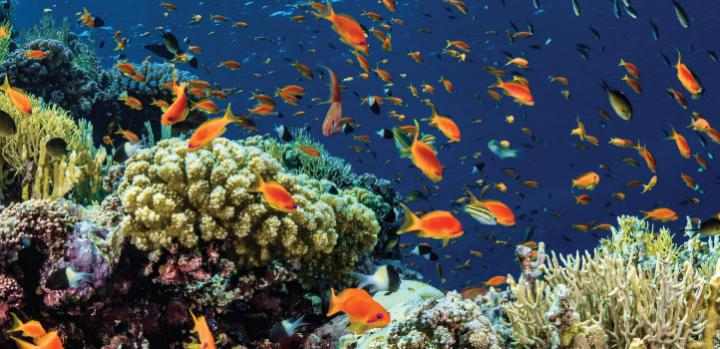
Credit: © 2021 Morgan Bennett Smith

A simple but powerful idea is to improve the health of corals using cocktails of beneficial bacteria. The strategy is being explored as part of global scientific efforts to help corals become stronger, more stress resistant and more likely to survive bleaching events associated with climate change.

Corals rely on bacterial and algal symbionts to provide nutrients, energy (through photosynthesis), toxin regulation and protection against pathogenic attacks. This complex and finely balanced relationship underpins the health of the holobiont and coral reefs as a whole.

Rather like the use of probiotics in plant science to improve growth and resilience, marine scientist Raquel Peixoto believes that, in times of stress, corals could benefit from a boost to their natural symbiotic partners.

“This is not the solution to the destruction of our coral reefs; the best solution lies in worldwide CO2 mitigation,” says Peixoto, who joined KAUST in 2020 from the Federal University of Rio de Janeiro, Brazil. “But we’re hopeful that we can buy corals some time by using beneficial microorganisms for corals (or BMCs) and providing a ‘medicine’ to help them better cope with shifting environmental pressures and adapt to a changing world.”

Peixoto has previously conducted lab-based experiments trialing BMCs in collaboration with KAUST researchers and is continuing her groundbreaking research now she is based on campus.

“It is exciting to work right beside the Red Sea, which is arguably the best source of powerful coral probiotics on Earth,” says Peixoto. “These reefs have adapted to higher temperatures and salinity than other regions, providing an ideal model for stress-tolerant corals and bacteria.”

To ensure BMCs are safe, Peixoto and her team select bacteria that are naturally symbiotic to specific coral species on each reef, ensuring no alien bacteria are accidentally introduced. Peixoto is encouraged by their lab-based results so far, including one study that involved inoculating a single coral species with a BMC consortium comprising six bacteria strains. The coral’s microbiome underwent dynamic genetic and metabolic alterations that boosted its chances of survival under heat stress.

“As well as further proof of concept of BMCs, this provides us with a fantastic model of host-microbiome interactions, demonstrating just how intimate the relationships are,” says Peixoto.

Success in the lab, however, needs to translate to success in the open oceans, which requires innovative multidisciplinary research. Scaling up and seeding whole reefs might involve robots and artificial intelligence (AI), for example, which could deliver probiotics either into sediments or directly to corals. Slow-release “pills” could disseminate the probiotic consortia in the right place at the right time. “Bleaching events can be predicted,” notes Peixoto, “so specific regions could be targeted for a month or two ahead of time to boost coral health.”

The KAUST team is also considering the feasibility to create “universal” BMC consortia that would be effective for whole reefs. They are currently working with five common coral species from an offshore reef near KAUST. They will test the corals with a specific BMC consortium for each species but will also test their response to a universal consortium.

“Ultimately, we may need to develop several consortia targeting the majority of species in a reef,” says Peixoto. “If we have to pick, we’ll choose those corals that most need our help.”

###

Media Contact
Michael Cusack
[email protected]

Original Source

https://discovery.kaust.edu.sa/en/article/1106/microbiome-boost-may-help-corals-resist-bleaching

Related Journal Article

http://dx.doi.org/10.1146/annurev-animal-090120-115444

Tags: BiodiversityBiologyBiomedical/Environmental/Chemical EngineeringClimate ChangeEcology/EnvironmentMarine/Freshwater Biology
Share12Tweet8Share2ShareShareShare2

Related Posts

Tirzepatide Versus GLP-1 Agonists for Stroke Risk in Atrial Fibrillation and Diabetes

August 22, 2026
Real-world study examines psychotic complications of subcutaneous foslevodopa/foscarbidopa infusions in 198 patients

Real-world study examines psychotic complications of subcutaneous foslevodopa/foscarbidopa infusions in 198 patients

August 22, 2026

Blood-flow signals from liver vessels direct region-specific liver function through Wnt pathways

August 22, 2026

Ge/SiGe Quantum-Well Photodetectors Integrated with SiN Waveguides on 200-mm Silicon Wafers

August 22, 2026
Please login to join discussion

POPULAR NEWS

  • Tirzepatide Versus GLP-1 Agonists for Stroke Risk in Atrial Fibrillation and Diabetes

    29 shares
    Share 12 Tweet 7
  • Real-world study examines psychotic complications of subcutaneous foslevodopa/foscarbidopa infusions in 198 patients

    29 shares
    Share 12 Tweet 7
  • Blood-flow signals from liver vessels direct region-specific liver function through Wnt pathways

    29 shares
    Share 12 Tweet 7
  • Ge/SiGe Quantum-Well Photodetectors Integrated with SiN Waveguides on 200-mm Silicon Wafers

    29 shares
    Share 12 Tweet 7

About

We bring you the latest biotechnology news from best research centers and universities around the world. Check our website.

Follow us

Recent News

Tirzepatide Versus GLP-1 Agonists for Stroke Risk in Atrial Fibrillation and Diabetes

Real-world study examines psychotic complications of subcutaneous foslevodopa/foscarbidopa infusions in 198 patients

Blood-flow signals from liver vessels direct region-specific liver function through Wnt pathways

Subscribe to Blog via Email

Enter your email address to subscribe to this blog and receive notifications of new posts by email.

Join 85 other subscribers
  • Contact Us

Bioengineer.org © Copyright 2023 All Rights Reserved.

Welcome Back!

Login to your account below

Forgotten Password?

Retrieve your password

Please enter your username or email address to reset your password.

Log In
No Result
View All Result
  • Homepages
    • Home Page 1
    • Home Page 2
  • News
  • National
  • Business
  • Health
  • Lifestyle
  • Science

Bioengineer.org © Copyright 2023 All Rights Reserved.