New research of MIT’s Research Enterprise in Singapore’s IRG, DiSTAP, revolutionises the creation of genetic material, enabling drastically accelerated development of key microbial factories for urban farming in Singapore
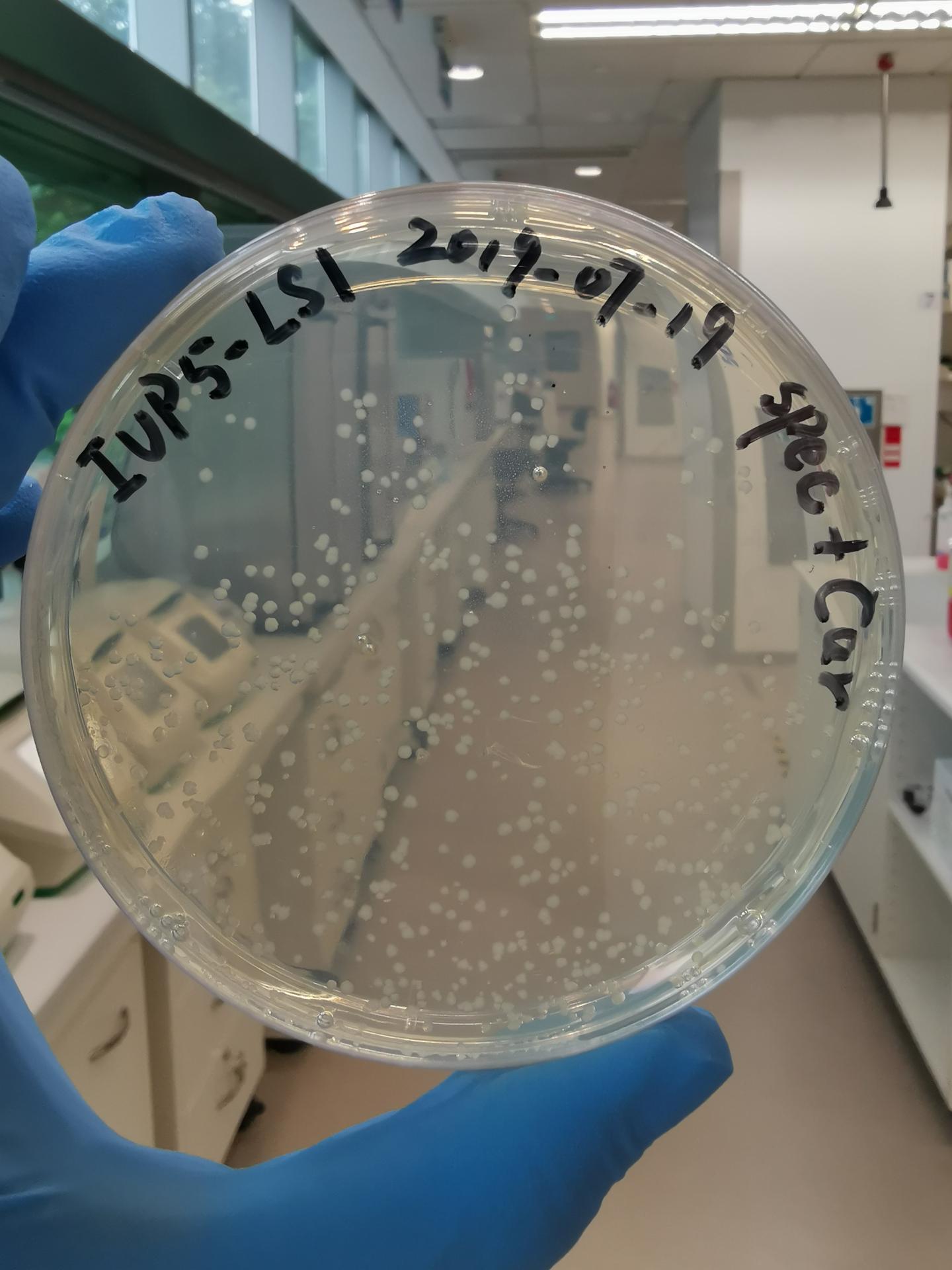
Credit: DiSTAP, SMART (MIT’s research enterprise in Singapore)
Singapore, July 25, 2019 – Researchers at SMART, MIT’s research enterprise in Singapore, and National University of Singapore (NUS) have developed a technology that greatly accelerates the genetic engineering of microbes that can be used to manufacture chemicals used for urban farming. The new technology will result in a faster, cheaper, more accurate, and near-scarless plasmid construction, using standard and reusable parts, that is compatible with most popular DNA assembly methods.
Explained in a paper titled “A standard for near-scarless plasmid construction using reusable DNA parts”, which will be published this month in the prestigious academic journal, Nature Communications, the project is part of the SMART Interdisciplinary Research Group (IRG) – Disruptive & Sustainable Technologies for Agricultural Precision (DiSTAP). The IRG develops new technologies to enable Singapore, a city-state which is dependent upon imported food and produce, to improve their agriculture yield to reduce external dependencies.
Kang Zhou, a DiSTAP Principal Investigator who is also an assistant professor at the NUS Department of Chemical and Biomolecular Engineering (ChBE) and Xiaoqiang Ma, a postdoctoral associate at SMART, led the development of the technology while working on ways to support their colleagues who were working on enhancing vegetable yield in the country’s urban farms. They were exploring ways on microbial fermentation which create fertilizers, nutrients and non-synthetic pesticides for urban farms, in the form of small molecules.
“The objective of this study was to create a technology that can engineer microbes faster and at a lower cost,” said Ma. “Current technology is expensive and time-consuming. Researchers have to order customised materials from suppliers which takes a while to arrive. They also often use only 1% of the material, leading to wastage. As each material is customised, researchers have to re-order each time, which further delays and add costs to the production.”
The new Guanine/Thymine (GT) DNA assembly technology significantly changes things by enabling genetic engineers to reuse genetic materials. It provides a simple method to define the biological parts as standard DNA parts. Further, unlike previous attempts at creating standardised materials which have an accuracy of up to 50%, the GT technology is able to reach an accuracy of close to 90%. As a near-scarless plasmid construction, the technology is substantially faster, being able to stitch up to 7 parts to a DNA as opposed to only 2 parts for other methods of similar accuracy.
“Being able to provide an accuracy of close to 90% for genetic materials while connecting up to 7 parts to a DNA is a game-changer in the creation of genetic materials by using standard parts,” said Zhou. “We anticipate that the huge cost and time savings will enable the development of new fermentation processes that can manufacture green chemicals to make urban farming in Singapore more efficient and safer. This technology is also applicable to all genetic engineering fields outside of agriculture, and we are actively looking at ways we can deploy it for easy access.”
In addition to commercialisation plans, the researchers are also planning to set up an e-commerce platform which can quickly create and distribute these genetic materials to researchers around the world. It will be the first such platform for reusable genetic engineering materials in the world.
###
For media queries, please contact:
Andrew Wong
[email protected]
+65 91993623
About SMART Disruptive & Sustainable Technologies for Agricultural Precision (DiSTAP)
DiSTAP is one of the six SMART Interdisciplinary Research Groups (IRGs) that addresses deep problems in food production in Singapore and the world. The DiSTAP programme is developing a suite of impactful and novel analytical, genetic and biosynthetic technologies that will fundamentally change how plant biosynthetic pathways are discovered, monitored, engineered and ultimately translated to meet the global demand for food and nutrients. Scientists from Massachusetts Institute of Technology (MIT), Temasek Life Sciences Laboratory (TLL), Nanyang Technological University (NTU) and National University of Singapore (NUS) are collaboratively:
- Developing new tools for the continuous measurement of important plant metabolites and hormones for novel discovery, deeper understanding and control of plant biosynthetic pathways in ways not yet possible, especially in the context of green leafy vegetables;
- Leveraging these new techniques to engineer plants with highly desirable properties for global food security, including high yield density production, drought and pathogen resistance and biosynthesis of high-value commercial products;
- Developing tools for producing hydrophobic food components in industry-relevant microbes;
- Developing technologies for rewriting the genome of important industry-relevant microbial strains, to enable the introduction of long heterologous pathways, free up cellular resources, increase product yield, and improve safety and robustness; and
- Applying these technologies to improve urban farming.
For more information, please logon to: http://distap.
About Singapore-MIT Alliance for Research and Technology (SMART)
Singapore-MIT Alliance for Research and Technology (SMART) is MIT’s Research Enterprise in Singapore, established by the Massachusetts Institute of Technology (MIT) in partnership with the National Research Foundation of Singapore (NRF) since 2007. SMART is the first entity in the Campus for Research Excellence and Technological Enterprise (CREATE) developed by NRF. SMART serves as an intellectual and innovation hub for research interactions between MIT and Singapore. Cutting-edge research projects in areas of interest to both Singapore and MIT are undertaken at SMART. SMART currently comprises an Innovation Centre and six Interdisciplinary Research Groups (IRGs): Antimicrobial Resistance (AMR), BioSystems and Micromechanics (BioSyM), Critical Analytics for Manufacturing Personalized-Medicine (CAMP), Disruptive & Sustainable Technologies for Agricultural Precision (DiSTAP), Future Urban Mobility (FM) and Low Energy Electronic Systems (LEES).
SMART research is funded by the National Research Foundation Singapore under the CREATE programme. For more information, please visit – http://smart.
Media Contact
Andrew Wong
[email protected]