A study combining clinical-data analysis, functional cell experiments and single-cell transcriptomics found that the METTL1–NSUN1 axis is associated with malignant progression and immune-microenvironment features in kidney renal clear cell carcinoma (KIRC). The available report is the abstract of an open-access BMC Cancer article published online on 17 October 2026; the publisher states that the version is subject to further edits and will be replaced by the final Version of Record. The abstract does not provide sample sizes, detailed statistical results or full methodological specifications.
According to the abstract, METTL1 messenger RNA and protein levels were significantly elevated in KIRC tumors and correlated with advanced progression and poor prognosis. NSUN1 was significantly co-expressed with METTL1, was also increased, and correlated with unfavorable prognosis. CRISPR screening gene-effect scores indicated that METTL1 knockout inhibited cell growth across renal, esophageal, gastric and colorectal cancer cell lines. In the functional experiments, METTL1 overexpression increased NSUN1 expression, while NSUN1 knockdown partially rescued the oncogenic effects attributed to METTL1 overexpression. These findings support a functional contribution from NSUN1 to METTL1-associated effects, but the abstract does not quantify the extent of the rescue or establish that all METTL1 activity depends on NSUN1.
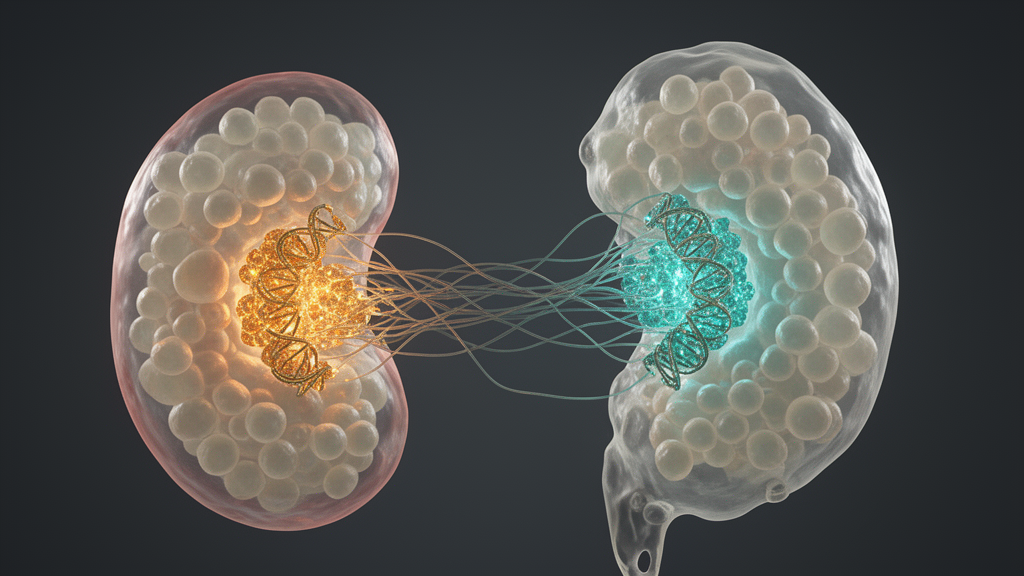
Mechanistically, the experimental results indicated that METTL1 installed N7-methylguanosine modifications on NSUN1 messenger RNA and increased its expression. Single-cell sequencing data showed progressive upregulation of METTL1 and NSUN1 during epithelial-to-malignant transformation, accompanied by coordinated activation of RNA-modification genes and epithelial–mesenchymal transition-related transcription factors, including ZEB1, KLF4 and TBX3. The analysis also identified intensive crosstalk between cancer cells and basal cells in the tumor microenvironment. High METTL1 expression correlated with increased infiltration of pro-tumor M0 macrophages and neutrophils, which the authors linked with an immunosuppressive microenvironment. The reported immune findings are correlations in the analyzed data, rather than direct evidence that METTL1 caused the infiltration or suppression.
Taken together, the abstract reports associations between METTL1/NSUN1 expression, tumor progression, prognosis and tumor-microenvironment features, alongside mechanistic findings from cancer-cell models. The scope of the evidence described here does not demonstrate clinical utility or therapeutic benefit in people with KIRC, and the underlying paper remains a research article rather than a clinical treatment study.
Subject of Research: Mechanistic and single-cell analysis of the METTL1–NSUN1 axis in kidney renal clear cell carcinoma
Article Title: Integrative functional experiments and single-cell transcriptomics reveal the METTL1/NSUN1 axis drives malignant progression in kidney renal clear cell carcinoma
Article References: Cui, Y., Qin, T., Wu, X., & Zhang, C. (2026). Integrative functional experiments and single-cell transcriptomics reveal the METTL1/NSUN1 axis drives malignant progression in kidney renal clear cell carcinoma. BMC Cancer. https://doi.org/10.1186/s12885-026-17194-6
Image Credits: AI Generated
DOI: 10.1186/s12885-026-17194-6
Keywords: kidney renal clear cell carcinoma, METTL1, NSUN1, N7-methylguanosine, single-cell transcriptomics, tumor progression, prognosis, tumor microenvironment, macrophages, neutrophils, Integrative, functional
News Source: Nathaniel Bowman. (October 20, 2026). METTL1–NSUN1 axis linked to malignant progression and immune features in kidney clear cell carcinoma. Scienmag.