Methylene blue, one of the oldest synthetic dyes in medicine, has emerged as a potential treatment for septic shock, and a new study now offers a detailed molecular explanation for why. Researchers report that the drug protects mice from lethal septic shock by restoring the expression of a fatty acid synthesis enzyme in neutrophils, which in turn suppresses a form of inflammatory cell death known as pyroptosis. The work, published in BMC Biotechnology, combines computational target screening with animal experiments to trace the drug’s protective effect to a single regulatory axis: methylene blue upregulates fatty acid synthase, or FASN, in neutrophils, thereby restraining the NLRP3-driven inflammatory cascade that fuels organ damage in sepsis.
Septic shock is the most severe form of sepsis, arising when the immune response to infection spirals out of control and drives widespread organ failure and high mortality. Current treatment relies on antibiotics, fluid resuscitation and vasopressor support, yet mortality remains substantial, which has pushed researchers to look for drugs that can directly dampen the damaging inflammatory response. Methylene blue has attracted renewed interest in this context despite historical concerns about mild toxic side effects, but the molecular mechanisms behind its apparent benefit have remained unclear. The team behind the new study set out to identify the key genes through which the drug acts, and then to validate both the therapeutic efficacy and the regulatory pathway in a mouse model of septic shock.
The investigation began with a computational pipeline. The researchers screened potential targets of methylene blue using the PubChem and SuperPred databases, while septic shock-related genes were retrieved from OMIM and GeneCards. Cross-referencing the two sets produced thirteen core intersection targets from an initial pool of 51 potential drug targets and 1610 disease-related genes. Machine learning then narrowed the field: LASSO regression and support vector machine algorithms confirmed five key genes, namely ADORA2B, CTSD, CXCR4, FASN and PKN1. Molecular docking simulations were used to verify the binding affinity between methylene blue and the proteins encoded by these genes, providing a structural rationale for the drug’s interaction with its candidate targets.
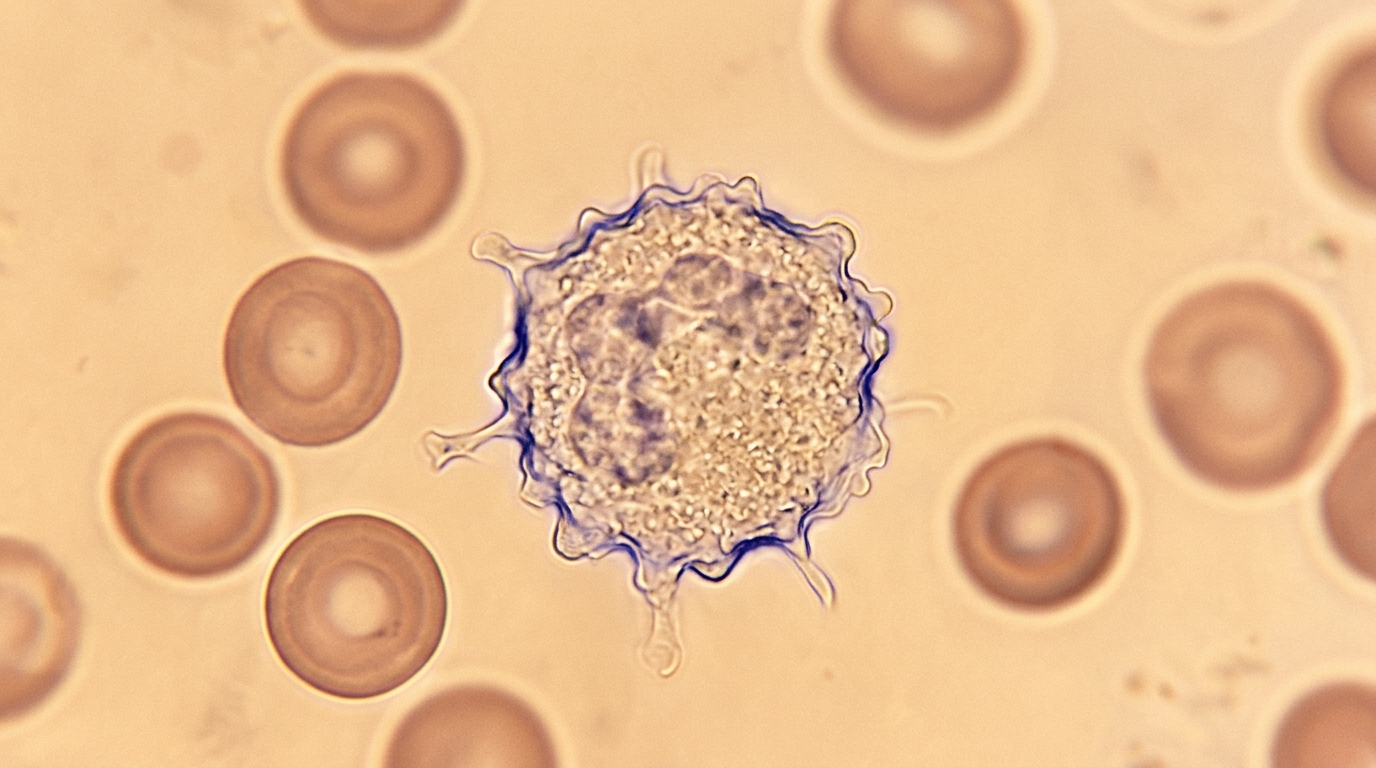
To locate where these genes act, the team turned to single-cell RNA sequencing data from the publicly available dataset GSE175453. The analysis showed that the five key genes were expressed mainly in neutrophils, the short-lived white blood cells that flood infected tissue early in sepsis. Notably, FASN expression was significantly downregulated in septic shock, a finding that would prove central to the study’s conclusions. The other four genes also showed disease-associated shifts that the animal experiments would later confirm: ADORA2B and CTSD were upregulated in septic shock mice, while CXCR4, FASN and PKN1 were downregulated.
With the computational groundwork laid, the researchers moved to an in vivo model. They induced septic shock in mice using cecal ligation and puncture, a standard surgical technique that reproduces the polymicrobial infection and overwhelming inflammation characteristic of human septic shock. The animals were divided into four groups: a control group, a sham-operated group, a CLP group receiving no treatment, and a CLP group treated with methylene blue. The team then assessed survival rates, pathological changes in lung and spleen tissue, and the expression levels of the five key genes across the groups.
The results were striking. Methylene blue treatment significantly improved the survival rate of CLP mice and alleviated tissue damage in both lung and spleen. The drug also reversed the abnormal expression pattern of the key genes, restoring the balance that septic shock had disrupted. Immunofluorescence and flow cytometry revealed reduced neutrophil infiltration in treated animals, suggesting that the drug limits the recruitment or accumulation of these inflammatory cells at sites of injury.
The mechanistic core of the study lies in what happened to the neutrophils themselves. Using enzyme-linked immunosorbent assay and western blotting, the researchers showed that methylene blue inhibited the secretion of interleukin-1β and interleukin-18, two potent inflammatory cytokines released by neutrophils, and suppressed the activation of the NLRP3/ASC/Cleaved-caspase-1/GSDMD pathway. This pathway drives pyroptosis, a lytic form of programmed cell death that ruptures cells and spills their inflammatory contents into surrounding tissue, amplifying the immune response. By blocking this cascade in neutrophils, methylene blue appears to break the self-reinforcing loop that turns a localized infection into systemic organ damage.
To confirm that FASN is not merely a bystander but a functional mediator of the drug’s effect, the researchers interfered with FASN expression using lentiviral injection. When FASN was silenced, the protective therapeutic effects of methylene blue were abrogated, demonstrating that the drug’s benefit depends on this enzyme. Conversely, when a pharmacological pyroptosis inhibitor was administered, it effectively reversed the tissue damage induced by FASN knockdown, placing pyroptosis downstream of FASN in the causal chain. Together, these experiments establish a regulatory sequence in which methylene blue upregulates FASN, and elevated FASN in turn inhibits neutrophil pyroptosis through the NLRP3 pathway.
The authors conclude that methylene blue exerts its therapeutic effect on septic shock by upregulating FASN expression, thereby inhibiting neutrophil pyroptosis, and they describe the finding as a novel molecular mechanism underlying the drug’s action that points to promising therapeutic targets for clinical intervention. The study’s design, combining database-driven target identification with machine learning validation, single-cell expression mapping and mechanistic animal experiments, reflects a growing trend in drug repurposing research, in which old medicines are re-examined through modern multi-omics tools to uncover mechanisms that were invisible to earlier generations of pharmacologists. Whether the same FASN-pyroptosis axis operates in human septic shock patients, and whether methylene blue dosing can be optimized to exploit it safely, remain questions for future clinical research, but the work provides a concrete molecular framework for a drug whose medicinal value is being rediscovered after more than a century of clinical use.
Subject of Research: Methylene blue's therapeutic mechanism in septic shock via FASN-mediated inhibition of neutrophil pyroptosis
Article Title: Methylene blue alleviates septic shock via FASN-mediated inhibition of neutrophil pyroptosis
Article References: Liu, X., & Peng, Z. (2026). Methylene blue alleviates septic shock via FASN-mediated inhibition of neutrophil pyroptosis. BMC Biotechnology. https://doi.org/10.1186/s12896-026-01221-2
Image Credits: AI Generated
DOI: 10.1186/s12896-026-01221-2
Keywords: methylene blue, septic shock, neutrophils, pyroptosis, FASN, NLRP3, inflammasome, CLP mouse model, multi-omics, drug repurposing, IL-1β, IL-18
News Source: Gregory Coleman. (November 6, 2026). Methylene blue tames septic shock by blocking neutrophil pyroptosis through FASN. Scienmag.