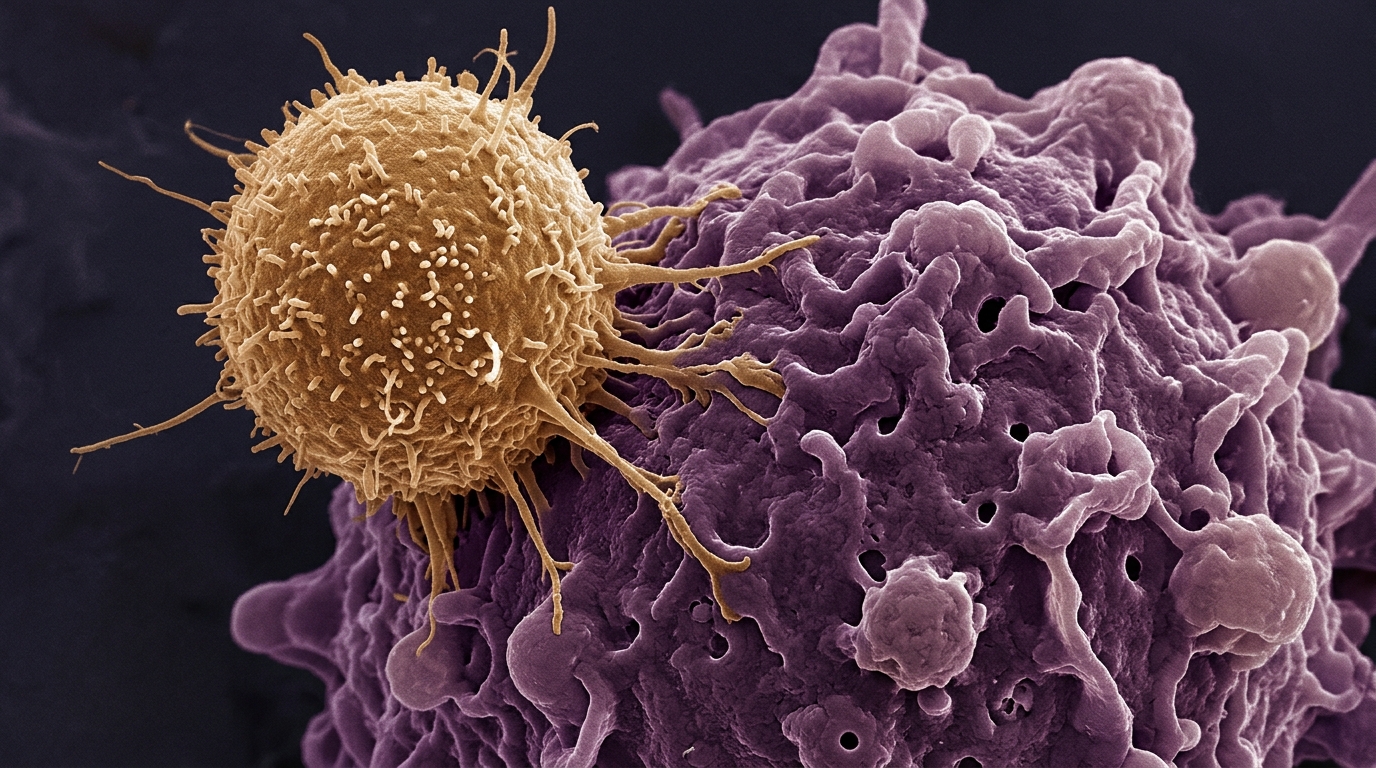
In a computational study evaluating single-cell transcriptomic and T cell receptor sequencing data across multiple cancer cohorts, researchers introduced TCRi, a hierarchical Bayesian information-theoretic framework designed to quantify the coupling between genetic clonotype and transcriptional phenotype in immune cells. Applying the framework to four real-world datasets comprising 167,118 CD8 T cells from cancer patients treated with anti-PD-1 or anti-PD-L1 immune checkpoint blockade, the investigators demonstrated that mutual information between clonotype and phenotype serves as a robust discriminator of immunotherapeutic response. Rather than relying on discrete, deterministic cell-state assignments, TCRi frames phenotype assignment as a probabilistic inference problem, capturing the statistical dependence between a cell’s specific receptor sequence and its functional state across complex repertoire landscapes. This principled formulation overcomes long-standing analytical barriers by modeling single-cell transcriptional distributions and clonal lineages under a unified probabilistic structure.
The development of TCRi addresses an inherent limitation in single-cell immunology, where researchers typically evaluate either clonal diversity through bulk receptor sequencing or transcriptional phenotypes through gene expression clustering in isolation. Bulk sequencing measures the clonotype marginal distribution, summarizing clonal frequencies while obscuring transcriptional states, whereas single-cell assays characterize the phenotype marginal distribution without directly modeling clonal constraints. To unify these modalities, TCRi employs a conditional variational autoencoder equipped with a zero-inflated negative binomial decoder conditioned on library size and an informative VampPrior latent space to embed single-cell gene expression counts. A hierarchical Bayesian model implemented in Pyro then infers clonotype-specific phenotype distributions by sharing information across clonotypes, patients, and clinical covariates through a Dirichlet hierarchy. This architecture establishes a joint probability distribution across the entire repertoire, deriving conditional and marginal distributions while accounting for technical noise, biological heterogeneity, and uneven sequencing depths.
From the learned joint probability distribution, TCRi calculates several fundamental information-theoretic metrics to quantitatively profile immune repertoires. These metrics include clonotypic entropy, which characterizes the diversity of clonotypes mapped within a given transcriptional phenotype, and phenotypic entropy, which measures the diversity of phenotypic states exhibited by individual cells sharing an identical clonotype. To measure directional alterations across multiple clinical time points or experimental conditions, the framework utilizes the Kullback-Leibler divergence between conditional phenotype distributions, termed phenotypic flux. To quantify overall statistical coupling across the repertoire, TCRi computes the mutual information between clonotype and phenotype, alongside normalized mutual information, which scales mutual information by mean marginal entropies to enable balanced comparisons across repertoires with substantial imbalances in clonotype numbers. Together, these quantities provide a richer characterization of clonal dynamics than standard clonality indices or discrete clustering alone.
The researchers first validated TCRi on paired single-cell data from 22,452 CD8 T cells spanning 6,727 unique TCR clonotypes obtained from tumor biopsies of 14 carcinoma patients—7 responders and 7 nonresponders—treated with anti-PD-1 therapy. In this cohort, TCRi’s probabilistic reclassification refined prior cell-type labels, reassigning 1,680 naive CD8 T cells to an antigen-experienced memory state supported by reduced CCR7 expression, increased TCF7 expression, negative enrichment against naive signatures with a normalized enrichment score of minus 1.57, and substantially larger clone sizes. Evaluating clonal dynamics, nonresponding patients exhibited higher phenotypic entropy both pretreatment and post-treatment compared to responders, with persistent clones in nonresponders displaying the highest phenotypic entropy. Phenotypic flux and clonotypic entropy shifts were most pronounced in CD8 effector T cells, where nonresponders demonstrated greater entropy increases, supporting the biological model of clonal replacement in effective therapeutic response.
Analysis of normalized mutual information in the carcinoma cohort revealed a pronounced separation between clinical response groups. Responding patients displayed consistently lower normalized mutual information between clonotype and phenotype prior to treatment, and this coupling decreased further following therapy, reflecting phenotypic states that remained less rigidly constrained to specific clones. In contrast, nonresponders exhibited higher initial coupling that amplified post-treatment. When TCRi was retrained exclusively on pretreatment data, this difference remained statistically significant under a two-sided Mann-Whitney U test with P less than 0.0001. Furthermore, while empirical count-based calculations of mutual information correlated strongly with the number of observed clonotypes per patient, TCRi-derived estimates eliminated this sampling-depth dependence, maintaining stability across varying repertoire sizes. Null models trained with randomized clonotype labels markedly reduced the separation between responders and nonresponders, demonstrating that the observed differences stemmed from genuine biological coupling rather than model-fitting artifacts.
Applying TCRi to 23,024 CD8 T cells from 8 lung cancer patients—6 responders and 2 nonresponders—profiled pre- and post-treatment, the authors examined precursor and terminal exhaustion dynamics. The original study identified an accumulation of precursor-exhausted GZMK-positive T cells in responders through clonal revival rather than reinvigoration of terminally exhausted cells. TCRi reassigned ambiguous CXCL13-positive boundary cells into terminal exhausted states, consistent with marker expression profiles. The largest divergence in clonotypic entropy occurred within terminal exhausted cells, where nonresponders exhibited an expansion of clonotypic diversity while responders remained stable. Furthermore, 43 putative cancer-associated clonotypes identified from curated databases underwent a greater pre- to post-treatment entropy shift than background clones in nonresponders. Pretreatment-only TCRi models discriminated response across posterior draws with P less than 0.0001, although patient-level comparisons were underpowered in this small cohort, showing an area under the curve of 0.42.
To evaluate whether low mutual information reflected the behavior of verified tumor-reactive cells, the investigators analyzed 100,384 CD8 T cells and 947 clonotypes from 9 patients with non-small cell lung cancer treated with neoadjuvant anti-PD-1, in which mutation-associated neoantigen (MANA) and viral specificities were experimentally defined. Nonresponders exhibited higher normalized mutual information than responders across all subsets, including background, viral-specific, and MANA-specific clones, with two-sided Mann-Whitney U tests yielding P less than 0.0001 for each comparison. Crucially, MANA-specific clonotypes exhibited the sharpest split: responder MANA clones possessed the lowest normalized mutual information of any subset, whereas nonresponder MANA clones had the highest. This established that the global low-entropy, low-coupling state in responding patients was driven directly by a concentrated, stable population of tumor-reactive T cells adopting tissue-resident memory phenotypes, contrasting sharply with the disorganized coupling observed in nonresponders.
Within this neoantigen-annotated cohort, MANA-specific and viral-specific clonotypes segregated into distinct clusters in phenotypic space, with MANA clones concentrating in HOBIT-high TRM1 states and viral clones mapping predominantly to TRM2 states. In silico perturbation analysis revealed distinct transcriptional determinants governing these posterior assignments: viral-specific clonotypes depended heavily on cytotoxic tissue-resident markers including IL17A, CXCR6, and killer-cell immunoglobulin-like receptor genes, whereas MANA-specific clonotypes relied on antigen presentation and exhaustion genes including B2M, CD74, CXCL13, and TMSB4X. Archetype analysis across three functional gene modules—TCR and core signaling, terminal function and adhesion, and natural killer-like cytotoxicity—demonstrated that MANA-specific clones were skewed toward terminal adhesion and cytotoxicity vertices with damped core TCR signaling. This pattern aligns with the hypothesis that persistent exposure to tumor antigens and regulatory suppression dampens the TCR signaling cascade in tumor-specific clonotypes, situating them within a distinctive functional landscape separate from viral-reactive populations.
The authors evaluated TCRi against the CoNGA computational framework across 21,258 CD8 T cells from 22 donors, comprising 14 melanoma patients treated with immune checkpoint blockade—8 who developed immune-related colitis and 6 who did not—alongside 8 healthy controls. While CoNGA identifies gene expression signatures and TCR sequence similarity by selecting a single representative expression profile per clone, TCRi preserves full cell-level distributions. Phenotypic entropy correlated modestly with CoNGA gene expression variation across joint clusters with Pearson R2 equal to 0.268 and P equal to 0.033, but CoNGA scores showed no significant relationship with normalized mutual information with R2 equal to 0.001 and P equal to 0.874. Furthermore, whereas CoNGA gene expression variation failed to distinguish patient groups from healthy controls, TCRi phenotypic entropy revealed that both partial response and progressive disease patients exhibited significantly higher phenotypic entropy than healthy donors with P equal to 0.01 for both comparisons.
Comprehensive stress-testing confirmed the resilience of the TCRi architecture across multiple noise and subsampling regimes. Shuffling clonotype labels within patients eliminated response separation, proving that predictive power was not an artifact of patient-level covariates. Under systematic subsampling, TCRi preserved responder versus nonresponder discrimination down to approximately 5 percent retention of nonresponder cells, maintaining narrower credible intervals than empirical baselines. Testing label corruption, the framework tolerated up to 50 percent phenotype-label noise before signal degradation, whereas random corruption of clonotype labels caused an immediate, sharp collapse in separation, verifying that TCRi relies strictly on true clonotype structure rather than fabricating artificial signals. Benchmarking computational scalability demonstrated linear wall-clock runtime scaling relative to both cell count and clonotype count, completing training and inference on approximately 45,000 cells in under two minutes on a single NVIDIA H100 graphics processing unit in full-batch mode.
The investigators highlighted that the evaluated patient cohorts were observational and lacked untreated control arms, with certain clinical subsets constrained by small patient numbers. Furthermore, because single-cell repertoire sequencing samples only a fraction of an individual’s circulating and infiltrating immune repertoire, probabilistic estimation must continue to account for repertoire sparsity. Despite these considerations, TCRi provides a principled probabilistic methodology for modeling genotype-phenotype relationships without imposing rigid, deterministic cell-state boundaries. By quantifying clonotypic entropy, phenotypic flux, and mutual information, the framework offers an objective mathematical lens for characterizing immune reconstitution, clonal replacement, and therapeutic vulnerability in cancer immunotherapy. The authors noted that this probabilistic paradigm could be extended beyond anti-PD-1 checkpoint blockade to evaluate engineered T cell therapies, cancer vaccines, and other complex cellular systems where phenotypic diversity and clonal selection intersect across human disease.
Subject of Research: Information-theoretic joint modeling of T cell clonotypes and phenotypes in cancer immunotherapy
Article Title: An information-theoretic framework for inferring T cell dynamics from single-cell RNA and T cell receptor sequencing
Article References: Ceglia, N., Salehi, S., Sethna, Z. M., Elhanati, Y., Freeman, S. S., Lyudovyk, O., Burman, B., Chow, A., Zamarin, D., DeWolf, S., Shahid, S., Bojilova, V., Rusk, N., Balachandran, V. P., McPherson, A., Shah, S. P., & Greenbaum, B. D. (2026). An information-theoretic framework for inferring T cell dynamics from single-cell RNA and T cell receptor sequencing. Nature Genetics. https://doi.org/10.1038/s41588-026-02781-x
Image Credits: AI Generated
DOI: 10.1038/s41588-026-02781-x
Keywords: cancer immunotherapy, T cell receptor, single-cell RNA-seq, information theory, mutual information, immune checkpoint blockade, computational biology, T cell dynamics, information-theoretic, framework, inferring, cell
News Source: Nathaniel Bowman. (November 6, 2026). Information-Theoretic Modeling Links T Cell Dynamics to Cancer Immunotherapy Outcomes. Scienmag.