Metastatic cancer remains one of the most formidable challenges in modern oncology, and few experimental drugs have attracted as much quiet excitement as metarrestin, also known as ML246. This orally bioavailable synthetic molecule earned its reputation by doing something unusual: it selectively dismantles a sub-nuclear structure called the perinucleolar compartment, a feature that appears in cancer cells but not in healthy ones, and whose presence correlates strongly with a tumor’s ability to spread. Despite years of preclinical promise, however, the drug’s precise molecular mechanism has remained frustratingly opaque. Now, a team led by Vivek K. Kashyap and Subhash C. Chauhan at the University of Texas Rio Grande Valley, working with collaborators across the United States and India, has published a comprehensive computational study in BMC Cancer that systematically maps how ML246 rewires the molecular machinery of cancer cells, and the results point to a surprising primary target with implications far beyond the nucleus.
The study’s approach belongs to a discipline known as network pharmacology, which treats a drug not as a single bullet aimed at a single target but as a perturbation that ripples through an entire web of interacting proteins. Rather than asking only which one protein ML246 binds, the researchers asked how the drug’s influence propagates through the protein-protein interaction networks that govern cell fate. This philosophy reflects a growing recognition in pharmacology that most effective drugs, particularly in cancer, exert their effects through polypharmacology: simultaneous engagement of multiple nodes in a biological network. To capture this systems-level picture, the team combined reverse pharmacophore matching, network topology analysis, molecular docking, and molecular dynamics simulations into a single integrated pipeline, each stage feeding hypotheses into the next.
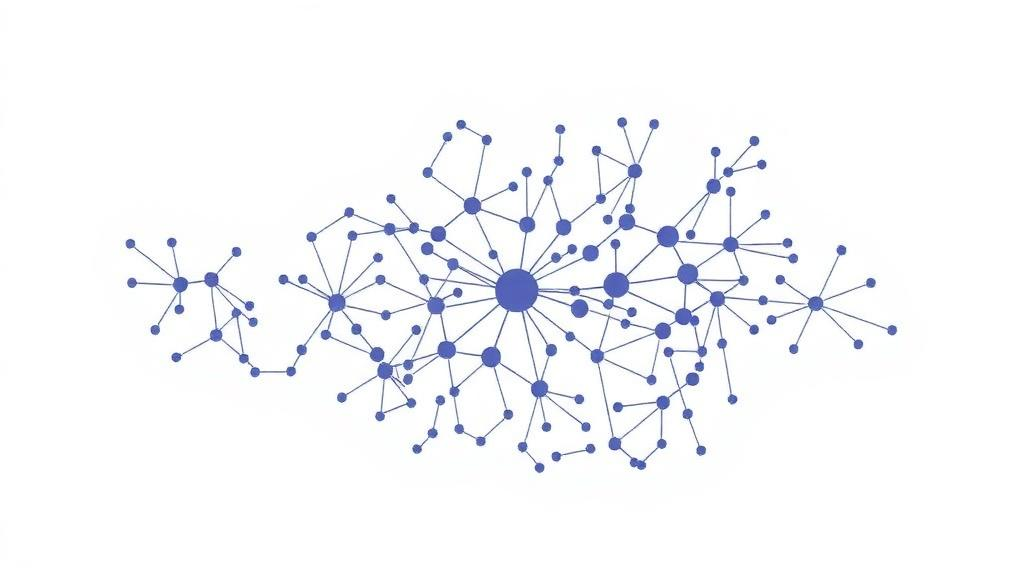
The first step was target identification. Using reverse pharmacophore matching, a technique that scans structural databases for proteins whose binding sites are geometrically and chemically compatible with a drug’s pharmacophore model, the researchers identified 25 oncogenic targets with fit scores above 0.502. These candidate proteins were then mapped onto the STRING database, a curated repository of known and predicted protein-protein interactions, and visualized in Cytoscape, a standard platform for network analysis. The resulting ML246-rewired network comprised 121 nodes and displayed a scale-free topology, meaning that most proteins in the network have few connections while a small number of hub proteins have many. Scale-free networks are a hallmark of biologically meaningful connectivity, and they also carry a strategic implication: disrupting a hub can cascade through the entire system, which is precisely what a cancer drug hopes to achieve.
To find those critical hubs, the team applied Molecular Complex Detection, or MCODE, a clustering algorithm that identifies densely connected sub-networks within a larger interaction map. The analysis revealed ten distinct functional modules, each representing a coordinated group of proteins that likely operate together in cellular processes. Overlaying these modules with gene ontology enrichment analysis using the ClueGO tool showed that fourteen signaling pathways were significantly enriched, and these pathways were overwhelmingly tied to cancer biology, particularly the regulation of the cell cycle and transcription. In other words, the network that ML246 touches is not a random assortment of proteins but a coherent machine centered on the processes that cancer cells depend upon most: dividing relentlessly, transcribing their growth programs, and evading the checkpoints that would normally halt them.
From the intersection of network topology, pathway enrichment, and molecular docking data, eight key regulatory proteins emerged: CDKN1B, CCND1, SMAD3, CCND3, FOXO1, CTNNB1, PCNA, and PIK3CA. Each of these names tells a story that oncologists will recognize immediately. CCND1 and CCND3 are cyclins, the engines that drive cells through the division cycle. CDKN1B, better known as p27, is a cyclin-dependent kinase inhibitor that acts as a brake on that engine. SMAD3 relays signals from transforming growth factor beta, a pathway with dual roles in tumor suppression and progression. FOXO1 is a transcription factor governing stress responses and apoptosis. CTNNB1, or beta-catenin, sits at the heart of the Wnt signaling pathway, one of the most frequently hijacked circuits in human cancer. PCNA is the sliding clamp that tethers DNA polymerase during replication, and PIK3CA encodes the catalytic subunit of PI3K, one of the most commonly mutated oncogenes across all tumor types.
When the researchers subjected these eight proteins to molecular docking, a computational method that predicts how a small molecule fits into a protein’s binding pocket, one target rose above the rest. CDKN1B, the cell-cycle inhibitor p27, bound ML246 with the highest predicted affinity of the entire set, with a binding free energy of minus 7.87 kilocalories per mole and an estimated inhibition constant of 1.70 micromolar. To test whether this predicted interaction was more than a static snapshot, the team ran a 100-nanosecond molecular dynamics simulation of the ML246-CDKN1B complex. The simulation showed stable complex formation throughout, with the drug remaining lodged in the binding site rather than drifting away, a result that lends considerable credibility to the docking prediction. The finding is conceptually striking: a drug famous for dissolving a nuclear structure implicated in metastasis appears, by this analysis, to engage most strongly with a protein whose job is to stop cells from dividing.
The team then asked whether CDKN1B’s expression patterns across human cancers support its candidacy as a biologically relevant target. Using pan-cancer expression analysis through the Gene Expression Profiling Interactive Analysis 2 platform, drawing on data from The Cancer Genome Atlas, they found that CDKN1B expression is elevated in low-grade gliomas, pancreatic adenocarcinoma, and thymoma. Pancreatic adenocarcinoma in particular is among the deadliest of malignancies, with notoriously limited treatment options, so any molecular lead in that disease attracts attention. The expression data do not by themselves prove that ML246’s anti-metastatic effects flow through CDKN1B in patients, but they do show that the computational prediction converges on a protein whose dysregulation is documented in clinically relevant tumor types, which is exactly the kind of triangulation that network pharmacology is designed to achieve.
It is worth pausing on why the perinucleolar compartment matters in the first place. This structure, which sits at the rim of the nucleolus inside the nucleus, is absent from normal differentiated cells but present in a wide range of solid tumors, and its abundance correlates with metastatic potential. Metarrestin was developed specifically to exploit this cancer selectivity, and earlier work identified the eukaryotic elongation factor eEF1A2 as one binding partner. The new study does not overturn that prior biology; rather, it expands the map, showing that the drug’s footprint extends into cell-cycle control, TGF-beta signaling, Wnt signaling, and PI3K pathways. The authors describe their work as combining computational predictions with experimental validation, and they position the framework as a foundation for rational drug development strategies aimed at advanced cancer treatment and management.
Caveats remain, as they always do with purely computational mechanism studies. Docking energies and molecular dynamics trajectories are predictions, not measurements, and the authors themselves note that techniques such as surface plasmon resonance, isothermal titration calorimetry, and co-immunoprecipitation represent the experimental gold standards against which such predictions must ultimately be tested. Still, the study exemplifies a shift in how drug mechanisms are being deduced in the era of big biological data. Instead of years of reductionist biochemistry, a carefully constructed network analysis can, in months, generate a ranked, testable list of hypotheses. For metarrestin, that list now has a clear headliner: p27, the cell-cycle brake, may be the fulcrum on which this anti-metastatic compound turns. If experimental follow-up confirms the prediction, the work will have transformed an intriguing phenotypic drug into a mechanistically understood therapeutic candidate, and it will have demonstrated, once again, that the fastest route through a complex biological system sometimes runs along its networks rather than through its individual parts.
Subject of Research: Network pharmacology analysis of the molecular mechanism of the perinucleolar compartment inhibitor metarrestin (ML246) in cancer
Article Title: Using network pharmacology to systematically deduce the molecular mechanism of the selective perinucleolar compartment inhibitor ML246
Article References: Kashyap, V. K., Sharma, B. P., Singh, H. N., Singh, B., Parashar, D., Kumar, S., Roy, K. K., Yallapu, M. M., & Chauhan, S. C. (2026). Using network pharmacology to systematically deduce the molecular mechanism of the selective perinucleolar compartment inhibitor ML246. BMC Cancer. https://doi.org/10.1186/s12885-026-16317-3
Image Credits: AI Generated
DOI: 10.1186/s12885-026-16317-3
Keywords: metarrestin, ML246, network pharmacology, perinucleolar compartment, CDKN1B, molecular docking, molecular dynamics, protein-protein interaction, cell cycle, metastatic cancer, pan-cancer analysis, BMC Cancer
Nathaniel Bowman. (October 4, 2026). Metarrestin’s Anti-Cancer Mechanism Mapped Through Network Pharmacology. Scienmag.