• HOME
  • NEWS
  • EXPLORE
    • CAREER
      • Companies
      • Jobs
    • EVENTS
    • iGEM
      • News
      • Team
    • PHOTOS
    • VIDEO
    • WIKI
  • BLOG
  • COMMUNITY
    • FACEBOOK
    • INSTAGRAM
    • TWITTER
Tuesday, May 19, 2026
BIOENGINEER.ORG
No Result
View All Result
  • Login
  • HOME
  • NEWS
  • EXPLORE
    • CAREER
      • Companies
      • Jobs
        • Lecturer
        • PhD Studentship
        • Postdoc
        • Research Assistant
    • EVENTS
    • iGEM
      • News
      • Team
    • PHOTOS
    • VIDEO
    • WIKI
  • BLOG
  • COMMUNITY
    • FACEBOOK
    • INSTAGRAM
    • TWITTER
  • HOME
  • NEWS
  • EXPLORE
    • CAREER
      • Companies
      • Jobs
        • Lecturer
        • PhD Studentship
        • Postdoc
        • Research Assistant
    • EVENTS
    • iGEM
      • News
      • Team
    • PHOTOS
    • VIDEO
    • WIKI
  • BLOG
  • COMMUNITY
    • FACEBOOK
    • INSTAGRAM
    • TWITTER
No Result
View All Result
Bioengineer.org
No Result
View All Result
Home NEWS Science News Biology

Melting arctic sea ice linked to emergence of deadly virus in marine mammals

Bioengineer by Bioengineer
November 7, 2019
in Biology
Reading Time: 2 mins read
0
IMAGE
Share on FacebookShare on TwitterShare on LinkedinShare on RedditShare on Telegram

Loss of ice opens pathways for disease transmission among sea lions, ice seals, sea otters and others
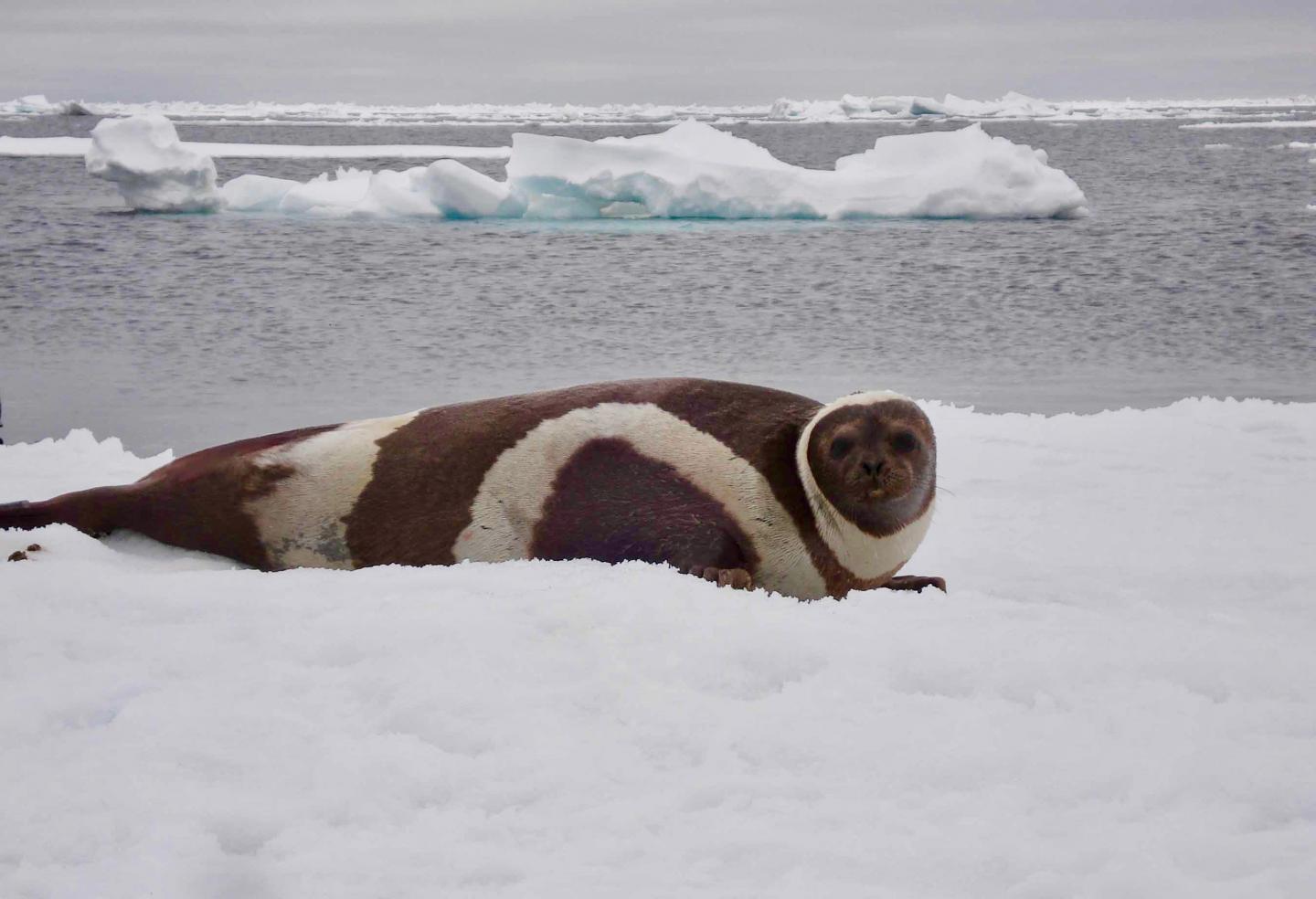
IMAGE

Credit: NOAA Fisheries, Polar Ecosystems Program

Scientists have linked the decline in Arctic sea ice to the emergence of a deadly virus that could threaten marine mammals in the North Pacific, according to a study from the University of California, Davis.

Phocine distemper virus (PDV), a pathogen responsible for killing thousands of European harbor seals in the North Atlantic in 2002, was identified in northern sea otters in Alaska in 2004, raising questions about when and how the virus reached them.

The 15-year study, published today in the journal Scientific Reports, highlights how the radical reshaping of historic sea ice may have opened pathways for contact between Arctic and sub-Arctic seals that was previously impossible. This allowed for the virus’ introduction into the Northern Pacific Ocean.

“The loss of sea ice is leading marine wildlife to seek and forage in new habitats and removing that physical barrier, allowing for new pathways for them to move,” said corresponding author Tracey Goldstein, associate director of the One Health Institute at the UC Davis School of Veterinary Medicine. “As animals move and come in contact with other species, they carry opportunities to introduce and transmit new infectious disease, with potentially devastating impacts.”

AS ICE MELTS, A VIRUS ON THE MOVE

Researchers sampled marine mammals for phocine distemper virus exposure and infection from 2001-2016. Sampled mammals included ice-associated seals, northern fur seals, Steller sea lions and northern sea otters from Southeast Alaska to Russia along the Aleutian Islands and the Bering, Chukchi and Beaufort seas.

Arctic ocean sea ice and open water routes were assessed from the North Atlantic to North Pacific oceans. Satellite telemetry data helped the researchers link animal movement and risk factor data to demonstrate that exposed animals have the potential to carry phocine distemper virus long distances.

The authors identified widespread infection and exposure to the virus across the North Pacific Ocean beginning in 2003, with a second peak of exposure and infection in 2009. These peaks coincided with reductions in Arctic sea ice extent.

“As sea ice continues its melting trend, the opportunities for this virus and other pathogens to cross between North Atlantic and North Pacific marine mammals may become more common,” said first author Elizabeth VanWormer, a postdoctoral researcher at UC Davis during the study and currently an assistant professor at the University of Nebraska, Lincoln. “This study highlights the need to understand PDV transmission and the potential for outbreaks in sensitive species within this rapidly changing environment.”

###

COAUTHORS AND FUNDING

Additional coauthoring institutions include University of Saint Andrews, U.S. Fish and Wildlife Service, NOAA Fisheries, Alaska Fisheries Science Center Marine Mammal Center, University of Glasgow, Alaska Department of Fish and Game, University of Alaska-Fairbanks, Queens University Belfast, Pirbright Institute, and Alaska Veterinary Pathology.

This study was supported by funding from the Morris Animal Foundation and the NOAA Oceans and Human Health Graduate Traineeship Program. Additional support was provided by the Alaska Fisheries Science Center Marine Mammal Laboratory and the U.S. Fish and Wildlife Service.

Media Contact
Kat Kerlin
[email protected]
530-752-7704

Tags: BiodiversityBiologyClimate ChangeEcology/EnvironmentMarine/Freshwater BiologyVirologyZoology/Veterinary Science
Share12Tweet8Share2ShareShareShare2

Related Posts

Decoding p53 Vulnerability: Unraveling Why the Genome Guardian Often Fails — Biology

Decoding p53 Vulnerability: Unraveling Why the Genome Guardian Often Fails

May 19, 2026
New Imaging Technique Simultaneously Maps Brain Activity in Nine Cell Types — Over Four Times the Previous Limit — Biology

New Imaging Technique Simultaneously Maps Brain Activity in Nine Cell Types — Over Four Times the Previous Limit

May 19, 2026

Decoding the Tumor Microenvironment Chemokine Network: From Immune Evasion to Innovative Multi-Target Therapies

May 19, 2026

New Study Uncovers “Bet-Hedging” Strategy Enabling Gut Bacteria to Survive and Thrive

May 19, 2026
Please login to join discussion

POPULAR NEWS

  • Research Indicates Potential Connection Between Prenatal Medication Exposure and Elevated Autism Risk

    845 shares
    Share 338 Tweet 211
  • New Study Reveals Plants Can Detect the Sound of Rain

    732 shares
    Share 292 Tweet 183
  • Salmonella Haem Blocks Macrophages, Boosts Infection

    62 shares
    Share 25 Tweet 16
  • Breastmilk Balances E. coli and Beneficial Bacteria in Infant Gut Microbiomes

    58 shares
    Share 23 Tweet 15

About

We bring you the latest biotechnology news from best research centers and universities around the world. Check our website.

Follow us

Recent News

Researchers Urge Stricter Regulations as ‘Forever Chemicals’ Detected Throughout Solent Food Web

Oral GLP-1s Maintain Effectiveness Without Fasting

Scientists Observe Massive Light-Conversion Effect in Chiral Carbon Nanotubes

Subscribe to Blog via Email

Enter your email address to subscribe to this blog and receive notifications of new posts by email.

Join 82 other subscribers
  • Contact Us

Bioengineer.org © Copyright 2023 All Rights Reserved.

Welcome Back!

Login to your account below

Forgotten Password?

Retrieve your password

Please enter your username or email address to reset your password.

Log In
No Result
View All Result
  • Homepages
    • Home Page 1
    • Home Page 2
  • News
  • National
  • Business
  • Health
  • Lifestyle
  • Science

Bioengineer.org © Copyright 2023 All Rights Reserved.