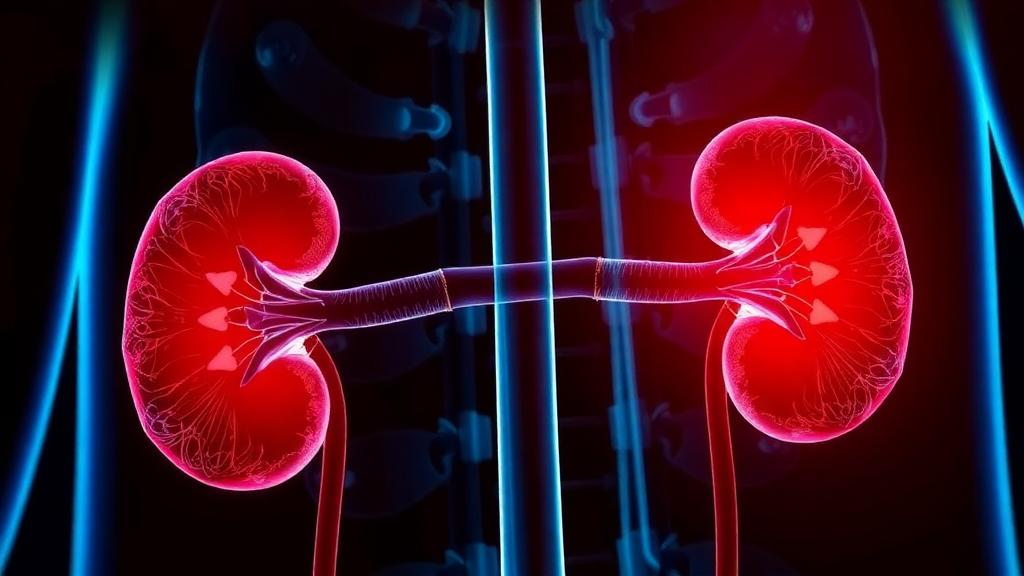
Melatonin, the hormone best known for steering the body’s sleep-wake cycle, has spent the past two decades accumulating a second reputation: that of a powerful molecular scavenger, mopping up the reactive oxygen species that damage blood vessels, nerves and kidneys in people with diabetes. A new cross-sectional case-control study published in BMC Endocrine Disorders adds a sobering twist to that story. Researchers in Istanbul report that serum melatonin levels are dramatically depleted in patients with type 2 diabetes mellitus, but that the hormone does not reliably distinguish those who have developed diabetic nephropathy from those who have not. Instead, the classic markers of kidney function, urea, creatinine and estimated glomerular filtration rate, along with the inflammatory protein C-reactive protein, remain the dominant signals of kidney involvement.
The study, led by Emel Tatlı of the Department of Nephrology at Gaziosmanpaşa Training and Research Hospital, University of Health Sciences, together with Tuğba Kip of Abdi İbrahim Pharmaceuticals, enrolled 83 participants: 59 patients with type 2 diabetes, of whom 29 had diabetic nephropathy and 30 did not, and 24 healthy controls. The design was deliberately simple and comparative. By measuring melatonin alongside a panel of oxidative and inflammatory markers in all three groups, the team set out to answer a question that has lingered in the literature for years: is the sleep hormone a bystander in the metabolic chaos of diabetes, or does its depletion track specifically with the kidney damage that diabetes inflicts?
The headline finding concerns the comparison between diabetic patients and healthy controls. Serum melatonin, measured with a validated enzyme-linked immunosorbent assay, averaged 22.00 plus or minus 15.56 nanograms per litre in the diabetic group, against 42.88 plus or minus 29.61 nanograms per litre in the controls, a difference that was highly statistically significant. In other words, people with type 2 diabetes carried roughly half the circulating melatonin of their healthy counterparts. That depletion did not travel alone. Total antioxidant status, a composite measure of the blood’s capacity to neutralise oxidants, was also markedly reduced in the diabetic group, falling from 7.87 to 4.05 millimoles per litre on average.
Curiously, total oxidant status moved in the same direction rather than the opposite one. The diabetic patients showed lower TOS values, 2.33 versus 8.50 micromoles per litre, alongside their lower antioxidant reserves. The authors interpret this apparently paradoxical pairing as evidence of a coupled deficit: when the antioxidant defence system is exhausted, the measurable oxidant burden in serum may also fall, because the reactive species are being consumed in damaging reactions rather than accumulating in the bloodstream. Whatever the precise mechanism, the strong positive correlations between melatonin and both antioxidant and oxidant status, with Spearman coefficients of 0.83 and 0.75 respectively, suggest that the hormone’s circulating level rises and falls in lockstep with the broader redox economy of the blood.
The inflammation data reinforce that picture of systemic metabolic strain. C-reactive protein, the liver-derived acute-phase protein that serves as a standard gauge of low-grade inflammation, was significantly elevated in the diabetic cohort compared with controls. Melatonin’s anti-inflammatory credentials are well established in experimental systems, where it suppresses nuclear factor-kappa B signalling, dampens tumour necrosis factor alpha and interleukin production, and limits neutrophil infiltration. The new findings are consistent with the idea that in established type 2 diabetes, the body’s endogenous melatonin system is running on empty precisely when inflammatory and oxidative pressures are at their highest.
But the story changes when the lens narrows to the kidneys. Within the diabetic cohort itself, neither total antioxidant status nor total oxidant status differed significantly between patients with diabetic nephropathy and those without. And in a result the authors themselves describe as paradoxical, serum melatonin was marginally higher in the nephropathy group, at a p-value of 0.043, the opposite direction to the pattern most researchers would have predicted. Diabetic nephropathy is classically driven by oxidative stress and chronic inflammation, the very processes melatonin is thought to counter. If melatonin depletion were a specific engine of kidney damage, one would expect the lowest levels in the patients with the worst kidneys.
What did separate the nephropathy patients was the conventional renal panel. They had markedly higher urea and creatinine, lower albumin, and higher C-reactive protein than their diabetic peers without kidney involvement. When the researchers constructed receiver operating characteristic curves to test how well each marker discriminated nephropathy, urea performed best, with an area under the curve of 0.805 and a 95 percent confidence interval of 0.696 to 0.897. Estimated glomerular filtration rate followed with an area of 0.737. Melatonin managed only a modest 0.666, well short of what would be needed for a clinically useful diagnostic test. Multivariate logistic regression confirmed that melatonin and the oxidative indices did not independently predict nephropathy once renal function markers were accounted for.
The authors’ conclusion is carefully worded but consequential: melatonin appears to mark the global oxidative and metabolic burden of type 2 diabetes rather than nephropathy specifically. That framing matters for two reasons. First, it cautions against the growing enthusiasm for melatonin as a standalone biomarker of diabetic complications. A hormone that reflects the overall diabetic state cannot, by itself, tell a clinician which organs are being damaged. Second, it tempers expectations for melatonin supplementation as a targeted kidney-protective therapy, at least on the basis of circulating levels. If serum melatonin does not track nephropathy, then simply raising it may not address the local renal pathology, though the authors are careful not to extrapolate beyond their cross-sectional data.
The study’s limitations are those inherent to its design. With 83 participants, it is powered to detect large differences, and the confidence intervals around some estimates are wide. A cross-sectional snapshot cannot establish whether low melatonin precedes kidney damage or follows it, and the marginal melatonin elevation in the nephropathy group may reflect reduced renal clearance of the hormone or confounding by reduced antioxidant capacity in advanced disease. The single-centre recruitment at a Turkish training and research hospital, approved by the local ethics committee with written informed consent from all participants, also limits generalisability. Longitudinal cohorts with serial melatonin measurements would be needed to disentangle cause from consequence.
Even so, the findings land at a moment of intense interest in the redox biology of diabetes. Melatonin research has expanded from sleep medicine into cardiology, oncology and nephrology, fuelled by the hormone’s potent free-radical scavenging and its receptor-mediated signalling pathways. This study offers a useful corrective: in real-world patients with established type 2 diabetes, the endogenous melatonin system is measurably depleted and tightly coupled to antioxidant status, but it is not a window into the kidney. For now, the humble blood urea test remains the better sentinel of diabetic nephropathy, and melatonin’s clinical role in diabetes remains, as the data suggest, that of a systemic marker rather than an organ-specific one.
Subject of Research: Serum melatonin levels in relation to inflammation and oxidative stress in type 2 diabetes and diabetic nephropathy
Article Title: Serum melatonin levels and their relationship with inflammation and oxidative stress in patients with diabetic nephropathy: a cross-sectional case–control study
Article References: Serum melatonin levels and their relationship with inflammation and oxidative stress in patients with diabetic nephropathy: a cross-sectional case–control study. (n.d.). https://doi.org/10.1186/s12902-026-02634-y
Image Credits: AI Generated
DOI: 10.1186/s12902-026-02634-y
Keywords: melatonin, diabetic nephropathy, type 2 diabetes, oxidative stress, total antioxidant status, total oxidant status, C-reactive protein, systemic inflammation, biomarker, kidney disease, case-control study, endocrinology
News Source: Jerry Hayes. (October 7, 2026). Melatonin Runs Low in Type 2 Diabetes but Fails to Flag Kidney Damage, Study Finds. Scienmag.