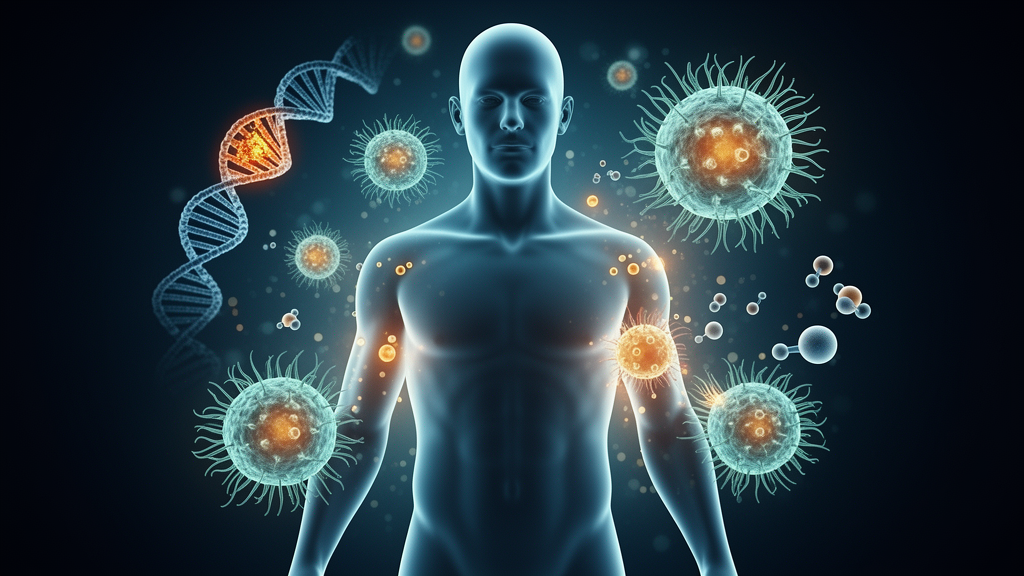
Male infertility may be far more than a reproductive problem. The study, published on 10 June 2026 in the journal Basic and Clinical Andrology, offers a systematic, quantitative map of what monogenic male infertility genes actually do, and where else in the body they operate.
The scale of the underlying problem is considerable. Male infertility affects roughly 10 percent of men worldwide, yet about 70 percent of cases still lack a definitive genetic diagnosis. Next-generation sequencing has been steadily uncovering single-gene causes, many of which are tied to broader systemic conditions. To organize this expanding knowledge, researchers led by Matthew Yang and colleagues curated a list of 596 candidate genes associated with male infertility, drawing on published literature, the OMIM database of human genes and genetic phenotypes, and clinical genetics panels from Prevention Genetics, Fulgent, and the University of Chicago Genetic Services.
Of those 596 candidates, 178 genes met the team’s criteria for strong evidence, meaning they were confirmed either by a definitive OMIM phenotype or by definitive classification in a prior expert review. That strong-evidence set represents a 71 percent increase over the 104 genes identified in 2020, a measure of how quickly sequencing studies are reshaping the field. The remaining genes were graded as moderate or weak evidence, the latter including genes implicated by only a single human study, only by animal work, or only by pathophysiological reasoning.
The researchers then ran gene set enrichment analyses on the strong-evidence genes, using the tools g:Profiler, REVIGO, and PANTHER to find overrepresented Gene Ontology terms and Reactome pathways, applying an adjusted significance threshold of p-adjusted below 0.05 for the ontology analysis and Fisher’s exact test with Bonferroni correction for the pathway work. The results were strikingly consistent. Across molecular function, cellular component, and biological process domains, the most significant driver terms related to microtubule and ciliary function, including cilium movement, cilium organization, dynein intermediate chain binding, and minus-end-directed microtubule motor activity. Other significant terms concerned steroid and hormone metabolism, and DNA repair.
Ciliary and flagellar biology emerged as the single most prominent theme. The BBSome is the protein complex defective in Bardet-Biedl syndrome, a multisystem disorder affecting the kidneys, retina, metabolism, and nervous system. Consistent with that, the study’s tissue expression analysis showed that BBS genes including BBS1, BBS2, BBS4, BBS5, BBS7, BBS10, BBS12, and MKKS display the broadest expression among testicular-category genes, active across many tissues rather than confined to the testis. Other ciliary genes such as DNAAF5, LRRC6, and MKS1 were likewise expressed beyond the testis.
The endocrine findings extended in an unexpected direction. Alongside the expected overrepresentation of androgen biosynthesis, the Reactome analysis identified enrichment of glucocorticoid and mineralocorticoid biosynthesis pathways, which are adrenal hormones rather than reproductive ones. The authors attribute this co-enrichment partly to genes such as CYP21A2 and CYP11B1, which participate in multiple branches of steroid synthesis. Defects in these enzymes can cause male infertility through the development of testicular adrenal rest tumors, while also producing extra-genitourinary manifestations such as electrolyte disturbances, blood pressure abnormalities, and advanced bone age. In the developmental gene category, the tissue heat map showed a cluster of genes, including CYP11A1, CYP21A2, and CYP17A1, strongly expressed in the adrenal gland.
DNA repair provided a third major thread. The Fanconi anemia nuclear complex, with an adjusted p-value of 3.931 × 10⁻², was overrepresented among the strong-evidence genes. The Fanconi anemia pathway is critical for repairing DNA interstrand crosslinks and maintaining genomic stability, and mouse studies have linked pathogenic variants in these genes to impaired spermatogenesis through disruption of spermatogonial stem cell maintenance and meiotic progression. Fanconi anemia itself is a multisystem disorder associated with bone marrow failure, predisposition to multiple malignancies including hematologic, head and neck, skin, gynecologic, and gastrointestinal cancers, and congenital anomalies including the VACTERL-H association. The enrichment of this complex suggests that men whose infertility stems from DNA repair defects may warrant evaluation well beyond the genitourinary tract.
The gene-tissue expression analysis, performed with the GTEx v8 multi-gene query using RNA sequencing data, reinforced the multisystem picture. Among the pre-testicular/endocrine category, most genes were expressed in the pituitary gland and hypothalamus, with clusters showing high expression across multiple tissues, as seen for NSMF, FGFR1, and PNPLA6, or expression restricted to the testis and hypothalamus, as for TAC3 and SOX3. The prominence of idiopathic hypogonadotropic hypogonadism, a rare but treatable cause of male infertility, was supported by the inclusion of genes such as KAL1, FGFR1, PROK2, and CHD7 in the strong-evidence list. Many of these genes are also associated with non-reproductive features including anosmia, cleft lip or palate, hearing impairment, renal agenesis, and skeletal anomalies. Notably, the post-testicular/obstructive category was excluded from this analysis because it contained only two strong-evidence genes.
Just as revealing were the absences. Despite well-documented roles in sperm function, no terms related to sperm capacitation reached significance in the molecular function analysis, and no terms relating to the acrosome, apoptosis, or oxidative stress were enriched. The authors argue that this highlights the value of formal statistical enrichment testing in distinguishing pathways that are genuinely overrepresented in the known genetic architecture from those merely assumed to be central based on prior knowledge. The study also situates itself in a shifting historical context: while Y chromosome microdeletions in the AZF region were traditionally estimated to appear in 8 to 12 percent of men with non-obstructive azoospermia and 3 to 7 percent with severe oligospermia, a meta-analysis found such deletions in only 0.8 percent of severely oligospermic men with sperm concentrations between 1 and 5 million per milliliter, suggesting their relative contribution has diminished as other genetic causes have been identified.
The findings dovetail with epidemiological observations that infertile men often carry broader health burdens. Previous work cited in the study reported that 44 percent of men with infertility had at least one medical diagnosis unrelated to reproductive health, that higher Charlson Comorbidity Index scores are associated with lower semen parameters, and that endocrine, metabolic, cardiovascular, and cerebrovascular conditions have been reported in association with abnormal semen parameters, alongside increased risks of malignancies, autoimmune disorders, and mortality. The authors are careful to note the limits of their approach: the curated gene set favors well-studied pathways, enrichment analysis identifies statistical overrepresentation rather than causal or clinical relationships and does not confirm that affected individuals will manifest systemic disease, and GTEx expression data reflect population-level averages in healthy adults that may not capture developmental stages or the tissues of men with infertility. Even so, they conclude that the pathway-level findings provide a biological framework for these clinical observations and support multidisciplinary evaluation and care for men with genetic male infertility, integrating expertise from urology, endocrinology, pulmonology, oncology, and medical genetics.
Subject of Research: Gene set enrichment analysis of curated monogenic male infertility genes identifying overrepresented biological pathways and tissue expression patterns
Article Title: Gene set enrichment analysis of curated monogenic loci highlights key pathways and multisystem involvement in male infertility
Article References: Yang, M., Lovrenert, K., Thirumavalavan, N., Eisenberg, M. L., Schumacher, F. R., & Wu, C.-H. W. (2026). Gene set enrichment analysis of curated monogenic loci highlights key pathways and multisystem involvement in male infertility. Basic and Clinical Andrology, 36(1), Article 17. https://doi.org/10.1186/s12610-026-00316-2
Image Credits: AI Generated
DOI: 10.1186/s12610-026-00316-2
Keywords: male infertility, genetics, gene set enrichment analysis, cilia, endocrine signaling, DNA repair, Fanconi anemia, Bardet-Biedl syndrome, GTEx, Reactome pathways, monogenic loci, multidisciplinary care
News Source: Juliet Wilcox. (October 29, 2026). Male Infertility Genes Map to Cilia, Hormones and DNA Repair Across the Body. Scienmag.