• HOME
  • NEWS
  • EXPLORE
    • CAREER
      • Companies
      • Jobs
    • EVENTS
    • iGEM
      • News
      • Team
    • PHOTOS
    • VIDEO
    • WIKI
  • BLOG
  • COMMUNITY
    • FACEBOOK
    • INSTAGRAM
    • TWITTER
Friday, June 26, 2026
BIOENGINEER.ORG
No Result
View All Result
  • Login
  • HOME
  • NEWS
  • EXPLORE
    • CAREER
      • Companies
      • Jobs
        • Lecturer
        • PhD Studentship
        • Postdoc
        • Research Assistant
    • EVENTS
    • iGEM
      • News
      • Team
    • PHOTOS
    • VIDEO
    • WIKI
  • BLOG
  • COMMUNITY
    • FACEBOOK
    • INSTAGRAM
    • TWITTER
  • HOME
  • NEWS
  • EXPLORE
    • CAREER
      • Companies
      • Jobs
        • Lecturer
        • PhD Studentship
        • Postdoc
        • Research Assistant
    • EVENTS
    • iGEM
      • News
      • Team
    • PHOTOS
    • VIDEO
    • WIKI
  • BLOG
  • COMMUNITY
    • FACEBOOK
    • INSTAGRAM
    • TWITTER
No Result
View All Result
Bioengineer.org
No Result
View All Result
Home NEWS Science News Biology

Magnetic eyelashes: A new source of MRI artifacts

Bioengineer by Bioengineer
July 24, 2019
in Biology
Reading Time: 2 mins read
0
IMAGE
Share on FacebookShare on TwitterShare on LinkedinShare on RedditShare on Telegram

Cosmetic product degrades MRI and presents patient hazard
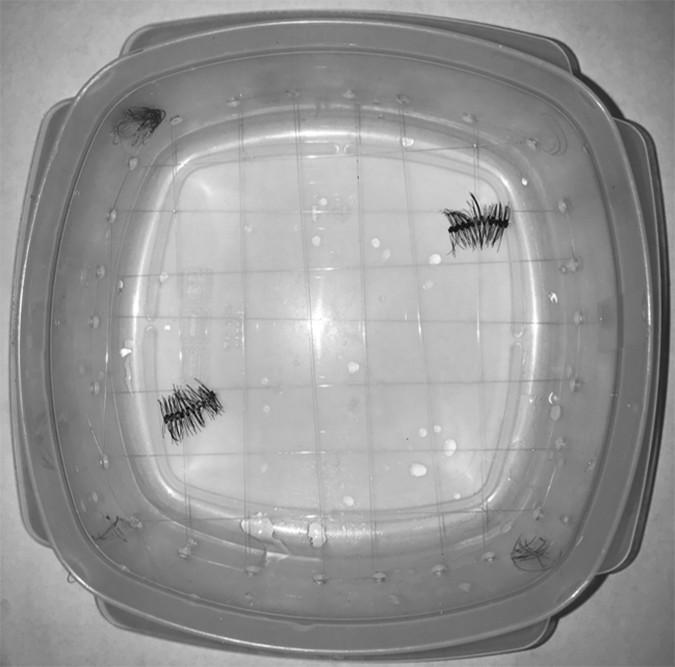
IMAGE

Credit: American Journal of Roentgenology (AJR)

Leesburg, VA, July 24, 2019–A new cosmetic product, magnetic eyelashes, should be of interest and concern to radiology professionals working in the MRI environment, according to an ahead-of-print article published in the November 2019 issue of the American Journal of Roentgenology (AJR).

With U.S. sales of false eyelashes having increased 31% since 2017 and magnetic eyelashes trending as the top beauty-related Google search of 2018, Einat Slonimsky and Alexander Mamourian at Penn State Health used a phantom to show that magnetic eyelashes worn during MRI can cause substantial artifact and that detachment of the eyelashes from the phantom can occur.

“Our purpose was to evaluate the magnitude of the susceptibility artifacts created by magnetic eyelashes on multiple standard imaging sequences and compare these artifacts with those created by aneurysm clips, which are a common source of image distortion,” wrote Slonimsky and Mamourian. Using two sets of magnetic eyelashes from the same manufacturer that were randomly selected and purchased online, the phantom was created by drilling multiple 2-mm holes in a plastic container and then running monofilament line through these holes to create a grid. The two sets of eyelashes were attached to single nylon strings, placed diagonally within the phantom. The phantom was then submerged in a container filled with distilled water, covered with a layer of plastic film to prevent free movement of the lashes, should they detach.

MRI was performed using a 3-T scanner with T2-weighted images, FLAIR images, T1-weighted images, susceptibility-weighted images, DW images, T1-weighted magnetization-prepared rapid-acquisition gradient-echo images, and T2-weighted sampling perfection with application-optimized contrasts using different flip-angle evolutions.

Ultimately, the magnetic eyelashes evidenced an artifact much larger than that created by the aneurysm clips (two made of cobalt alloy, one made of titanium) using the same sequences–measuring 7 × 6 cm maximal on susceptibility-weighted images, obscuring the entire phantom. Although the eyelashes stayed attached to the strings during the scan, upon removal of the phantom from the bore, one set of eyelashes detached from its string. Restrained by the plastic covering, it became attracted to the other eyelashes still attached to the phantom.

“Although friction and adhesion may differ from patient to patient, depending on the width and character of the native eyelashes of an individual,” Slonimsky and Mamourian wrote, “we strongly recommend inserting a line about magnetic eyelashes on the MRI safety questionnaire and adding stops in the screening system to prevent the entry of anyone with these lashes, including staff, into the MRI scanner room.”

###

Media Contact
Logan K. Young
[email protected]

Original Source

https://arrs.org/ARRSLIVE/Pressroom/PressReleases/magnetic-eyelashes-degrade-mri-present-patient-hazard.aspx

Related Journal Article

http://dx.doi.org/10.2214/AJR.19.21550

Tags: BioinformaticsElectromagneticsGuidelines/Treaties/AgreementsHardwareHealth CareHealth Care Systems/ServicesHealth ProfessionalsMedicine/HealthPublic Health
Share12Tweet8Share2ShareShareShare2

Related Posts

Natural Hallucinogens: Evolution’s Ecological Tools, Not Mere Chemical Byproducts

June 25, 2026

This Famous Butterfly Revealed: Three Distinct Species Hidden in One

June 25, 2026

Scientists Attack Soybean Cyst Nematode by Starving Its Food Source

June 25, 2026

Decoding the Secret Code of a Crucial Immune Sensor

June 24, 2026
Please login to join discussion

POPULAR NEWS

  • Saying Goodbye to PGY-6: Pediatric Fellowship Realities

    103 shares
    Share 41 Tweet 26
  • Multi-Hospital Study Reveals Long Covid Burden Is Twice as High as Current Estimates

    92 shares
    Share 36 Tweet 23
  • Detection of EDCs in Breast Milk and Infant Urine Up to Six Months Highlights Early Exposure Risks

    77 shares
    Share 31 Tweet 19
  • New Drug Candidate Developed at McMaster Shows Potential for Treating Brain Cancer

    58 shares
    Share 23 Tweet 15

About

We bring you the latest biotechnology news from best research centers and universities around the world. Check our website.

Follow us

Recent News

Tracking Lanthanide-Labeled Microplastics in Plants

POSTECH Researchers Slash Cost of Reconstituted Cell-Free Systems by 95%

AI and Physics Collaborate to Design Advanced Hydrogen Storage Materials

Subscribe to Blog via Email

Success! An email was just sent to confirm your subscription. Please find the email now and click 'Confirm' to start subscribing.

Join 82 other subscribers
  • Contact Us

Bioengineer.org © Copyright 2023 All Rights Reserved.

Welcome Back!

Login to your account below

Forgotten Password?

Retrieve your password

Please enter your username or email address to reset your password.

Log In
No Result
View All Result
  • Homepages
    • Home Page 1
    • Home Page 2
  • News
  • National
  • Business
  • Health
  • Lifestyle
  • Science

Bioengineer.org © Copyright 2023 All Rights Reserved.