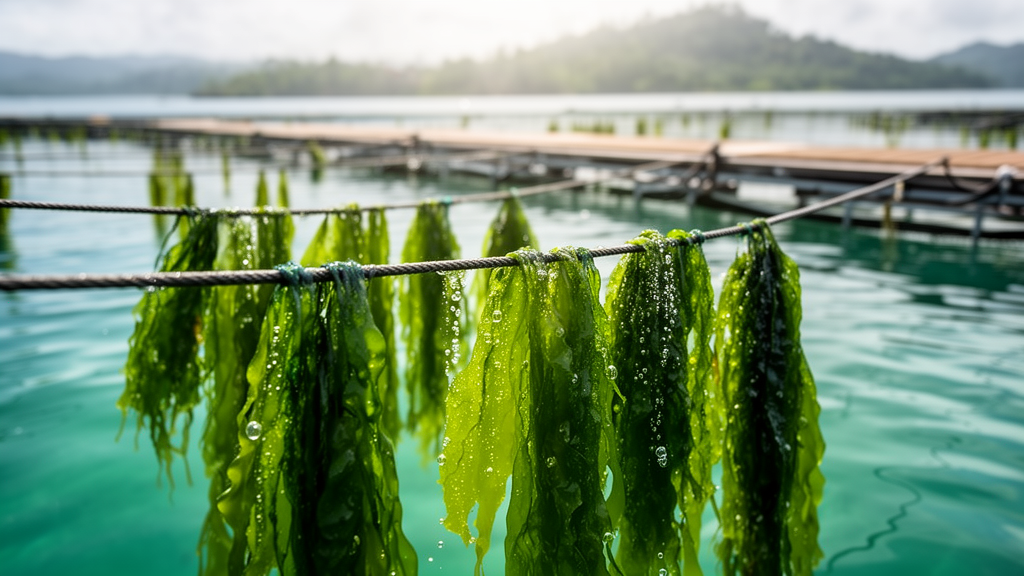
An integrated bibliometric and text-mining investigation has mapped global applied research across 16 macroalgal genera to provide an evidence base for aquaculture planning in Costa Rica. Marine macroalgae are increasingly evaluated across diverse sectors, serving as potential sources for food ingredients, hydrocolloids, biomaterials, bioactive molecules, animal-feed supplements, and biostimulants. Despite extensive global macroalgal literature, comparative syntheses evaluating specific genera prioritized for Costa Rican aquaculture development had remained lacking.
To address this gap, researchers analyzed 2,996 Scopus-indexed research articles published between 2000 and April 2024. The investigative methodology coupled manual article screening with supervised artificial intelligence classification. This approach facilitated bibliometric mapping across historical publication trajectories, target industrial sectors, contributing countries, academic journals, research institutions, individual authors, and recurring keyword networks.
Publication trends revealed that scientific output across these selected genera expanded after 2010, followed by notable acceleration between 2018 and 2023. Growth in applied literature occurred prominently across the health, agri-livestock, food, manufacturing, and biotechnology sectors. However, the study highlighted that publication activity remains heavily concentrated within pharmaceutical and biomedical journals, reflecting a growing yet fragmented research landscape.
Analysis of taxonomic publication volumes indicated that three genera—Sargassum, Ulva, and Gracilaria—dominated the scientific output over the evaluated timeframe. Based on publication patterns, the authors identified Sargassum, Ulva, Gracilaria, and Asparagopsis as prominent candidates for further applied evaluation. A secondary tier of candidate genera identified in the analysis included Padina, Codium, Cladophora, Gracilariopsis, and Hypnea.
Geographic patterns revealed that research output was substantially anchored in Asian institutions, with India, China, and South Korea collectively generating approximately 30 percent of the indexed records. Despite this geographical concentration, authorship and institutional networks linked diverse regions globally, spanning Asia, Europe, Latin America, Africa, and the Middle East.
Keyword network analysis demonstrated that contemporary investigations remain heavily centered on preliminary laboratory work. Dominant keyword clusters converged around antioxidant and antimicrobial activity, polysaccharides, extraction protocols, nanoparticle synthesis, methane mitigation, and biomaterials. These terms indicate that a major portion of the current literature focuses on exploratory biochemical characterization and in vitro bioactivity evaluations.
The study authors emphasized that bibliometric prominence does not equate to commercial readiness or immediate viability for cultivation. The dataset indicates that scientific literature alone cannot establish practical suitability for aquaculture enterprises or industrial exploitation within Costa Rica.
Evaluating the true commercial and ecological potential of these macroalgal genera in Costa Rica requires rigorous local validation. The researchers concluded that future development must incorporate local cultivation trials, strain selection, seasonal biochemical profiling, contaminant screening, supply-chain logistics, regulatory reviews, and techno-economic feasibility assessments.
Subject of Research: Applied research trends across macroalgal genera for aquaculture development
Article Title: Applied research trends in selected macroalgal genera relevant to aquaculture development in Costa Rica
Article References: Herrera-Vásquez, P. J., Fernández-García, C., & Pérez-Molina, J. P. (2026). Applied research trends in selected macroalgal genera relevant to aquaculture development in Costa Rica. Discover Applied Sciences. https://doi.org/10.1007/s42452-026-09653-3
Image Credits: AI Generated
DOI: 10.1007/s42452-026-09653-3
Keywords: macroalgae, aquaculture, Costa Rica, bibliometrics, text mining, Sargassum, Ulva, Gracilaria, Asparagopsis, biotechnology, bioactive compounds, antioxidant activity, antimicrobial activity, biomaterials, methane mitigation, polysaccharides, applied research, Scopus
News Source: Denise Maddox. (November 20, 2026). Macroalgae Study Identifies Promising Genera for Costa Rican Aquaculture Planning. Scienmag.