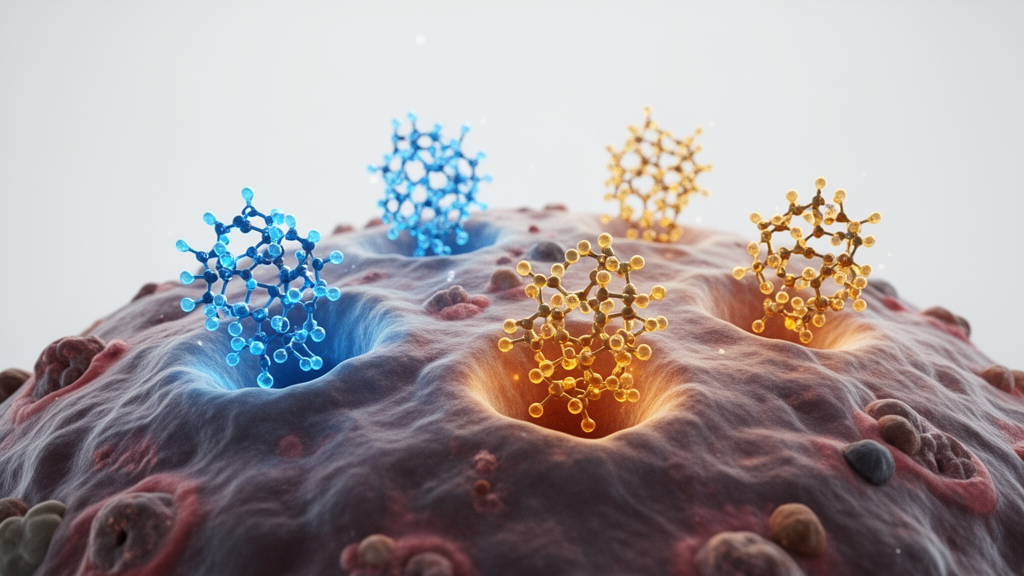
Computational screening integrating machine learning, molecular docking, and pharmacokinetic profiling has identified five drug candidates capable of targeting the BRAF V600E mutation in metastatic melanoma. Melanoma represents an aggressive malignancy originating within epidermal melanocytes, presenting severe clinical risks when malignant cells spread beyond cutaneous margins into distant organs. While localized melanoma maintains a five-year survival rate exceeding ninety-seven percent, metastatic progression degrades patient survival below thirty percent. The V-RAF murine sarcoma viral oncogene homolog B1 gene operates as a critical proto-oncogene regulating cellular proliferation and survival through the MAP kinase and ERK signaling pathway. In approximately fifty percent of melanoma cases, an oncogenic mutation substitutes valine with glutamic acid at codon 600, causing constitutive kinase activation that drives uncontrolled tumor proliferation. Although predominantly identified in melanomas, this activating mutation also occurs across other human malignancies, including colorectal cancer, thyroid carcinoma, leukemia, and gliomas.
Although existing small-molecule therapeutics targeting the BRAF V600E oncoprotein initially curtail tumor growth, clinical efficacy is persistently compromised by the rapid onset of drug resistance. Current regulatory-approved inhibitors, including vemurafenib, dabrafenib, and encorafenib, bind directly within the ATP-binding pocket of the kinase to suppress downstream proliferative cascades. Despite positive initial responses, patient tumors typically develop resistance within six to nine months of treatment initiation. Underlying mechanisms include secondary mutations reactivating the MAPK pathway, cellular adaptations, or activation of bypass survival pathways like the PI3K/AKT cascade. While combining kinase inhibitors with MEK inhibitors or immune checkpoint therapies has shown therapeutic promise, these combinations introduce significant adverse effects and complex resistance patterns. Furthermore, traditional pharmaceutical discovery remains a lengthy, cost-intensive process often requiring more than a decade of research, with mean expenditures reaching 879.3 million dollars per successfully approved therapeutic agent when factoring in development failures.
To overcome the financial and temporal bottlenecks of conventional drug development, researchers implemented an automated computational screening pipeline using bioactivity data from the ChEMBL database. The investigators extracted 6,962 bioactivity entries associated with serine/threonine-protein kinase B-Raf under target identifier CHEMBL5145. Following standardized filtering and the removal of duplicate chemical structures, 4,054 verified inhibitors possessing recorded half-maximal inhibitory concentrations were retained alongside their canonical isomeric simplified molecular input-line entry system notations. To establish uniform target values for algorithmic training, experimental IC50 values were converted from nanomolar concentrations into pIC50 molar equivalents. Chemical representations were subsequently processed through the PaDEL-Descriptor program to compute two-dimensional and three-dimensional molecular properties. Using default software parameters that removed structural salts, detected aromaticity, and standardized tautomers and nitro groups, the platform generated the PubChem molecular fingerprint subset containing 881 discrete structural descriptors for every compound across the curated bioactivity dataset.
Model construction and algorithmic evaluation were conducted using the Waikato Environment for Knowledge Analysis machine learning suite. Before initiating model training, the descriptor data underwent automated preprocessing through WEKA’s NumericCleaner and RemoveUseless filters, eliminating uninformative structural features and reducing the dataset to 551 molecular descriptors. The researchers then applied the InfoGain attribute evaluation filter to assess correlations between individual structural descriptors and biological inhibition values. Thirty-six regression configurations were tested and evaluated based on correlation coefficients and predictive accuracy, incorporating eighty-twenty train-test splits and ten-fold cross-validations to guard against overfitting. The Random Forest ensemble regressor achieved the strongest performance, yielding a Pearson correlation coefficient of 0.97, an R-squared value of 0.94, and a root mean square error of 0.25 on the full training dataset. However, validation scores decreased to 0.78 for the eighty-twenty split and 0.77 for cross-validation, revealing a generalizability gap that suggested partial overfitting.
Following model training and validation, the finalized Random Forest architecture was applied to screen large structural chemical libraries for potential BRAF inhibitors. The first screening collection comprised 2,405 unique United States Food and Drug Administration approved drugs retrieved from the ChEMBL database after deduplication. The second library originated from the Enhanced National Cancer Institute Database Browser, yielding 85,409 distinct non-approved compounds with positive drug-likeness predictions after removing duplicate structures from an initial repository of over 250,000 molecules. Molecular fingerprints were calculated for both screening libraries via PaDEL-Descriptor software, and an InputMapped classifier generated pIC50 predictions that were subsequently converted into predicted IC50 values. The model successfully prioritized established melanoma therapeutics, ranking encorafenib, dabrafenib, and vemurafenib within the top ten predicted approved compounds.
To independently confirm the inhibitory potential of the computationally selected molecules, the authors performed molecular docking simulations against the crystal structure of BRAF V600E. The atomic coordinates of the V600E oncogenic mutant complexed with vemurafenib were obtained from the Protein Data Bank under accession code 3OG7. The protein structure was prepared in UCSF Chimera using the Dock Prep utility, which removed crystallographic ligands and solvent molecules, added hydrogen atoms, assigned histidine protonation states, corrected incomplete side chains using the Dunbrack 2010 rotamer library, and applied Amber ff14SB and Gasteiger charges. Discovery Studio Visualizer established a three-dimensional docking grid box measuring 30 by 30 by 30 angstroms centered at coordinates (1.85, −2.78, −20.09). Three-dimensional structures for the top twenty and bottom twenty performing compounds from each database were retrieved from PubChem and docked using AutoDock Vina with an exhaustiveness parameter of eight binding mode conformations.
Molecular docking analyses revealed pronounced energetic differences between the top-performing and lowest-performing compounds predicted by the machine learning model. The top twenty candidate molecules exhibited strong binding affinities with a mean score of −9.815 kilocalories per mole, surpassing the recognized literature threshold of −9.0 kilocalories per mole for active kinase inhibitors. Conversely, the control group of the twenty lowest-performing predicted compounds demonstrated a significantly weaker mean binding affinity of −5.312 kilocalories per mole. A two-sample student t-test confirmed that this difference in binding affinities was statistically significant, yielding a p-value below 0.05. A linear correlation between predicted IC50 values and docking affinities produced a Pearson coefficient of 0.846. Detailed contact analyses verified that top-ranked compounds formed stable hydrogen bonds and hydrophobic interactions with essential residues in the ATP-binding pocket and DFG motif, specifically interacting with Val471, Lys483, Leu515, Trp531, Cys532, Gly534, Ser536, Gly593, and Asp594.
Integrating the machine learning predictions and molecular docking results enabled the investigators to select five lead candidates for detailed pharmacokinetic evaluation. For novel inhibitor exploration, the researchers chose two non-approved compounds from the National Cancer Institute repository, designated NSC363006 and NSC251706. Physicochemical properties were assessed using SwissADME across six oral bioavailability criteria: lipophilicity, molecular weight between 150 and 500 grams per mole, polar surface area, solubility, saturation, and flexibility. The approved drugs demonstrated favorable oral bioavailability profiles comparable to vemurafenib, despite minor molecular weight or lipophilicity deviations. Conversely, the non-approved NCI compounds exhibited notable pharmacokinetic deficiencies: NSC363006 violated molecular weight, hydrogen acceptor, molar refractivity, atom count, rotatable bond, and surface area limits, while NSC251706 violated hydrogen bonding, rotatable bond, and polar surface criteria.
The five prioritized compounds were further evaluated through pkCSM pharmacokinetic modeling, CLC-Pred cytotoxicity predictions, and recognized drug-likeness rules to evaluate clinical feasibility. CLC-Pred analysis indicated probable cytotoxic activity across cancer cell lines, with nearly every candidate achieving a probability score exceeding 0.5 and nilotinib showing melanoma cytotoxicity comparable to vemurafenib. In pkCSM evaluations, approved drugs displayed normal absorption, whereas NSC251706 scored zero for gastrointestinal absorption. All compounds exhibited low blood-brain barrier permeability within the standard log BB range of −3 to 1. In metabolic profiling, while vemurafenib inhibited four major cytochrome isoforms—CYP1A2, CYP2C19, CYP2C9, and CYP3A4—the candidate inhibitors avoided CYP1A2 inhibition. Drug clearance values remained favorable across all candidates, and none exhibited AMES mutagenic toxicity. Although candidate compounds showed varied violations across Lipinski, Ghose, Veber, Egan, and Muegge drug-likeness filters, the authors noted that even approved inhibitors like vemurafenib do not satisfy all criteria.
Despite the promising computational profiles identified, the authors emphasized key methodological limitations inherent to in-silico screening that necessitate empirical biological validation. Because this investigation relied entirely on computational modeling, predicted binding affinities and pharmacokinetic properties cannot fully capture physiological complexities such as cellular uptake, systemic metabolism, and off-target toxicities. Furthermore, the machine learning model was trained on bioactivity data biased toward previously documented kinase inhibitors, potentially restricting its ability to discover completely novel chemical scaffolds. The molecular docking simulations also utilized rigid protein coordinates, omitting dynamic conformational rearrangements that occur during cellular kinase inhibition. Consequently, the research team noted that future work must validate these five candidate inhibitors through empirical in-vitro experiments in melanoma cell lines and in-vivo pharmacodynamic testing. Subsequent investigations will also pursue structural chemical optimization to enhance binding specificity for BRAF V600E and examine combination strategies with MEK inhibitors to improve long-term treatment outcomes for metastatic melanoma.
Subject of Research: Computational discovery and pharmacological profiling of novel BRAF V600E inhibitors for metastatic melanoma treatment
Article Title: Machine learning enabled elucidation of novel BRAF V600E inhibitors for metastatic melanoma treatment
Article References: De, A., Kouznetsova, V. L., & Tsigelny, I. F. (2025). Machine learning enabled elucidation of novel BRAF V600E inhibitors for metastatic melanoma treatment. BMC Methods, 2(1), Article 31. https://doi.org/10.1186/s44330-025-00050-7
Image Credits: AI Generated
DOI: 10.1186/s44330-025-00050-7
Keywords: Melanoma, BRAF V600E, Machine Learning, Drug Repurposing, Molecular Docking, Pharmacokinetics, ADMET, Random Forest, Nilotinib, Sonidegib, Regorafenib, NSC363006, NSC251706, Vemurafenib, AutoDock Vina, ChEMBL, SwissADME, Cytotoxicity
News Source: Teresa Odom. (November 14, 2026). Machine Learning Model Identifies Five Candidate Inhibitors for Resistant Melanoma. Scienmag.