


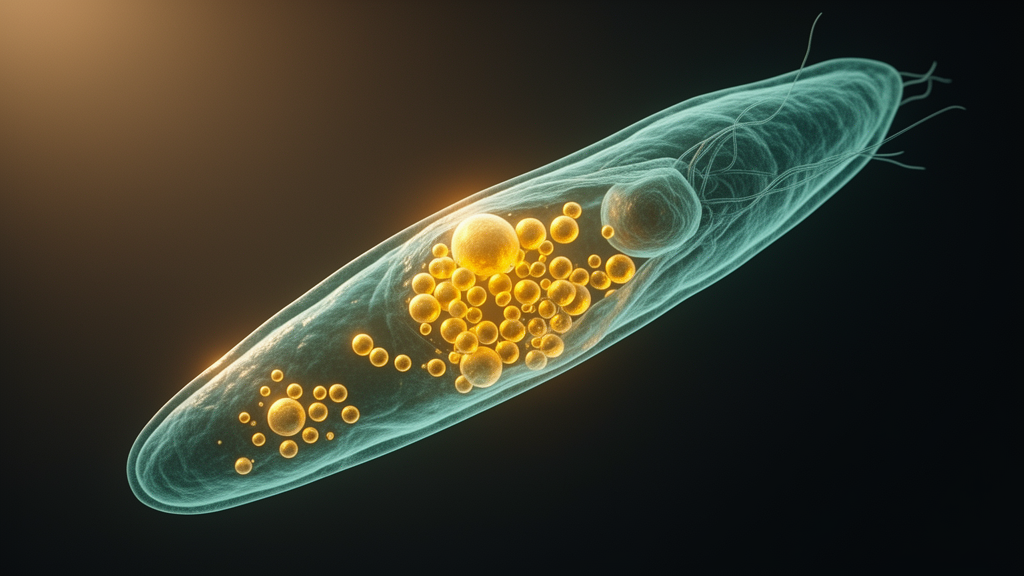
Researchers have carried out the first functional characterization of the lipid droplet kinase (LDK) in Trypanosoma cruzi, the parasite that causes Chagas disease. Using CRISPR/Cas9-mediated gene disruption in the Dm28c strain, the team generated LDK-null mutants and confirmed the deletion by PCR and quantitative real-time PCR. The study, published as an open access research article in Parasites & Vectors, examined how losing this kinase affects parasite growth, lipid droplet accumulation, drug susceptibility, oxidative stress tolerance, and the ability to infect host cells.
The results show that LDK is not essential for parasite survival under the conditions tested. However, the kinase clearly mattered for lipid droplet biology: knockout parasites accumulated significantly fewer lipid droplets after 96 hours of growth, with reductions of 42.1 to 45.5 percent relative to control parasites. Lipid droplets are dynamic organelles involved in lipid storage, energy metabolism, cellular signaling, and host–pathogen interactions, and in trypanosomatids LDK had previously been linked to lipid droplet biogenesis, but its role in T. cruzi had remained unknown.
Unexpectedly, the loss of LDK made the parasites more resistant to oxidative damage. When exposed to hydrogen peroxide, the knockout parasites showed 1.5 to 1.6-fold higher EC50 values than the parental line, meaning they tolerated the oxidative stressor at higher concentrations.
The most striking effect appeared during host cell infection. In assays with L929 fibroblasts, LDK-null parasites were markedly less infectious, producing approximately 49 percent fewer infected fibroblasts and 58 to 62 percent fewer intracellular amastigotes than control parasites. The authors conclude that although LDK is not required for parasite growth, it contributes to lipid droplet homeostasis, oxidative stress adaptation, and host cell infection. Because the work was carried out in the Dm28c strain under specific laboratory conditions, the findings describe the roles of LDK in this experimental system rather than establishing the kinase as a drug target, but the study expands understanding of lipid droplet-associated proteins in trypanosomatids and opens new questions about how lipid storage organelles support infection by the Chagas disease parasite.
Subject of Research: Functional characterization of the lipid droplet kinase in Trypanosoma cruzi using CRISPR/Cas9 gene disruption
Article Title: Lipid droplet kinase contributes to lipid droplet accumulation, oxidative stress response, and infectivity in Trypanosoma cruzi
Article References: Costa-Silva, H. M., Souza, L. C., Lima, D. A., Ribeiro, J. M., & Murta, S. M. F. (2026). Lipid droplet kinase contributes to lipid droplet accumulation, oxidative stress response, and infectivity in Trypanosoma cruzi. Parasites & Vectors. https://doi.org/10.1186/s13071-026-07740-3
Image Credits: AI Generated
DOI: 10.1186/s13071-026-07740-3
Keywords: Trypanosoma cruzi, Chagas disease, lipid droplet kinase, CRISPR/Cas9, lipid droplets, oxidative stress, benznidazole, infectivity, amastigotes, trypanosomatids, gene deletion, Parasites & Vectors
News Source: Juliet Wilcox. (October 28, 2026). Lipid droplet kinase shapes lipid storage, stress response, and infectivity in Chagas parasite. Scienmag.



