• HOME
  • NEWS
  • EXPLORE
    • CAREER
      • Companies
      • Jobs
    • EVENTS
    • iGEM
      • News
      • Team
    • PHOTOS
    • VIDEO
    • WIKI
  • BLOG
  • COMMUNITY
    • FACEBOOK
    • INSTAGRAM
    • TWITTER
Thursday, June 25, 2026
BIOENGINEER.ORG
No Result
View All Result
  • Login
  • HOME
  • NEWS
  • EXPLORE
    • CAREER
      • Companies
      • Jobs
        • Lecturer
        • PhD Studentship
        • Postdoc
        • Research Assistant
    • EVENTS
    • iGEM
      • News
      • Team
    • PHOTOS
    • VIDEO
    • WIKI
  • BLOG
  • COMMUNITY
    • FACEBOOK
    • INSTAGRAM
    • TWITTER
  • HOME
  • NEWS
  • EXPLORE
    • CAREER
      • Companies
      • Jobs
        • Lecturer
        • PhD Studentship
        • Postdoc
        • Research Assistant
    • EVENTS
    • iGEM
      • News
      • Team
    • PHOTOS
    • VIDEO
    • WIKI
  • BLOG
  • COMMUNITY
    • FACEBOOK
    • INSTAGRAM
    • TWITTER
No Result
View All Result
Bioengineer.org
No Result
View All Result
Home NEWS Science News Chemistry

Li-ion battery components to be printed on an inkjet printer

Bioengineer by Bioengineer
November 20, 2019
in Chemistry
Reading Time: 2 mins read
0
IMAGE
Share on FacebookShare on TwitterShare on LinkedinShare on RedditShare on Telegram

Researchers are developing a technology for printing the electrodes for miniature li-ion batteries by an inkjet printer.
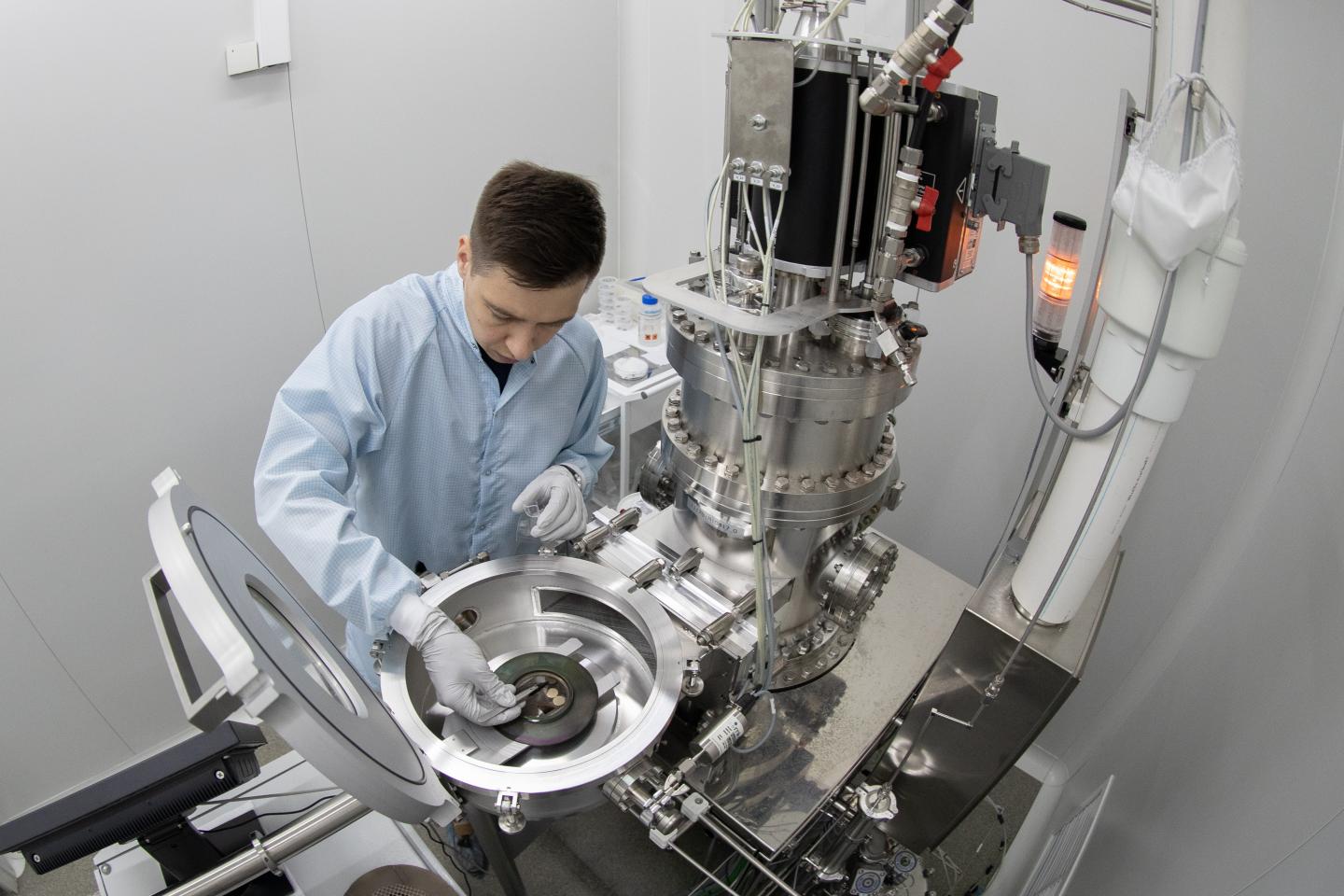
IMAGE

Credit: Peter the Great St.Petersburg Polytechnic University


Scientists from Peter the Great St.Petersburg Polytechnic University (SPbPU) are developing a technology for printing the electrodes for miniature li-ion batteries by an inkjet printer. The ongoing research may help to create power supplies for biosensors, wearable electronics, and other miniature devices. The results of the study are published in one of the leading scientific journals Energy Technology. The research was carried out with the financial support of the National Technological Initiative center of SPbPU and two Russian science foundation grants.

Li-ion batteries produced by a conventional technology, have a high energy density, meaning they can store a large amount of it in a small volume. Due to this property, they are often used for miniature devices, such as smartwatches, stylus pens and so on. Nowadays, the advancement in that field reached its technological limit, and a further reduction in size is challenging. Therefore, technology growth requires new approaches for manufacturing of batteries. Among other possible solutions are the methods used in the production of integrated circuits, as well as various printing methods that have an advantage in their high performance.

To print electrodes with the given characteristics, one needs to select the synthesis conditions, composition and viscosity of the printing solution, and the printing parameters (for example, the distance between the drops and the number of layers applied). It is a challenging task for specialists from different fields of science. Electrodes manufactured by inkjet printing, cannot provide a sufficiently high energy density compared to electrodes produced by traditional technology. The observed difference is due to the use of various materials, as well as the parameters of the manufactured electrodes – active layer density, the proportion of active material etc.

“To reduce the difference in energy density, we propose to use promising compounds based on lithium and manganese-enriched cathode material with an increased capacity,” said Maxim Maximov, the leading researcher of the “Synthesis of new materials and structures laboratory” of the Advanced Manufacturing Technologies Center of the National Technology Initiative (NTI) of Peter the Great St. Petersburg Polytechnic University.”We demonstrated the possibility of electrodes manufacturing with this material by inkjet printing. We have also found that the energy intensity of the material in the printed electrode and the electrode made by traditional technology are close”.

Using the synthesized active cathode material, the scientists prepared a stable colloidal solution and optimized its rheological parameters for inkjet printing. They selected the conditions for printing electrodes, conducted a study of the electrochemical properties of printed electrodes, confirming the prospects of using the proposed technological approach and the chosen composition of the cathode material. Soon, scientists plan to conduct research, that will provide a further increase in the energy intensity of the printed electrodes and the prototype of the li-ion battery.

###

Media Contact
Raisa Bestugina
[email protected]
7-812-591-6675

Related Journal Article

http://dx.doi.org/10.1002/ente.201901086

Tags: Algorithms/ModelsChemistry/Physics/Materials SciencesComputer ScienceElectromagneticsEnergy/Fuel (non-petroleum)Industrial Engineering/ChemistryMaterialsMechanical EngineeringPolymer Chemistry
Share12Tweet8Share2ShareShareShare2

Related Posts

AI and Physics Collaborate to Design Advanced Hydrogen Storage Materials

June 25, 2026

International Team Including Dresden Scientists Develops Novel Designer Proteins for Advanced Study of Living Tissue

June 25, 2026

New Study Uncovers Key Factors Driving Water Chemistry in Nanoscale Environments

June 25, 2026

Plasma Technology Extends Catalyst Lifespan in Hydrogen Production

June 24, 2026
Please login to join discussion

POPULAR NEWS

  • Saying Goodbye to PGY-6: Pediatric Fellowship Realities

    103 shares
    Share 41 Tweet 26
  • Multi-Hospital Study Reveals Long Covid Burden Is Twice as High as Current Estimates

    92 shares
    Share 36 Tweet 23
  • Detection of EDCs in Breast Milk and Infant Urine Up to Six Months Highlights Early Exposure Risks

    77 shares
    Share 31 Tweet 19
  • New Drug Candidate Developed at McMaster Shows Potential for Treating Brain Cancer

    58 shares
    Share 23 Tweet 15

About

We bring you the latest biotechnology news from best research centers and universities around the world. Check our website.

Follow us

Recent News

Tracking Lanthanide-Labeled Microplastics in Plants

POSTECH Researchers Slash Cost of Reconstituted Cell-Free Systems by 95%

AI and Physics Collaborate to Design Advanced Hydrogen Storage Materials

Subscribe to Blog via Email

Success! An email was just sent to confirm your subscription. Please find the email now and click 'Confirm' to start subscribing.

Join 82 other subscribers
  • Contact Us

Bioengineer.org © Copyright 2023 All Rights Reserved.

Welcome Back!

Login to your account below

Forgotten Password?

Retrieve your password

Please enter your username or email address to reset your password.

Log In
No Result
View All Result
  • Homepages
    • Home Page 1
    • Home Page 2
  • News
  • National
  • Business
  • Health
  • Lifestyle
  • Science

Bioengineer.org © Copyright 2023 All Rights Reserved.