


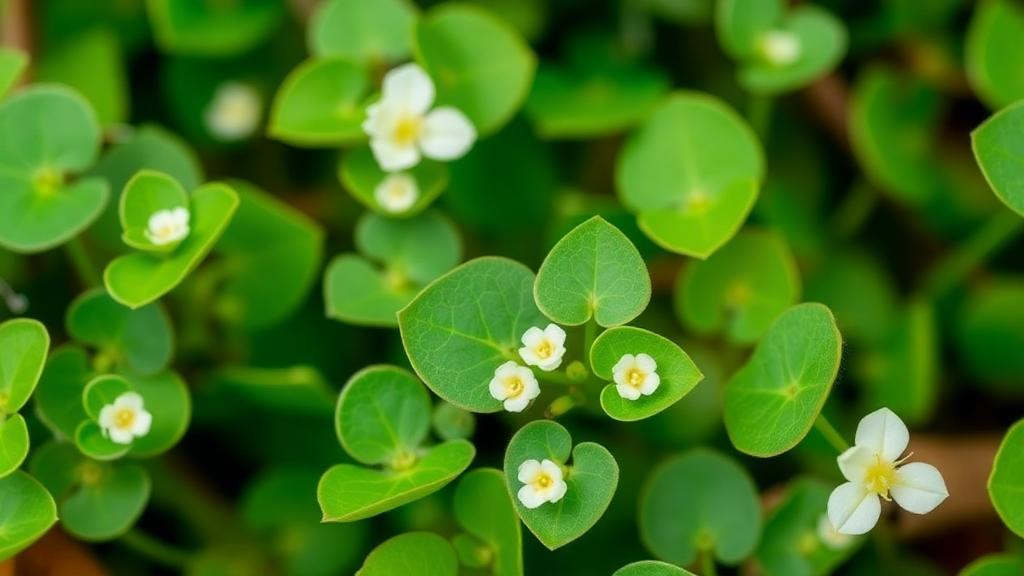
A little-studied wild plant from Egypt’s Bahariya Oases has delivered a striking set of laboratory results. Stellaria pallida, commonly called lesser chickweed, a flowering member of the Caryophyllaceae family, was extracted with four organic solvents of increasing polarity, and the methanol fraction emerged as the clear standout. In a new open-access study published in AMB Express, researchers report that the methanolic extract of the plant’s aerial parts carried the highest total phenolic content, the strongest radical-scavenging activity in two standard antioxidant assays, and the broadest antimicrobial effects against five reference microorganisms, including the yeast Candida albicans and several pathogenic bacteria.
The team, led by Mohamed T. Selim and colleagues, collected fresh aerial portions of S. pallida from a documented location in the Bahariya Oases, dried and powdered them, and ran successive Soxhlet extractions with chloroform, ethyl acetate, ethanol, and methanol at temperatures below each solvent’s boiling point. Methanol yielded the largest extract recovery at 8.57 grams per 100 grams of dried plant material, followed by ethanol, ethyl acetate, and chloroform. The authors interpret this gradient as a sign that the plant’s aerial tissues are rich in polar secondary metabolites, a profile consistent with what is known about other species in the genus Stellaria, which contains roughly 120 species distributed across temperate and cold-climate regions worldwide.
Quantitative phytochemical screening reinforced that picture. Using the Folin–Ciocalteu method calibrated against gallic acid, the researchers measured a total phenolic content of 58 ± 1.55 milligrams of gallic acid equivalents per gram of dry extract in the methanol fraction, well above the values recorded for ethanol (50.18 ± 1.29), chloroform (54.82 ± 1.01), and ethyl acetate (39.39 ± 1.23 mg GAE/g). Flavonoids told a slightly different story: the ethanol extract contained the most, at 27.22 ± 1.08 milligrams of quercetin equivalents per gram, while the methanol extract actually had the lowest flavonoid content of the four fractions at 19.80 ± 0.92 mg Qu/g. All assays were performed in triplicate, and differences among extracts were statistically significant at p < 0.05.
Chemical fingerprinting by gas chromatography–mass spectrometry identified 20, 11, 18, and 21 compounds in the chloroform, ethyl acetate, ethanol, and methanol extracts respectively, spanning fatty acids, esters, hydrocarbons, sterols, terpenoids, and alkaloids. The dominant constituents differed by solvent: prostaglandin A1-biotin (15.74 percent), 13-docosenamide (9.96 percent), and a tetrahydro-dimethoxy psi-carotene derivative (6.54 percent) led the methanol extract, while stigmasterol ranked prominently in the ethyl acetate fraction and n-hexadecanoic acid and chondrillasterol featured in the ethanol extract. High-performance liquid chromatography with diode-array detection then quantified twenty phenolic and flavonoid compounds in the methanol extract, with rutin the most abundant at 333.7 micrograms per gram, followed by chlorogenic acid (181.17 µg/g), ferulic acid (168.11 µg/g), apigenin-7-glucoside (143.08 µg/g), epicatechin (129.32 µg/g), and caffeic acid (117.56 µg/g).
Antioxidant performance tracked solvent polarity closely. In the DPPH radical-scavenging assay, all four extracts showed clear concentration-dependent activity, but none matched ascorbic acid, the positive control, which exceeded 90 percent scavenging at the maximum tested concentration of 500 micrograms per milliliter. The chloroform extract was weakest, rising from 19.3 ± 0.25 percent scavenging at the lowest dose to 64.9 ± 0.39 percent at the highest; ethyl acetate and ethanol climbed to roughly 70 and 71.4 percent respectively. The methanol extract approached ascorbic acid most closely, and the abstract reports IC50 values of 16.24 micrograms per milliliter for DPPH and 13.54 µg/mL for hydrogen peroxide scavenging, the best of all four fractions in both assays.
The antimicrobial screen used the agar well diffusion method against a panel of reference strains: Staphylococcus aureus ATCC 6538 and Bacillus subtilis ATCC 6633 as Gram-positive bacteria, Escherichia coli ATCC 11229 and Klebsiella pneumoniae ATCC 2146 as Gram-negative bacteria, and Candida albicans ATCC 10231 as a unicellular fungus. Every extract inhibited every organism to some degree, but potency varied significantly with both solvent and microbe. The methanolic extract produced the largest inhibition zones, from 16.4 ± 0.64 millimeters against K. pneumoniae up to 31.6 ± 0.46 mm against C. albicans, with strong showings against S. aureus (27.93 ± 0.84 mm) and E. coli (23.43 ± 0.51 mm). A two-way analysis of variance found highly significant effects of extract type, pathogen, and their interaction, with the model explaining 98.67 percent of the variability in zone diameters.
Minimum inhibitory concentrations, determined for the methanol extract across six serial dilutions in DMSO, confirmed the hierarchy of susceptibility. C. albicans was the most sensitive organism, inhibited at 6.25 milligrams per milliliter; S. aureus and B. subtilis required 12.5 mg/mL; and the Gram-negative species E. coli and K. pneumoniae needed 25 mg/mL. The authors are careful to characterize these values as indicative of moderate antimicrobial potency rather than clinical-grade efficacy, noting that crude extracts contain complex mixtures of active and inactive constituents that can dilute the apparent activity of individual molecules. They also acknowledge that agar diffusion is not the standardized quantitative benchmark; broth microdilution MIC testing, bioassay-guided fractionation, and work with purified compounds are needed for a fuller assessment.
To probe possible molecular underpinnings, the team ran in silico molecular docking with AutoDock Vina, testing the identified phenolics against five microbial proteins chosen for their biological relevance: the choline-binding protein OpuAC from B. subtilis, DNA gyrase from S. aureus, the NDM-1 beta-lactamase from K. pneumoniae, dihydrofolate reductase from E. coli, and the secreted aspartyl proteinase Sap1-like (candidapepsin) from C. albicans. Reference antibiotics were docked alongside: ampicillin against OpuAC, ciprofloxacin against gyrase, meropenem against NDM-1, trimethoprim against dihydrofolate reductase, and pepstatin A against candidapepsin. Several flavonoids outscored the reference ligands under this protocol. Quercetin dihydrate bound OpuAC at −9.4 kcal/mol versus ampicillin’s −6.5; chrysin led on S. aureus DNA gyrase at −6.5 kcal/mol versus ciprofloxacin’s −3.7; and apigenin-7-glucoside and epicatechin gallate each reached −10.2 kcal/mol against E. coli dihydrofolate reductase, surpassing trimethoprim’s −7.7. Against candidapepsin, apigenin-7-glucoside scored −9.4 kcal/mol, exceeding pepstatin A’s −7.6.
The authors repeatedly caution that these docking scores are predictive computational observations, not evidence of enzyme inhibition or antimicrobial mechanism. Binding affinities reflect molecular size, aromaticity, and functional group composition under the applied docking protocol, and favorable in silico scores can arise for ligands that never inhibit the target in a living cell. The study’s own framing is explicit: the docking results are hypothesis-generating and require confirmation through enzyme inhibition assays, target-binding studies, and other mechanistic experiments before any biological relevance can be claimed. Rutin and chlorogenic acid, highlighted in the abstract for strong binding affinities, should therefore be read as computational leads rather than proven active principles.
The broader limitations are equally candid. All bioactivity data come from in vitro assays on reference laboratory strains, not clinical or multidrug-resistant isolates, and the plant material represents a single collection from one location and harvesting period, so environmental and seasonal variation in phytochemistry remains unexplored. No cytotoxicity testing on normal mammalian cells was performed, meaning safety, selectivity, and effects on non-target cells are unknown, and no in vivo, pharmacokinetic, or clinical work has yet been done. Within those boundaries, the study positions lesser chickweed as a promising but preliminary source of natural antioxidant and antimicrobial chemistry, with methanol-soluble phenolics, particularly rutin and chlorogenic acid, as the compounds most worth isolating, validating, and testing in the stricter assays that must follow.
Subject of Research: Phytochemical screening, antioxidant and antimicrobial testing, and molecular docking of phenolic compounds from Stellaria pallida
Article Title: Bioactive screening and molecular docking of phenolics from Stellaria pallida
Article References: Selim, M. T., Elnosary, M. E., & El-Gwaid, F. S. A. (2026). Bioactive screening and molecular docking of phenolics from Stellaria pallida. AMB Express, 16(1), Article 93. https://doi.org/10.1186/s13568-026-02090-w
Image Credits: AI Generated
DOI: 10.1186/s13568-026-02090-w
Keywords: Stellaria pallida, lesser chickweed, phenolic compounds, antioxidant activity, antimicrobial activity, molecular docking, methanol extract, rutin, chlorogenic acid, HPLC-DAD, minimum inhibitory concentration, natural products
News Source: Gregory Coleman. (October 29, 2026). Lesser Chickweed Extracts Show Antioxidant and Antimicrobial Activity in Lab Screening. Scienmag.



