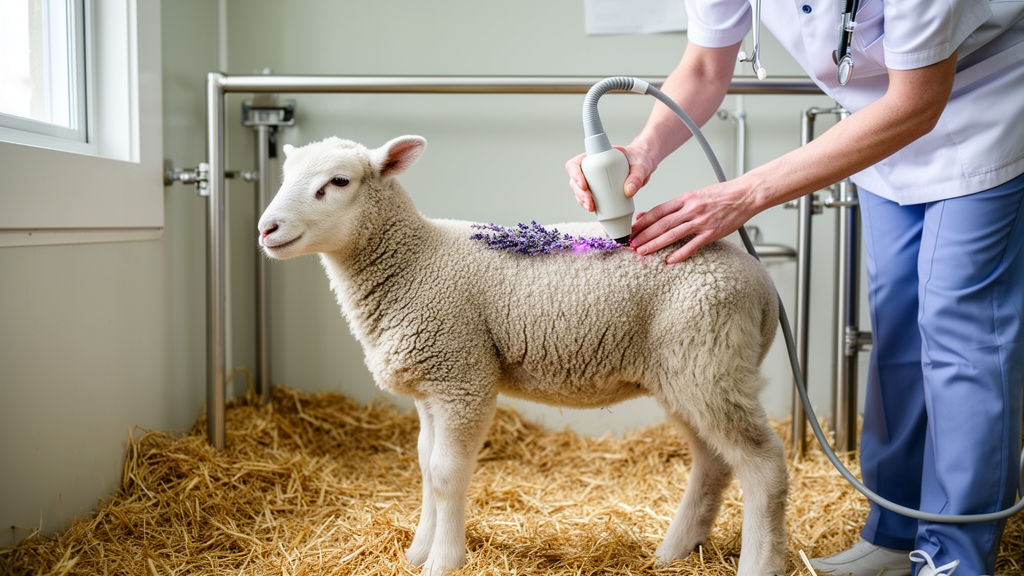
A controlled trial in young male Kangal Akkaraman lambs found that direct oral administration of lavender essential oil produced statistically significant changes in three fatty acids in muscle tissue but no significant improvement in growth, feed intake or feed efficiency. Across 56 experimental days, the animals received either no lavender oil, 1,000 mg per day or 2,000 mg per day. Both supplemented groups had higher proportions of cis-11-eicosenoic acid and arachidic acid and a lower proportion of cis-10-heptadecenoic acid than controls. The researchers described these as selective shifts in individual long-chain lipid fractions rather than evidence of an overall improvement in meat nutrition.
The experiment was published in Animal Breeding and lasted 63 days, including seven days of acclimatisation followed by 56 days of treatment. It involved 36 male Kangal Akkaraman lambs that were 12 weeks old at the start and had a mean initial body weight of 27.26 ± 3.06 kg. Using a randomised complete block design based on initial body weight, the researchers assigned 12 lambs to each of three groups. The animals had no statistically significant baseline differences among the groups. Each lamb was housed in an individual pen measuring 1.2 m × 1.5 m and fitted with an individual feed trough and automatic drinker, allowing feed consumption and feed-conversion ratio to be calculated for each animal.
All three groups received the same basal lamb-growing ration and alfalfa hay ad libitum. The control group received 0 mg of lavender oil per animal per day, the Lav1000 group received 1,000 mg, and the Lav2000 group received 2,000 mg. The doses were administered as a single daily oral dose before morning feeding, between 08:30 and 10:00, using a graduated syringe. The same trained operator handled dosing throughout the experimental period. Commercial Lavandula angustifolia Mill. subsp. angustifolia essential oil was used, and its chemical composition was characterised by gas chromatography–mass spectrometry. Direct individual dosing was chosen to provide precise control of each lamb’s intake and avoid possible palatability effects from adding an aromatic oil to the feed.
Performance was assessed through initial and final live weights, total live-weight gain, average daily gain, daily feed intake and feed-conversion ratio. Following the initial weighing on day zero, the lambs were weighed individually every 14 days during the experimental period. Daily feed intake was determined by subtracting refused feed from the total offered, and feed-conversion ratio was calculated as daily feed intake divided by daily live-weight gain. At the end of treatment, the researchers also collected blood for serum biochemical analysis. Muscle fatty-acid composition was examined in six randomly selected lambs from each group, using samples from the Musculus longissimus dorsi.
None of the measured performance outcomes differed significantly among the groups. Initial and final body weights, average daily live-weight gain, daily feed intake and feed-conversion ratio all had p-values greater than 0.05. Final weight and average daily gain were numerically higher in the 1,000 mg group than in the control group, but the analysis did not identify these differences as statistically significant. The result therefore does not establish that either dose had no effect, nor does it demonstrate improved growth; it shows that this 63-day trial detected no statistically significant benefit for those performance measures under its specific conditions.
Serum analysis detected significant group differences in only two measured parameters, amylase and alkaline phosphatase. No statistically significant treatment effects were found for glucose, total protein, albumin, globulin, the albumin-to-globulin ratio, blood urea nitrogen, creatinine, alanine aminotransferase, aspartate aminotransferase, gamma-glutamyl transferase, creatine kinase, total bilirubin, phosphorus, magnesium, calcium, total cholesterol, triglycerides, high-density lipoprotein cholesterol or low-density lipoprotein cholesterol. Mean triglyceride and low-density lipoprotein cholesterol concentrations were numerically lower in the two lavender-supplemented groups than in controls, but those comparisons were not statistically significant, with reported p-values of 0.158 and 0.695. The lower values cannot therefore be interpreted as a lipid-lowering effect or as evidence of improved metabolic health.
The interpretation of the blood results is constrained by the absence of blood samples collected before treatment began. Without pretreatment baseline values, the study could not determine whether small post-treatment differences reflected responses to lavender oil or ordinary biological variation. The trial also did not measure ruminal fermentation, including volatile fatty acids or ammonia nitrogen, and it did not quantify antioxidant biomarkers. Although serum alanine and aspartate aminotransferase were measured, enzyme activities directly relevant to hepatic cholesterol biosynthesis were not evaluated. Proposed links between lavender compounds, ruminal processes and lipid metabolism therefore remained untested, rather than demonstrating a mechanism in these lambs.
Muscle composition supplied the clearest measured differences. Relative to controls, the Lav1000 and Lav2000 groups had significantly higher proportions of cis-11-eicosenoic acid, C20:1c11, and arachidic acid, C20:0, and significantly lower proportions of cis-10-heptadecenoic acid, C17:1c10. Gas chromatography with flame-ionisation detection was used to identify fatty-acid methyl esters extracted from homogenised longissimus dorsi tissue. Peaks were matched with an authentic 37-component fatty-acid methyl ester standard, and each fatty acid was expressed as a percentage of total identified fatty acids. The statistical analysis used one-way analysis of variance followed by Duncan’s multiple-comparison test, with p < 0.05 considered significant.
The three altered fractions do not constitute a broad shift in the meat’s fatty-acid matrix. Cis-11-eicosenoic acid is a monounsaturated fatty acid, whereas arachidic acid is a long-chain saturated fatty acid, so the increase in arachidic acid was not characterized as nutritionally favourable. The authors also reported that no detrimental shifts occurred in individual or total fatty-acid concentrations. Instead, they interpreted the results as evidence that lavender oil may exert a localized or minor influence on ruminal biohydrogenation kinetics or on fatty-acid incorporation into muscle. The practical nutritional and sensory consequences of the observed changes remain limited and require additional research.
Ruminant microorganisms extensively biohydrogenate dietary unsaturated fatty acids before absorption, and essential-oil compounds may influence organisms involved in that process. Lavender oil contains monoterpenes including linalool and linalyl acetate, which have been investigated in other contexts for antimicrobial and metabolic effects. In this lamb trial, however, the researchers did not measure microbial populations, volatile fatty acid production, nitrogen partitioning or direct biohydrogenation rates, and they did not examine tissue-specific gene expression. The observed composition changes establish an association between oral lavender treatment and selected muscle fatty acids, not a confirmed digestive or molecular pathway. Future work incorporating ruminal sampling and direct fermentation measurements would be needed to determine whether the shifts are reproducible and biologically meaningful.
Overall, direct administration of lavender essential oil at 1,000 or 2,000 mg per lamb per day did not produce statistically significant changes in growth performance, feed intake or feed conversion during the treatment period. Most measured serum biochemical parameters also did not differ significantly among groups, while amylase and alkaline phosphatase did. The selective muscle-fatty-acid changes show that lavender oil can affect tissue lipid composition under the study conditions, but they do not demonstrate better animal performance or nutritionally improved meat. The conclusions are bounded by a population of 36 male lambs from one breed, a nine-week experimental phase, six animals per group for the tissue analysis, no pretreatment blood measurements and no direct ruminal assays. These results support further investigation of dose, delivery method and metabolic effects, while providing no direct evidence of a health benefit in humans or animals.
Subject of Research: Effects of orally administered lavender essential oil on growth, serum biochemistry and muscle fatty acids in Kangal Akkaraman lambs
Article Title: Effects of oral administration of lavender (Lavandula angustifolia) essential oil on growth performance, serum biochemistry and muscle fatty acid profile in Kangal Akkaraman lambs
Article References: Özbilgin, A., Toprak, H. İ., & Kayir, Ö. (2026). Effects of oral administration of lavender ( Lavandula angustifolia ) essential oil on growth performance, serum biochemistry and muscle fatty acid profile in Kangal Akkaraman lambs. Archives Animal Breeding, 69(4), 595-603. https://doi.org/10.5194/aab-69-595-2026
Image Credits: AI Generated
Keywords: lavender essential oil, Kangal Akkaraman lambs, animal nutrition, growth performance, feed conversion, serum biochemistry, muscle fatty acids, rumen biohydrogenation, small ruminants, livestock science, Effects, oral
News Source: Drew Townsend. (October 22, 2026). Lavender oil shows selective muscle-fat shifts, no significant growth gain in lambs. Scienmag.