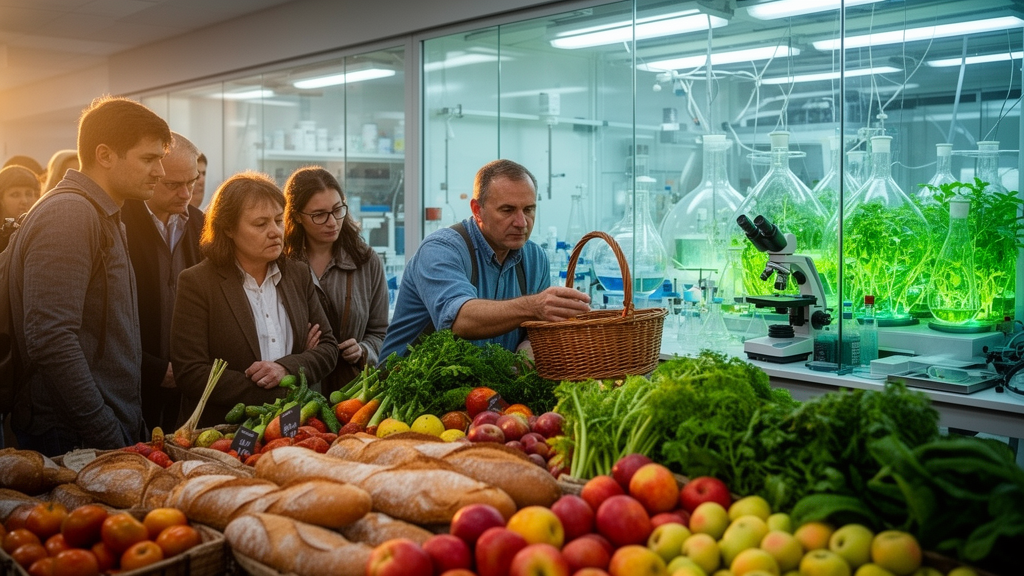
A structured review of two decades of research concludes that people in Poland are generally more receptive to agricultural biotechnology when it is used for medicine, environmental remediation or industrial purposes than when it is connected with food, feed or crop cultivation. The evidence points to a recurring divide: awareness of terms such as genetically modified organisms and new genomic techniques is relatively common, but understanding of what those technologies do, where they are used and how they are regulated remains thin. The review found only one eligible Polish study directly examining public perceptions of new genomic techniques, or NGTs, and that survey included 194 respondents. With only 12 original studies covering biotechnology broadly, the authors caution that the available evidence cannot yet support a comprehensive or definitive account of Polish acceptance.
The authors searched the Scopus and Web of Science databases in June 2026 for English- and Polish-language original research linking Poland with public acceptance, opinion or perception of biotechnology, GMOs and NGTs. Their search returned 81 records. After 41 duplicates were removed, 40 unique records were screened; 28 did not meet the predefined criteria, leaving 12 studies for qualitative thematic analysis. The reviewed research covered 2005–2025 and surveyed the general public, consumers, students, farmers, scientists and agricultural advisers. Sample sizes ranged from 30 to 1,950, while methods included questionnaires, interviews and focus groups. This variety gave the review a broad view of attitudes but also limited direct comparisons, because populations, questions and measurements differed substantially.
One of the clearest knowledge gaps concerned genome editing. In the single study identified on NGTs, more than half of the 194 participants had encountered the term, yet few could define it correctly and nearly half said they had never heard of it before. Respondents also had incomplete knowledge of the legal status and market availability of products made with NGTs. Knowledge of GMOs was similarly uneven. In a survey of 1,021 Polish citizens, less than half could correctly define the term, although many wanted more information. Another study of 699 respondents found some improvement in GMO knowledge over time, suggesting that familiarity has increased without producing a comprehensive understanding of biotechnology’s applications or its regulatory framework.
Public opinion becomes markedly more sceptical when genetic modification is placed directly on the dinner table. In a survey of 1,008 Polish citizens, more than half supported banning the production and sale of transgenic food. Sixty-two percent believed food from animals fed with GM feed could harm human health, and more than half wanted restrictions on GM feed even if those restrictions increased the cost of milk, eggs and poultry. Only about one-third regarded cultivation of genetically modified crops in Poland as desirable for food and feed security. In another survey of 1,021 citizens, approximately 60% opposed producing and distributing GM food, citing possible health effects such as cancer and allergies, as well as environmental concerns.
Perceived benefits could increase support, but they did not usually overcome the dominant risk and safety concerns attached to food. Improved nutritional value attracted the strongest consumer response among the product attributes examined, although only about one-third of respondents in the 1,008-person survey said they would buy transgenic food with such advantages. Farmers also remained skeptical: in a study of 128 farmers, only 24% considered GM cultivation economically beneficial for their own farms, while almost half could not assess the financial consequences. Nearly 64% opposed importing GM soybeans and maize for feed. Yet these farmers recognized potential gains from higher yields, resistance to pests and diseases and lower production costs, showing that perceived advantages and perceived disadvantages could coexist.
Support rose when the same technologies were associated with purposes that did not directly involve food consumption. Biotechnology applications in environmental remediation and wastewater treatment received the highest backing in the 1,008-person survey, while research connected with vaccines and medicines was also viewed more favorably than agricultural applications. Scientists in one qualitative study were generally more supportive of GM technologies used in medicine, pharmaceuticals and industrial production, although their views of GM food and feed remained divided. Biofuel production was also among the more accepted non-food uses. These contrasts indicate that opposition cannot be interpreted as a simple rejection of genetic manipulation itself. Acceptance appears tied to the visible purpose of an application and to whether its benefits seem concrete while its risks seem remote.
Trust was another major influence. Polish respondents in several studies regarded scientists and teachers as more reliable sources of biotechnology information than companies or media reports. In a survey of 500 secondary-school graduates, 64% described reports about the benefits of GM crops as untrustworthy, while nearly 70% expressed distrust of GM food. Qualitative interviews linked biotechnology companies with commercial interests that were thought to shape information and undermine confidence in safety. The reviewed evidence also showed strong demand for public control: approximately three-quarters of respondents in the 1,008-person study wanted biotechnology and genetic-engineering research and applications regulated by public authorities. Mandatory labelling drew similar support, with many consumers seeking detailed information about genetically modified ingredients.
Transparency alone did not necessarily determine purchasing behaviour. In the study of 699 respondents, nearly 54% said they did not consider GMO information on labels when making purchases. A four-country survey of 1,950 consumers found that Polish participants were especially likely to regard GMO-free labels as a health signal and relatively willing to pay a premium for them. These results distinguish two forms of acceptance: the desire for oversight and transparent information, and the practical choice of whether to buy a labelled product. Consumer trust may therefore be shaped by more than the presence of a label, including whether the regulatory system, communicating institutions and product claims are regarded as credible.
Demographic and occupational differences added to the complexity, although the findings were not uniform. Women more often associated GM food with health risks, while men more often emphasized agricultural advantages such as pest resistance. Younger respondents were generally more supportive of GM crop cultivation: 61% of people aged 20–35 held favorable attitudes, compared with 14% of those aged 60 or older. Higher education was associated in one study with greater willingness to use NGT-derived products, but another found only minor educational differences in support for transgenic food. Students were more positive than consumers, farmers were the most skeptical stakeholder group, and scientists were generally more supportive. The review’s central conclusion is therefore not that any single group holds a uniform view, but that knowledge, values, trust, perceived control and the application’s purpose interact to shape acceptance.
Against this backdrop, proposed European rules for genome-edited plants may alter what consumers see on the market without necessarily changing underlying attitudes. The review notes that a 2023 European Commission proposal established separate pathways for NGT plants. Plants meeting specified criteria could be treated as conventional and exempt from GMO risk assessment, while others would remain subject to existing GMO authorization, detection and monitoring requirements. The authors emphasize that legal change alone is unlikely to resolve public uncertainty because confidence also depends on transparent and legitimate governance. The evidence instead points to a need for direct, evidence-based communication involving scientists, policymakers, industry representatives and consumers, together with longitudinal and theory-driven studies that can separate effects of knowledge, trust and values. For now, the most defensible conclusion is that Poland’s biotechnology debate is driven less by resistance to one method than by how each application is presented, regulated and understood.
Subject of Research: Public perceptions and acceptance of agricultural biotechnology in Poland
Article Title: Public perception and acceptance of biotechnology in agriculture: insights from Poland
Article References: Ewa, W.-G., & Agata, T. (2026). Public perception and acceptance of biotechnology in agriculture: insights from Poland. Frontiers in Bioengineering and Biotechnology, 14, Article 1983759. https://doi.org/10.3389/fbioe.2026.1983759
Image Credits: AI Generated
DOI: 10.3389/fbioe.2026.1983759
Keywords: agricultural biotechnology, genetically modified organisms, new genomic techniques, public acceptance, Poland, genome editing, food safety, risk perception, institutional trust, consumer attitudes, Public, perception
News Source: Gregory Coleman. (October 22, 2026). Polish Scepticism Targets Food, Not Biotechnology Itself. Scienmag.