An open-source application called Pore Segmentation Suite lets researchers compare 14 methods for identifying pores in natural-stone surface images, extract dominant colour palettes, quantify treatment-related colour changes, and assemble publication-ready figures within one browser-based interface. Its demonstration reveals why a single image can yield strikingly different porosity estimates: applied to the same salt-aged travertine surface, 12 setup-free algorithms returned values ranging from 0.25% to 23.2%. The result is not a claim that one method is universally correct, but evidence that algorithm choice, thresholds and recorded parameters must accompany every image-derived measurement if results are to be reproducible.
The software was developed for porous building stones, including travertine, whose deterioration can be influenced by water, salt crystallization and freeze-thaw exposure. Pore Segmentation Suite is a modular Python program built with Streamlit and runs locally in a user’s browser, retaining the loaded image and intermediate results in session memory as users move between its four operating modes. Its backend separates segmentation, pore statistics, colour science, ageing analysis, method comparison, collage construction, filters, palette management, presets, internationalization and utilities. Core image processing relies on scikit-image and OpenCV, while clustering, statistics, numerical calculations and tables use scikit-learn, SciPy, NumPy and Pandas.
The segmentation module spans five families of methods. Classical approaches include Sauvola adaptive thresholding, Multi-Otsu and six histogram-based automatic thresholds. Blob and region detectors include Difference of Gaussians, Maximally Stable Extremal Regions, Bottom-Hat morphology, the Frangi vesselness filter and Watershed. Colour-based methods use CIELAB distance to a pore palette or a Gaussian mixture model, while two hybrid approaches intersect Difference of Gaussians or MSER masks with colour-distance masks. Optional foundation-model modules add Meta’s Segment Anything Model 2, including a prompted workflow, and Cellpose or Cellpose-SAM. Shape and texture filters can suppress small or otherwise implausible detections, and overlays can be adjusted for light or dark stones.
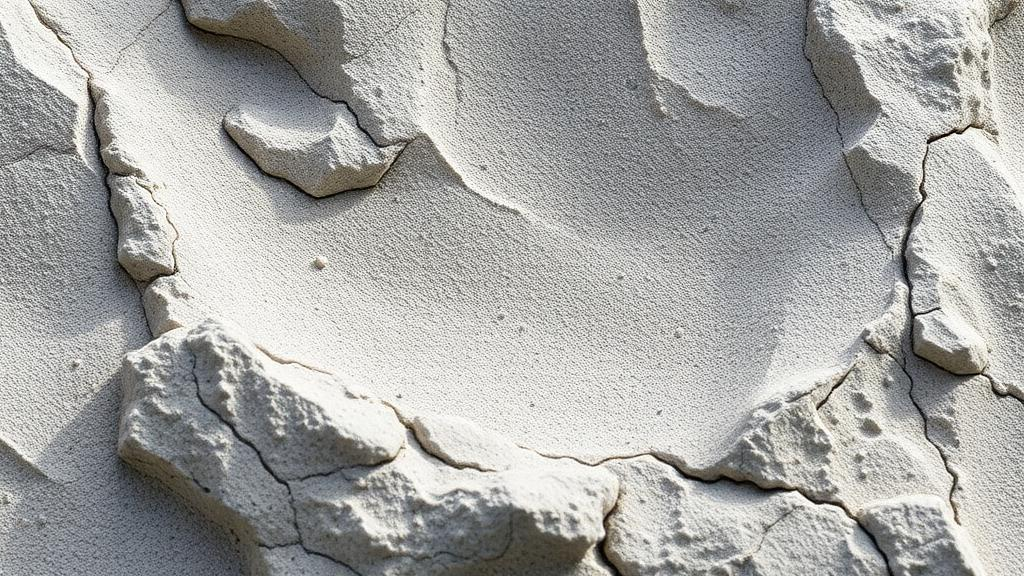
A particularly striking result emerged when the researchers applied the setup-free algorithms to Karaman travertine specimen KT-A1 after 15 cycles of sodium sulfate crystallization. Image porosity was 1.13% with Sauvola, 0.84% with Multi-Otsu, 2.43% with automatic thresholding, 4.36% with Difference of Gaussians, 2.38% with MSER, 8.22% with Bottom-Hat, 7.24% with Frangi and 23.20% with Watershed. Colour Distance and both colour hybrids each returned 0.25%, while the Gaussian mixture model returned 5.98%. Pore counts ranged from 105 to 2,360, and median processing times on the reference platform ranged from 88 milliseconds for Multi-Otsu to 1,958 milliseconds for Frangi.
The discrepancies persisted when the methods were tested across 12 travertine specimens, three from each of four stone types. The mean range among methods was 8 to 36 percentage points, depending on the specimen. A two-way decomposition of log-transformed porosity attributed 62% of the variance to algorithm and 14% to specimen; removing three palette-based methods that frequently produced identical masks reduced those shares to 51% and 12%. Fixed-percentile detectors were more stable across stones, with coefficients of variation from 0.06 to 0.13, whereas content-adaptive algorithms produced coefficients from 0.43 to 1.62. The authors emphasize that fixed-percentile methods locate candidate pores but do not constitute calibrated volumetric porosity measurements.
Foundation models behaved differently again. SAM 2 in generic “segment everything” mode returned one mask on KT-A1, leaving no candidate pores after a 1% size filter. The software therefore uses a prompted mode in which Sauvola candidates serve as point prompts and SAM 2 delineates individual pores. This approach followed Sauvola’s specimen ranking closely, with a Spearman correlation of 0.92, but produced fewer, smoother regions and took about three minutes per image on a two-core processor, compared with no more than two seconds for the classical methods in the benchmark. Zero-shot Cellpose-SAM recovered only the largest pores and detected none in the NT specimens, illustrating that the availability of a pretrained model does not remove the need to evaluate its behaviour for a particular material and imaging scale.
Accuracy testing against manual annotation set firm limits on what surface images can establish. Researchers selected 16 crops at random, including travertine, Cappadocian tuff and basalt samples, but pores in the Gül Kurusu tuff and basalt could not be delineated at the available resolution, leaving 11 usable crops. Two annotators achieved a Dice coefficient of 0.52, with a 95% confidence interval of 0.48 to 0.58, showing that pore boundaries themselves were uncertain. MSER had the highest mean Dice score at 0.35, although no pairwise algorithm difference survived correction across all 55 comparisons. Predicting each crop from the mean porosity of the others produced an error of 1.2 percentage points, which no algorithm improved upon; prompted SAM 2 was closest at 1.4 points.
The evaluation also showed that a simple rule marking the darkest 2% of pixels reached a mean Dice coefficient of 0.39 and tracked differences among crops better than the trained or engineered algorithms. At 0.128 millimetres per pixel, many annotated pores were therefore chiefly the darkest pixels in the image. Pores smaller than about 0.4 millimetres were unresolved, and the palette-based methods under-segmented travertine, with precision of 0.61 to 0.65 and recall of 0.14 to 0.17. These results do not certify any algorithm as universally superior. Instead, they show that image-derived porosity is a reproducible surface indicator whose value depends on image resolution, segmentation logic, stone appearance and the method parameters recorded with the result.
The software’s ageing module compares paired pre- and post-treatment images in CIELAB space and reports lightness, chromatic coordinates and chroma and hue differences alongside ΔE-76, ΔE-94 or CIEDE2000. For six Antalya Noche specimens exposed to 15 salt-crystallization cycles in potassium chloride solution, mean ΔE-2000 was 0.94 ± 0.72, with a median of 0.60. Only specimen NT-D2 exceeded the cited acceptability threshold of 1.8, while the group result was statistically indistinguishable from the cited perceptibility threshold of 0.8. These thresholds were derived for dental ceramics, however, and image-derived differences were about half the magnitude of readings from a contact colorimeter in the author’s comparison, although their rankings across 16 stone-and-salt groups were similar, with a Spearman correlation of 0.90.
That limitation is built into the interpretation engine, which reports threshold positions only when statistical testing supports them and allows users to substitute material-specific thresholds. It selects a paired t-test or Wilcoxon signed-rank test according to a Shapiro-Wilk normality check and reports confidence intervals and Cohen’s d for multi-specimen comparisons. The final collage builder can combine segmentation panels, time series and stone-by-salt matrices into single- or double-column layouts for several journal families, with output in PNG, PDF, SVG or TIFF at up to 600 DPI. The broader goal is not to replace standardized measurements such as EN 1936 open porosity or instrument-based colourimetry, but to consolidate transparent image analysis and make methodological sensitivity visible.
Pore Segmentation Suite is released under an MIT licence, with source code on GitHub and stable releases archived on Zenodo with citable identifiers. Its automated test suite contains 156 tests run on Linux, Windows and macOS, checking CIEDE2000 calculations against reference pairs, ageing statistics against independent SciPy calls and classical segmentation against synthetic surfaces with known pore masks. Reproduction scripts regenerate the paper’s tables and figures while recording image checksums, parameters and library versions. The current implementation remains two-dimensional, and the scanner’s nominal colour profile has not been characterised. Planned developments include three-dimensional microtomography, acquisition with colour targets, domain-specific U-Net transfer learning, MicroSAM for electron micrographs and batch processing, reflecting the project’s broader ambition to make reproducible, auditable analysis easier for the study of porous natural materials.
Subject of Research: Open-source image analysis for pore segmentation and colour characterization of porous natural stone
Article Title: Pore Segmentation Suite: an open-source, interactive, multi-method tool for pore segmentation and colour characterization
Article References: Sert, M. (2026). Pore Segmentation Suite: an open-source, interactive, multi-method tool for pore segmentation and colour characterization. SoftwareX, 36, Article 103140. https://doi.org/10.1016/j.softx.2026.103140
Image Credits: AI Generated
DOI: 10.1016/j.softx.2026.103140
Keywords: porous stone, pore segmentation, travertine, image porosity, colour analysis, salt crystallization, foundation models, reproducible research, open-source software, Pore, Segmentation, Suite
News Source: Denise Maddox. (October 22, 2026). Open-source suite exposes how algorithms change porous-stone measurements. Scienmag.