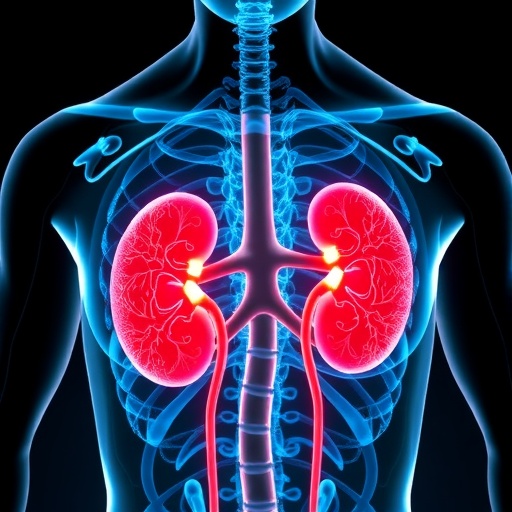
In a groundbreaking development set to redefine the approach to chronic disease management, the American Heart Association (AHA) and the American College of Cardiology (ACC), in conjunction with other leading medical entities, have unveiled the inaugural clinical practice guideline focused on the cardiovascular-kidney-metabolic (CKM) syndrome. This syndrome encapsulates a multifaceted interplay among cardiac, renal, and metabolic dysfunctions, cumulatively exacerbating risks for severe complications including Type 2 diabetes, chronic kidney disease, and cardiovascular morbidity and mortality. The new guideline is a clarion call to the medical community, underscoring the necessity of early detection, nuanced risk stratification, and integrated therapeutic strategies to halt or reverse disease progression.
CKM syndrome arises from the convergence of several interrelated pathological processes affecting heart, kidney, and metabolic pathways. Its multifactorial nature challenges traditional organ-specific approaches, requiring a holistic framework for diagnosis and management. Nearly 90% of adults in the United States bear at least one risk factor linked to CKM syndrome, such as overweight or obesity, hypertension, dyslipidemia, impaired glucose regulation, or diminished renal function. The staggering prevalence underscores the urgency for clinicians to adopt the new paradigm articulated in the guideline that facilitates staged assessment and tailored interventions.
Central to this guideline is the delineation of four distinct stages of CKM syndrome, each correlating with escalating severity and risk burden. Stage 1 identifies individuals exhibiting overweight or obesity and prediabetes in the absence of overt metabolic, renal, or cardiovascular disease. This early phase emphasizes the critical window for preventive lifestyle modifications. Stage 2 encompasses individuals presenting with one or more metabolic risk factors or non-cardiovascular kidney disease, distinguishing a cohort that remains free from clinical cardiovascular disease yet requires vigilant monitoring and intervention. Progressing to Stage 3, patients showcase subclinical cardiovascular abnormalities or are characterized by highly elevated risk profiles via validated predictive tools, indicating a transition towards overt organ involvement. Stage 4 comprises patients with established cardiovascular disease complicated by metabolic derangements or nephropathy, necessitating comprehensive management to mitigate adverse outcomes.
To refine risk quantification, the guideline introduces the Predicting Risk of Cardiovascular Disease Events (PREVENT) equations. This advanced predictive model incorporates metabolic and renal parameters in addition to traditional cardiovascular risk factors, enhancing precision in estimating the individual’s 10- and 30-year cardiovascular event probability. This methodological advancement informs personalized treatment stratagems, facilitating dynamic adjustments based on evolving risk profiles and therapeutic responses. Furthermore, the guideline prioritizes screening for social determinants of health, recognizing variables such as food insecurity, housing instability, and financial hardship as pivotal modulators of CKM syndrome risk and treatment adherence.
Therapeutic recommendations are comprehensive, advocating for an integrated, multidisciplinary approach centered on lifestyle optimization. Emphasis is placed on adherence to the AHA’s Life’s Essential 8 framework, encompassing regular physical activity, nutritional excellence, maintenance of healthy body weight, stringent control of blood pressure, glucose, and cholesterol levels, abstention from tobacco, and ensuring sufficient high-quality sleep. These foundational pillars serve not only to prevent CKM onset but also to arrest or reverse its progression. Complementing lifestyle interventions, pharmacologic therapies are delineated, with novel incorporation of glucagon-like peptide-1 receptor agonists (GLP-1 RAs) exemplifying innovative treatments targeting weight reduction and glycemic control, thereby mitigating cardiovascular risks in select patients.
Moreover, the guideline recognizes the therapeutic role of sodium-glucose cotransporter-2 (SGLT2) inhibitors, appreciating their dual renal and cardiovascular protective effects elucidated in recent clinical trials. The inclusion of metabolic and bariatric surgery is positioned as a viable modality for appropriate candidates, reflecting emerging evidence of its efficacy not only in weight management but also in ameliorating metabolic dysregulation and improving cardiovascular and renal outcomes. This multidimensional approach underscores the necessity for coordinated clinical care pathways involving cardiologists, nephrologists, endocrinologists, and primary care providers to optimize patient outcomes.
The unveiling of this guideline marks a paradigm shift in the conceptualization of chronic disease, dissolving traditional silos between cardiovascular, renal, and metabolic specialties. It advocates for early comprehensive screening using both biochemical and social indices, fostering personalized prevention strategies. The guideline’s release coincides with alarming statistics indicating 40% of U.S. adults and 21% of children and adolescents meet the criteria for obesity, a principal driver of CKM syndrome. By positioning obesity and its metabolic sequelae at the epicenter of CKM risk, the guideline propels a renewed focus on preventive cardiometabolic health.
The authors emphasize that CKM syndrome’s progression is neither inevitable nor irreversible. This conviction galvanizes the incorporation of staging to guide therapeutic intensity and timing, emphasizing interventions that can stabilize, delay progression, or even effect regression in early stages. This comprehensive framework facilitates nuanced clinician decision-making, balancing intervention benefits against patient-specific factors and social determinants, thus enabling optimized resource allocation and personalized care.
By deploying the PREVENT model alongside lifestyle and pharmacological intervention recommendations, the guideline equips clinicians to integrate emerging scientific insights into everyday practice. It challenges healthcare systems to prioritize early detection, enhance patient education, and adopt an integrative approach that transcends organ-centric barriers. This is poised to translate into tangible clinical benefits, including the reduction of heart attacks, strokes, kidney failure, and premature mortality.
The guideline’s development was a robust collaborative effort, involving the American Diabetes Association, the American Diabetes Association Obesity Association, and the American Society of Nephrology, reflecting the interdisciplinary nature of CKM syndrome. Such collaboration reinstates the imperative for coordinated research and clinical endeavors across medical specialties to tackle convergent chronic diseases holistically. As the guideline disseminates through official journals Circulation and JACC, it will likely serve as a catalyst for evolving clinical cardiac, renal, and metabolic care paradigms worldwide.
In conclusion, the new AHA/ACC guideline on cardiovascular-kidney-metabolic syndrome represents a seminal advancement highlighting the interconnected nature of these chronic conditions. By introducing a staged approach anchored in precision risk assessment, social determinants screening, lifestyle intervention, and innovative therapeutics, it sets a new standard for clinical practice designed to arrest the burgeoning burden of CKM syndrome. The integration of this guideline into clinical workflows promises to reshape disease prevention and management at a population level, potentially curbing the increasing global tide of cardiovascular and metabolic morbidity and mortality.
Subject of Research: Cardiovascular-Kidney-Metabolic Syndrome (CKM Syndrome), its prevention, detection, evaluation, and management.
Article Title: 2026 AHA/ACC/ADA/ASN Guideline for the Prevention, Detection, Evaluation, and Management of Cardiovascular-Kidney-Metabolic Syndrome: A Report of the American College of Cardiology/American Heart Association Joint Committee on Clinical Practice Guidelines
News Publication Date: June 9, 2026
Web References:
American Heart Association Circulation Article: 10.1161/CIR.0000000000001453
American College of Cardiology JACC Article: https://www.jacc.org/doi/10.1016/j.jacc.2026.03.056
Keywords: Cardiovascular disease, Chronic kidney disease, Metabolic syndrome, Obesity, Type 2 diabetes, Hypertension, Dyslipidemia, CKM syndrome, GLP-1 receptor agonists, SGLT2 inhibitors, Predictive risk modeling, Multidisciplinary care.
Tags: cardiovascular and renal disease interplaycardiovascular-kidney-metabolic syndrome guidelinesCKM syndrome prevalence and risk factorsearly detection of CKM syndromeholistic diagnosis of multisystem diseasesintegrated chronic disease managementmanaging type 2 diabetes with CKMmetabolic dysfunction and heart diseasemultidisciplinary approach to CKM syndromeobesity hypertension and CKM syndromerisk stratification in CKMtherapeutic strategies for CKM syndrome