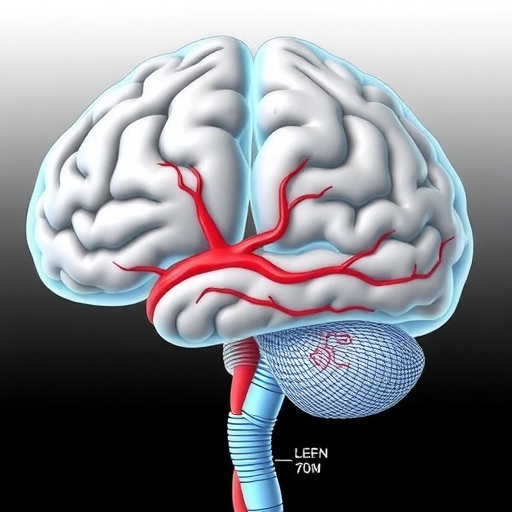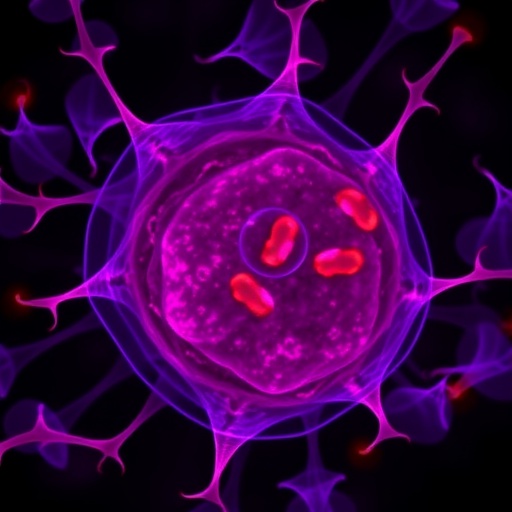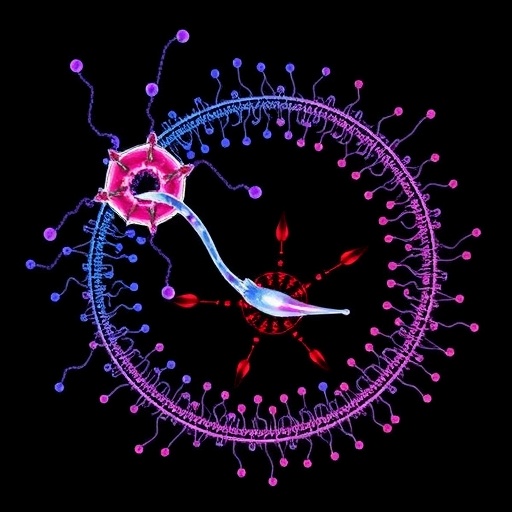
A new study in Cell Death Discovery reports how human sperm decide whether to survive or activate apoptosis, revealing a “sperm survival switch” built from circular RNAs (circRNAs). The work, published in 2026, connects subtle RNA regulatory loops to the molecular signals that govern cell fate in mature spermatozoa.
Sperm face a narrow time window after ejaculation to reach and fertilize the egg. During this period, they must balance stress responses while avoiding programmed cell death. Researchers have long known that apoptosis-related pathways influence sperm quality, but the upstream regulators that tune these pathways remained poorly defined.
Using an approach that combines RNA profiling with functional perturbation, the team identified circRNA-mediated regulatory circuits that modulate apoptotic signaling. Unlike linear RNAs, circRNAs form covalently closed loops, making them unusually stable and suited to sustained regulation in cells with limited transcriptional activity.
The study highlights that circRNAs can act as scaffolds and regulators for key signaling components, effectively shaping the intensity and timing of death pathways. By tracing how circRNA levels influence downstream apoptotic markers, the authors show that the same cell can shift outcomes depending on the regulatory loop’s status.
Mechanistically, the regulatory loops appear to affect pro- and anti-apoptotic balance, altering susceptibility to stress-induced signaling. This provides a functional explanation for how sperm maintain viability under challenging conditions and why some samples display poorer survival despite similar baseline motility.
The findings also frame apoptosis control as an information-processing system rather than a single on/off event. circRNA networks can integrate intracellular cues, producing a graded response that may better match the fluctuating environment encountered during fertilization.
From a translational perspective, the circRNA signatures described could serve as biomarkers of sperm competence, potentially improving selection in assisted reproduction. If specific survival-switch circRNAs correlate with fertilization outcomes, they may help refine prognostic screening beyond conventional semen parameters.
Overall, the work reframes sperm survival as a regulated RNA-driven program. By mapping circRNA-controlled regulatory loops onto apoptotic signaling, it offers a clearer target set for future therapies aimed at preserving sperm function or diagnosing reproductive health.
The research appears in Cell Death Discovery and is available under DOI: 10.1038/s41420-026-03262-0.
Subject of Research: Human sperm apoptosis regulation; circRNA-mediated control of cell survival
Article Title: The sperm survival switch: circRNA-mediated regulatory loops control apoptotic signalling in human spermatozoa
Article References: https://doi.org/10.1038/s41420-026-03262-0
Image Credits: AI Generated
DOI: https://doi.org/10.1038/s41420-026-03262-0
Tags: circRNA stability and function in mature spermatozoacircRNA-mediated regulatory loops in sperm apoptosiscircular RNAs in sperm cell survivalfunctional RNA perturbation in sperm apoptosis studiesimpact of circRNAs on pro- and anti-apoptotic balance in spermmolecular mechanisms of sperm survival switchRNA regulatory circuits controlling sperm cell fateRNA signaling pathways in sperm apoptosis regulationrole of circRNAs as molecular scaffolds in spermsignificance of circRNAssperm apoptosis signaling modulation by circRNAs