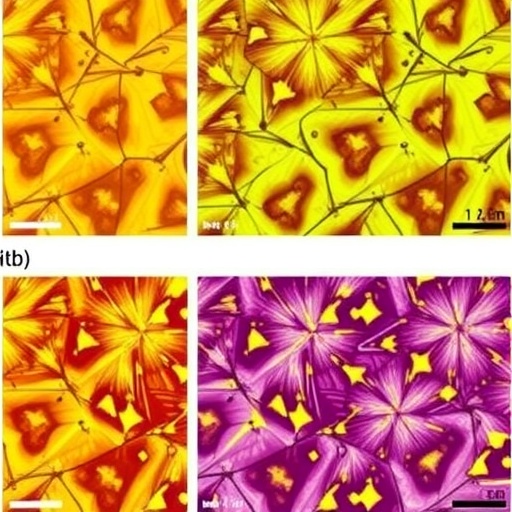
A new study has used high-resolution mass spectrometry imaging to map how benzalkonium—an antiseptic and common disinfectant—begins to break down inside wastewater biofilms. The work, published in Communications Engineering, reveals that biotransformation does not proceed uniformly across microbial communities. Instead, the earliest steps are spatially partitioned, indicating that microenvironments within biofilms strongly steer chemical fate.
Biofilms are complex, layered microbial structures that trap pollutants and create chemical gradients. In wastewater systems, those gradients can include oxygen availability, nutrient concentration, and surface-bound versus oxygen-sheltered zones. Because benzalkonium is designed to disrupt living cells, understanding exactly where and how microbes start transforming it is critical for predicting its persistence and downstream toxicity.
To visualize benzalkonium processing in situ, the researchers employed mass spectrometry imaging, a technique that couples chromatographic separation principles with pixel-by-pixel chemical detection. This approach allowed them to link changes in benzalkonium-related molecular features to specific regions within the biofilm matrix rather than relying only on bulk measurements.
The imaging results show that the initial transformation steps are “allocated” differently across the biofilm. Some zones display signatures consistent with early biotransformation pathways, while other areas retain higher levels of the parent compound. This pattern suggests that enzymatic activity and access to reactive intermediates vary with local conditions.
The team interprets these observations as evidence that different subpopulations or metabolic states within the biofilm contribute to benzalkonium breakdown. Microbes living near nutrient-rich interfaces may start the process differently than those embedded deeper in the structure, where diffusion limits and oxygen constraints alter metabolic chemistry.
A key implication is that pollutant fate models based on well-mixed assumptions may miss important spatial bottlenecks. If benzalkonium transformation begins only in particular biofilm microdomains, then removal efficiency and intermediate formation can change over time as the biofilm architecture evolves.
The study also highlights how contact between a quaternary ammonium biocide and microbial surfaces can shape uptake and transformation. By tracking where chemical changes first appear, researchers can better identify which biological niches are responsible for initiating degradation.
Overall, the findings provide a viral-style snapshot of how “hidden geography” inside wastewater biofilms governs contamination chemistry. As imaging methods become more sensitive, similar strategies could map the early processing of other disinfectants and antimicrobial compounds in engineered ecosystems.
Subject of Research: Mass spectrometry imaging of benzalkonium biotransformation in wastewater biofilms
Article Title: Mass spectrometry imaging reveals different allocation of the starting steps of benzalkonium biotransformation in wastewater biofilms.
Article References: Qiu, M., Larsson, Y., McKenzie, J. et al. Communications Engineering (2026). https://doi.org/10.1038/s44172-026-00731-3
Image Credits: AI Generated
DOI: https://doi.org/10.1038/s44172-026-00731-3
Tags: biodegradation pathways of disinfectantschemical gradients in biofilmsenzyme activity localization in biofilmsin situ visualization of pollutant breakdownMass spectrometry imaging of benzalkonium degradation in wastewater biofilmsmass spectrometry imaging techniques in environmental sciencemicrobial community heterogeneitymicroenvironment influence on microbial pollutant processingpollutant fate and transport in microbial communitiesspatial distribution of microbial biotransformationspatially resolved chemical analysis in biofilmswastewater disinfection byproduct formation