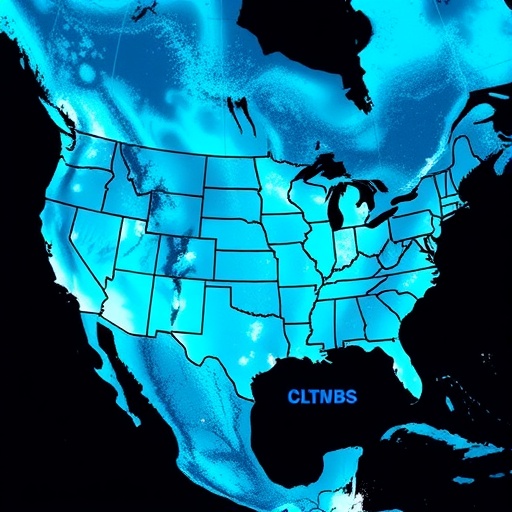
Lithium—once associated mainly with batteries—has been quietly showing up in human biology, according to new findings from a major U.S. cohort study. Researchers report that people living in parts of the Western United States can have measurable differences in both lithium levels in drinking water and lithium concentrations in urine. The work, published in Journal of Exposure Science & Environmental Epidemiology, links environmental availability to biomarkers of exposure without claiming that exposure is necessarily harmful or beneficial.
The study draws on data from the Strong Heart Family Study, a large multi-regional project designed to examine cardiovascular risk and related environmental influences across Native American communities. Instead of relying on self-reported exposure, the investigators compared water chemistry measures with urinary lithium concentrations, using urinary levels as a practical indicator of lithium intake.
A key technical challenge in exposure biology is that trace elements are present at very low concentrations and can vary with diet, hydration, and individual physiology. To address this, the researchers evaluated urinary lithium in relation to measured lithium in local water sources. Their analytical approach helps distinguish geographic environmental gradients from random individual fluctuation.
The results suggest that where lithium is more prevalent in water, urinary lithium tends to be higher. This pattern supports the idea that environmental water can be an important pathway for trace lithium entering the body, especially in regions with distinctive geology and water profiles typical of the Western U.S.
The findings also carry implications for interpreting lithium’s wider significance. Lithium exposure is often discussed in the context of pharmacology and potential neurobiological effects, but real-world exposure routes are less frequently quantified. By pairing environmental and biological data, the study provides a foundation for more rigorous health-impact questions.
Importantly, the study does not frame lithium exposure as a clinical issue on its own. Rather, it establishes baseline exposure variation and improves the evidence base needed for future research into whether chronic low-level lithium exposure influences health outcomes.
For readers watching “viral science news” trends—especially those connecting everyday materials to human metabolism—this research underscores a more general point: environmental trace elements can meaningfully reach the body, sometimes in ways that only become visible through careful biomonitoring.
As mining, desalination, and battery-related industries expand, understanding baseline exposure will matter. The new work offers a data-driven snapshot of lithium exposure in the Western United States and highlights water as a measurable conduit from geology to biology.
Subject of Research: Lithium exposure and biomonitoring (water and urinary levels)
Article Title: Lithium exposure in areas of the Western United States: Water and urinary levels in the Strong Heart Family Study.
Article References: Bannon, E.B., Lieberman-Cribbin, W., Basu, A. et al. (2026). J Expo Sci Environ Epidemiol. https://doi.org/10.1038/s41370-026-00947-7
Image Credits: AI Generated
DOI: 10.1038/s41370-026-00947-7
Tags: assessment of environmental risk factors for cardiovascular healthbiomarkers of lithium exposurechallenges in measuring low-concentration environmental toxinsenvironmental epidemiology of lithiumimpact of geographic lithium distributionLithium environmental exposure in Western U.S. populationslithium levels in drinking waterNative American community health and environmental factorstrace element analysis in exposure sciencetrace element variability in biological samplesurinary lithium biomonitoringwater chemistry and human health