• HOME
  • NEWS
  • EXPLORE
    • CAREER
      • Companies
      • Jobs
    • EVENTS
    • iGEM
      • News
      • Team
    • PHOTOS
    • VIDEO
    • WIKI
  • BLOG
  • COMMUNITY
    • FACEBOOK
    • INSTAGRAM
    • TWITTER
Friday, November 20, 2026
BIOENGINEER.ORG
No Result
View All Result
  • Login
  • HOME
  • NEWS
  • EXPLORE
    • CAREER
      • Companies
      • Jobs
        • Lecturer
        • PhD Studentship
        • Postdoc
        • Research Assistant
    • EVENTS
    • iGEM
      • News
      • Team
    • PHOTOS
    • VIDEO
    • WIKI
  • BLOG
  • COMMUNITY
    • FACEBOOK
    • INSTAGRAM
    • TWITTER
No Result
View All Result
Bioengineer.org
No Result
View All Result
Home NEWS Science News Biology

Korea10K Maps Whole Genomes and Uncovers Epigenetic Array Biases

by
November 20, 2026
in Biology
Reading Time: 2 mins read
0
Korea10K Maps Whole Genomes and Uncovers Epigenetic Array Biases

Korea10K Maps Whole Genomes and Uncovers Epigenetic Array Biases

Share on FacebookShare on TwitterShare on LinkedinShare on RedditShare on Telegram

A large-scale genomic initiative has established Korea10K, an integrated population-scale multiomic resource combining high-depth whole genomes with molecular and clinical health records. The reference dataset comprises 10,239 whole genomes sequenced at a mean depth of 30× coverage, addressing a longstanding absence of deeply sequenced multiomic resources dedicated to the Korean population. Prior to this effort, the limited availability of comprehensive Korean genomic data constrained systematic assessments of population-specific variations, functional impacts, and translational healthcare applications.

By conducting a detailed analysis of 9,000 unrelated individuals within the cohort, researchers achieved near-complete discovery of ultra-rare genetic variants, defined as those having an allele count greater than two and an allele frequency equal to or less than 0.0005. This discovery supports the construction of a high-resolution, population-specific imputation panel.

The comprehensive genomic investigation revealed distinctive patterns of demographic history and population architecture across the Korean cohort. Autosomal sequences demonstrated pronounced genetic homogeneity among individuals. This pattern was observed alongside a narrow Y-chromosomal and HLA-A allelic spectrum.

In contrast to the restricted autosomal and Y-chromosomal variation, the study documented comparatively deep mitochondrial lineage diversity among the evaluated participants. The coexistence of deep maternal lineage variation with marked autosomal uniformity provides substantial molecular evidence consistent with long-term demographic continuity in the population over evolutionary history.

The researchers also identified 16.4 million genetic variants that alter CpG dinucleotide contexts, uncovering widespread sequence-driven modulation across the genomic CG landscape.

Crucially, the team discovered that CG-eliminating sequence variants lead to an artificial loss of methylation signals and systematically disrupt CpG probe targets on widely used commercial methylation arrays. This interference introduces a previously unrecognized, sequence-dependent source of bias into epigenome-wide association studies and the estimation of biological age using epigenetic clocks.

Korea10K establishes a high-resolution genomic and multiomic reference for the Korean population and reveals a previously unrecognized interaction between genetic variation and epigenomic measurement. The study highlights the critical necessity of incorporating ancestry-aware genetic variation into the design and interpretation of molecular and epigenetic analyses for precision medicine.

Subject of Research: Population genomics and multiomic reference dataset for the Korean population

Article Title: Korea10K integrates 10,239 whole genomes with multiomic and clinical health information as a Korean reference dataset

Article References: An, K., Jeon, S., Kwon, Y., Choi, Y., Yoon, C., Jeon, Y., Bhak, J., Shin, D.-H., Choi, H.-J., Lee, H., Kim, Y. J., Shin, E.-S., Ryu, H., Blazyte, A., Park, S., Cho, J., Bolser, D., Joe, S., Yang, J. O., … Bhak, J. (2026). Korea10K integrates 10,239 whole genomes with multiomic and clinical health information as a Korean reference dataset. Genome Biology. https://doi.org/10.1186/s13059-026-04321-6

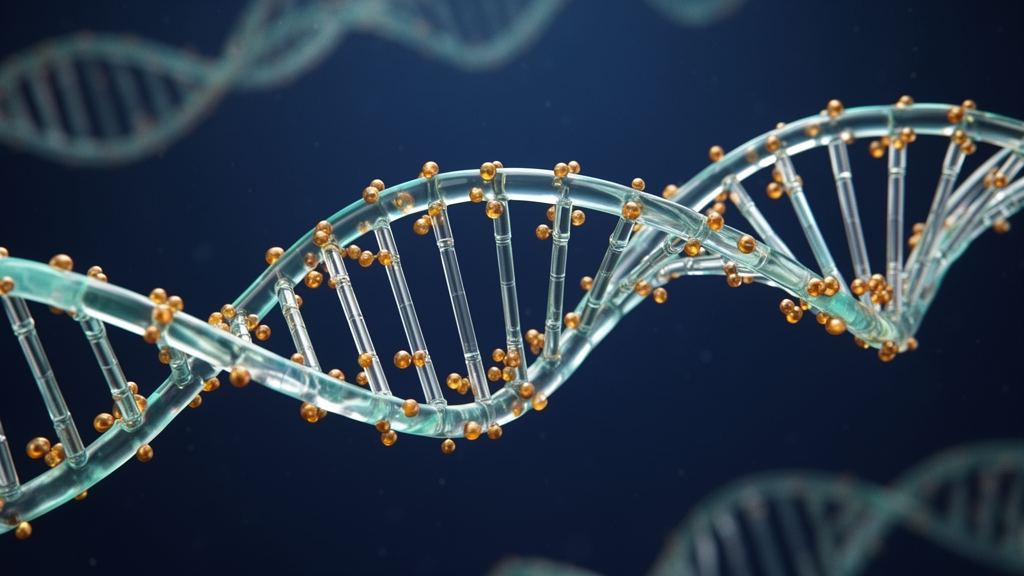
Image Credits: AI Generated

DOI: 10.1186/s13059-026-04321-6

Keywords: Korea10K, whole-genome sequencing, multiomics, genomics, Korean population, epigenetics, DNA methylation, CpG dinucleotide, ultra-rare variants, imputation panel, genetic diversity, population genetics, precision medicine, epigenetic clock, EWAS, human genetics

News Source: Juliet Wilcox. (November 20, 2026). Korea10K Maps Whole Genomes and Uncovers Epigenetic Array Biases. Scienmag.

Tags: CpG dinucleotideDNA Methylationepigenetic clockepigeneticsEWASGenetic diversityGenomicshuman geneticsimputation panelKorea10KKorean populationmultiomicspopulation geneticsPrecision Medicineultra-rare variantswhole-genome sequencing
Share12Tweet7Share2ShareShareShare1

Related Posts

Warmer Temperatures and Explosive Residues Increase Mortality in Mealworm Larvae

Warmer Temperatures and Explosive Residues Increase Mortality in Mealworm Larvae

November 20, 2026
Anthocyanins Lower Lung Hydroxyproline in Preclinical Animal Pulmonary Fibrosis Models

Anthocyanins Lower Lung Hydroxyproline in Preclinical Animal Pulmonary Fibrosis Models

November 20, 2026

Edible Mushroom Polysaccharide Partially Mitigates Spermatogenic Damage in Cryptorchid Mice

November 20, 2026

AhR and Hypoxia Factor Coordinate Mitochondrial Clearance and Renewal as Bioenergetic Rheostat

November 20, 2026

POPULAR NEWS

  • Pressurized Isopropanol Extracts Antioxidants and Enzyme Inhibitors From Prickly Pear Seeds

    Pressurized Isopropanol Extracts Antioxidants and Enzyme Inhibitors From Prickly Pear Seeds

    29 shares
    Share 12 Tweet 7
  • Integrated Photonic Quantum Converter Enhances Digital Phase Estimation in Metrology

    29 shares
    Share 12 Tweet 7
  • Endoscopic Ultrasound Expands Diagnostic and Guided Interventional Roles in Pancreatic Disease

    29 shares
    Share 12 Tweet 7
  • Full-Length TDP-43 Protein Propagates From Motor Cortex to Muscle in Rats

    29 shares
    Share 12 Tweet 7

About

We bring you the latest biotechnology news from best research centers and universities around the world. Check our website.

Follow us

Recent News

Warmer Temperatures and Explosive Residues Increase Mortality in Mealworm Larvae

Anthocyanins Lower Lung Hydroxyproline in Preclinical Animal Pulmonary Fibrosis Models

Multidisciplinary Panel Outlines Collaborative Harm Reduction Strategies to Prevent Firearm Injuries

Subscribe to Blog via Email

Enter your email address to subscribe to this blog and receive notifications of new posts by email.

Join 89 other subscribers
  • Contact Us

Bioengineer.org © Copyright 2023 All Rights Reserved.

Welcome Back!

Login to your account below

Forgotten Password?

Retrieve your password

Please enter your username or email address to reset your password.

Log In
No Result
View All Result
  • Homepages
    • Home Page 1
    • Home Page 2
  • News
  • National
  • Business
  • Health
  • Lifestyle
  • Science

Bioengineer.org © Copyright 2023 All Rights Reserved.