• HOME
  • NEWS
  • EXPLORE
    • CAREER
      • Companies
      • Jobs
    • EVENTS
    • iGEM
      • News
      • Team
    • PHOTOS
    • VIDEO
    • WIKI
  • BLOG
  • COMMUNITY
    • FACEBOOK
    • INSTAGRAM
    • TWITTER
Saturday, July 11, 2026
BIOENGINEER.ORG
No Result
View All Result
  • Login
  • HOME
  • NEWS
  • EXPLORE
    • CAREER
      • Companies
      • Jobs
        • Lecturer
        • PhD Studentship
        • Postdoc
        • Research Assistant
    • EVENTS
    • iGEM
      • News
      • Team
    • PHOTOS
    • VIDEO
    • WIKI
  • BLOG
  • COMMUNITY
    • FACEBOOK
    • INSTAGRAM
    • TWITTER
  • HOME
  • NEWS
  • EXPLORE
    • CAREER
      • Companies
      • Jobs
        • Lecturer
        • PhD Studentship
        • Postdoc
        • Research Assistant
    • EVENTS
    • iGEM
      • News
      • Team
    • PHOTOS
    • VIDEO
    • WIKI
  • BLOG
  • COMMUNITY
    • FACEBOOK
    • INSTAGRAM
    • TWITTER
No Result
View All Result
Bioengineer.org
No Result
View All Result
Home NEWS Science News Biology

KAT6A syndrome: Advances on the genetic bases and clinical picture of a rare disease

Bioengineer by Bioengineer
February 26, 2020
in Biology
Reading Time: 2 mins read
0
IMAGE
Share on FacebookShare on TwitterShare on LinkedinShare on RedditShare on Telegram

Expanding the clinical phenotype of patients
IMAGE

Credit: UNIVERSITY OF BARCELONA


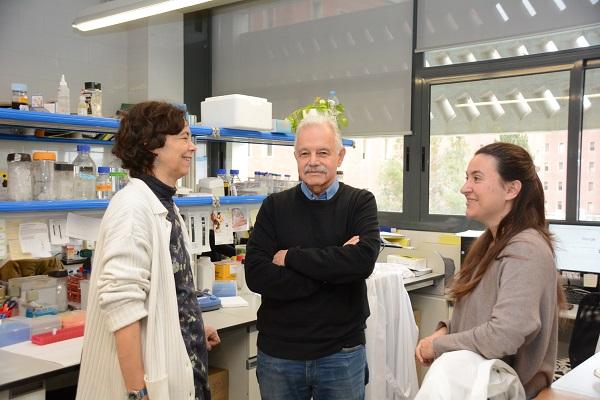
A research team has described five new cases of a rare disease -known as KAT6A syndrome- of which there are only eighty dominant cases worldwide. This neurological and developmental disorder, caused by alterations in the lysine acetyltransferase 6A gene (KAT6A), involves intellectual disability, language impairment, low muscle tone, cardiovascular malformation and eye defects, among other affectations.

The study, published in the journal Orphanet Journal of Rare Diseases, is led by a team co-led by the researchers Daniel Grinberg and Susanna Balcells and Roser Urreizti, from the Human Molecular Genetics Group of the Faculty of Biology of the University of Barcelona and the Rare Diseases Networking Biomedical Research Centre (CIBERER), and the experts Estrella López-Martín and Eva Bermejo-Sánchez, from the Institute of Rare Diseases Research (IIER) from Carlos III Health Institute (ISCIII).

KAT6A syndrome: news symptoms related to a rare disease

The research team confirmed in five new patients some of the features of the clinical picture related to the pathology, apart from describing new symptoms and affectations in the development of the disease. In particular, the authors overserved new symptoms such as cryptorchidism (testicular atrophy), syndactyly (fused fingers) and trigonocephaly (deformation in the frontal part of the cranium), apart from the emergence of recurrent infections.

The experts from the Human Molecular Genetics Group of the UB, also members of the Institute of Biomedicine of the University of Barcelona (IBUB) and the Research Institute Sant Joan de Déu (IRSJD), contributed to specifying the role of genetic mutations that were seen in this minority disease. Despite the syndrome was first related to truncating mutations, the new study describes a variant of the disease without cardiac affectations that is related to missense mutations.

Four out of the five patients described in this study showed missense substitutions, and the fifth case they observed a missense mutation that did not follow cardiac affectations.

The in silico studies -with informatic simulations- confirmed that the missense mutation generated a partial process of splicing that caused the premature truncating of the protein that gave origin to the pathology.

The new study will contribute to better understand the natural history of this syndrome and expand the clinical phenotype of patients, advances that are essential to delimit the phenotypical characterization and definition of this rare disease. According to the authors, these findings will help to increase the chances to diagnose other affected patients earlier. Other participants in the study are experts from the Hospital del Mar Medical Research Institute (IMIM), Hospital de la Fe (Valencia) and the University of Adelaide (Australia).

###

Media Contact
Rosa Martínez
[email protected]
34-934-031-335

Related Journal Article

http://dx.doi.org/10.1186/s13023-020-1317-9

Tags: BioinformaticsDiagnosticsDisabled PersonsDisease in the Developing WorldGeneticsMedicine/HealthneurobiologyPharmaceutical Science
Share13Tweet8Share2ShareShareShare2

Related Posts

Han directs new $15M NIH center for organ-on-chip technology

Han directs new $15M NIH center for organ-on-chip technology

July 11, 2026
Bacteriophages Enable Next-Gen Smart Pathogen Detection Sensors

Bacteriophages Enable Next-Gen Smart Pathogen Detection Sensors

July 10, 2026

Temperature Fluctuations Have Greater Impact Than Previously Believed

July 10, 2026

New Study Uncovers Biology Behind Glioma Cancer Progression

July 10, 2026
Please login to join discussion

POPULAR NEWS

  • Detection of EDCs in Breast Milk and Infant Urine Up to Six Months Highlights Early Exposure Risks

    77 shares
    Share 31 Tweet 19
  • New Drug Candidate Developed at McMaster Shows Potential for Treating Brain Cancer

    58 shares
    Share 23 Tweet 15
  • KTU Researchers Explore Ultrasound’s Role in Enhancing Blood Flow Beyond Diagnostics

    53 shares
    Share 21 Tweet 13
  • 高齢者の骨粗鬆症治療の持続性比較

    51 shares
    Share 20 Tweet 13

About

We bring you the latest biotechnology news from best research centers and universities around the world. Check our website.

Follow us

Recent News

Nursing Students Explore Caring for Older Adults in Home Care Settings

PRMT6 Promotes Blood Vessel Growth in Colorectal Cancer

Ultra-fine bubbles revolutionize future of inkjet printing technology

Subscribe to Blog via Email

Enter your email address to subscribe to this blog and receive notifications of new posts by email.

Join 84 other subscribers
  • Contact Us

Bioengineer.org © Copyright 2023 All Rights Reserved.

Welcome Back!

Login to your account below

Forgotten Password?

Retrieve your password

Please enter your username or email address to reset your password.

Log In
No Result
View All Result
  • Homepages
    • Home Page 1
    • Home Page 2
  • News
  • National
  • Business
  • Health
  • Lifestyle
  • Science

Bioengineer.org © Copyright 2023 All Rights Reserved.