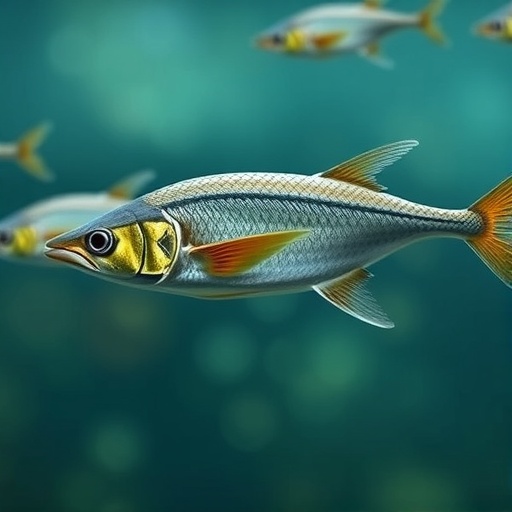
Over the past eight millennia, an extraordinary evolutionary journey has unfolded beneath the waters of the Baltic Sea, where Atlantic herring confronted the unprecedented challenge of thriving in an environment dramatically different from its oceanic origins. Unlike the open ocean’s stable and relatively high salinity levels, the Baltic Sea presents a harsh habitat characterized by brackish water with salinity often ranging between 2 to 3 parts per thousand—only a fraction of the roughly 34 to 35 parts per thousand that Atlantic herring are accustomed to in the North Atlantic Ocean. This drastic shift in environmental conditions presented a seemingly insurmountable obstacle to the reproductive success of marine species, particularly for one as dependent on external fertilization as the Atlantic herring.
A recently published study in the Proceedings of the National Academy of Sciences unveils the fascinating mechanisms that underlie the Atlantic herring’s remarkable adaptation to the Baltic Sea. The research, led by Dr. Leif Andersson and his team at Texas A&M College of Veterinary Medicine and Biomedical Sciences, reveals a finely tuned genetic rewiring that empowered the species to endure and reproduce effectively under the Baltic’s low-salinity conditions. This work offers a rare, granular insight into the process of evolution in real time, revealing how nature’s pressures coax precise molecular adaptations that redefine a species’ survival strategies.
The crux of the problem for herring lies in the reproductive stages that externalize early development—the sperm, eggs, and embryos—since unlike adults, these gametes cannot regulate their internal environment and are directly influenced by water chemistry. Adult herring have evolved physiological systems such as kidneys and ion channels to maintain osmotic balance, yet gametes and embryos lack these mechanisms, rendering their survival contingent on inherent genetic adjustments. This vulnerability in the reproductive cycle became the critical interface through which natural selection exerted pressure, favoring genetic variants that conferred resilience against the osmotic stresses of brackish water.
The team conducted extensive genomic sequencing and comparative analyses between Atlantic Ocean herring and their Baltic counterparts, identifying four pivotal genetic regions responsible for this adaptation. Notably, one of these genetic regions codes for a sperm-specific ion channel that is crucial in maintaining motility and functionality in low-salinity conditions. This molecular modification ensures that sperm remain viable in the dilute aqueous medium, thereby preserving fertilization efficiency.
Similarly, two other genetic variants impact the structural proteins forming the egg’s chorion—the protective outer envelope of the egg. In the Baltic herring, these proteins have been fortified to reduce permeability, preventing the egg from swelling and rupturing when immersed in the less saline environment. However, this augmented defense mechanism presents an unexpected hurdle during hatching: the larvae find it more difficult to escape from a strengthened egg envelope.
To overcome this, the researchers discovered that Baltic herring have evolved an ingenious genetic solution: a significant amplification of a gene cluster encoding enzymes capable of degrading the egg envelope. This gene exists in approximately twentyfold increased copies relative to Atlantic herring, producing an abundance of enzymes to effectively erode the toughened chorion at hatching. The result is a seamless transition from protective resilience to successful larval emergence—a remarkable evolutionary trade-off.
These adaptive genetic features are uniformly present across all Baltic herring populations studied, irrespective of their specific spawning locales, underscoring the uncompromising role these traits play in the species’ survival in the Baltic ecosystem. Moreover, Dr. Andersson and his colleagues suggest that such profound genomic divergence calls into question the traditional classification of Baltic herring as a mere subspecies, proposing instead that it merits recognition as a distinct species.
The ecological significance of this evolutionary tale cannot be overstated. The Baltic herring occupies a keystone position in the Baltic Sea’s food web, linking primary producers like phytoplankton to higher trophic levels such as predatory fish, seabirds, and marine mammals. It also underpins a vital fishery that sustains the economies and food security of Northern European countries, reinforcing the interconnectedness between biological adaptation and human livelihoods.
From a conservation standpoint, the genetic singularity of Baltic herring highlights the urgency for more tailored fisheries management. Dr. Andersson emphasizes that maintaining genetic diversity within these populations is essential for their continued resilience, especially in the face of industrial-scale fishing pressure and environmental changes. The unique adaptations that allow Baltic herring to flourish also make them vulnerable to loss of diversity, which could erode their capacity to cope with future stressors.
On a broader evolution and biology scale, this investigation exemplifies how natural selection operates with remarkable specificity and speed at the molecular level. It exemplifies how environmental pressures, particularly those acting on early developmental stages and reproductive biology, drive targeted genetic changes that reshape species’ life histories. The findings catalyze a deeper understanding of evolutionary dynamics, with potential lessons for the adaptive capacities of other marine organisms confronting shifting habitats and climate-induced transformations.
Notably, this research serves as a compelling case study of evolutionary innovation driven by reproductive constraints. It highlights the often-underappreciated fact that reproduction, especially in externally fertilizing species, can represent the ultimate evolutionary bottleneck requiring intricate molecular solutions. The Baltic herring’s story illustrates evolution’s power to not merely allow survival, but to engineer complex genetic architectures ensuring reproductive viability amid environmental upheaval.
This pioneering genetic research on the Baltic herring invites renewed attention to how species-specific traits evolve in response to habitat transitions and ecological pressures. It urges researchers, ecologists, and policymakers alike to view evolutionary biology in the context of practical conservation goals, recognizing that preserving evolutionary potential is inseparable from sustaining ecosystem health and function. As the Baltic herring continues to swim through its brackish home, it carries within its DNA a living chronicle of resilience, adaptation, and the relentless force of natural selection.
Subject of Research: Animals
Article Title: Sperm, egg, and embryo proteins critical for genetic adaptation of herring to low salinity in the Baltic Sea
News Publication Date: 11-May-2026
Web References: 10.1073/pnas.2601861123
References: Proceedings of the National Academy of Sciences
Keywords: Genetics, Evolution
Tags: Atlantic herring evolutionary biologyAtlantic herring external fertilizationAtlantic herring reproductive adaptationBaltic Sea low salinity survivalBaltic Sea marine biodiversityevolutionary genetics of marine speciesevolutionary response to environmental changegenetic mechanisms of salinity tolerancegenetic rewiring in fish reproductionimpact of salinity on fish reproductionmarine evolutionary studies in the Baltic Seamarine species adaptation to brackish water