• HOME
  • NEWS
  • EXPLORE
    • CAREER
      • Companies
      • Jobs
    • EVENTS
    • iGEM
      • News
      • Team
    • PHOTOS
    • VIDEO
    • WIKI
  • BLOG
  • COMMUNITY
    • FACEBOOK
    • INSTAGRAM
    • TWITTER
Thursday, May 14, 2026
BIOENGINEER.ORG
No Result
View All Result
  • Login
  • HOME
  • NEWS
  • EXPLORE
    • CAREER
      • Companies
      • Jobs
        • Lecturer
        • PhD Studentship
        • Postdoc
        • Research Assistant
    • EVENTS
    • iGEM
      • News
      • Team
    • PHOTOS
    • VIDEO
    • WIKI
  • BLOG
  • COMMUNITY
    • FACEBOOK
    • INSTAGRAM
    • TWITTER
  • HOME
  • NEWS
  • EXPLORE
    • CAREER
      • Companies
      • Jobs
        • Lecturer
        • PhD Studentship
        • Postdoc
        • Research Assistant
    • EVENTS
    • iGEM
      • News
      • Team
    • PHOTOS
    • VIDEO
    • WIKI
  • BLOG
  • COMMUNITY
    • FACEBOOK
    • INSTAGRAM
    • TWITTER
No Result
View All Result
Bioengineer.org
No Result
View All Result
Home NEWS Science News Biology

Insect evolution was more complex than previously assumed

Bioengineer by Bioengineer
April 21, 2021
in Biology
Reading Time: 2 mins read
0
IMAGE
Share on FacebookShare on TwitterShare on LinkedinShare on RedditShare on Telegram

IMAGE

Credit: Roth/Pechmann

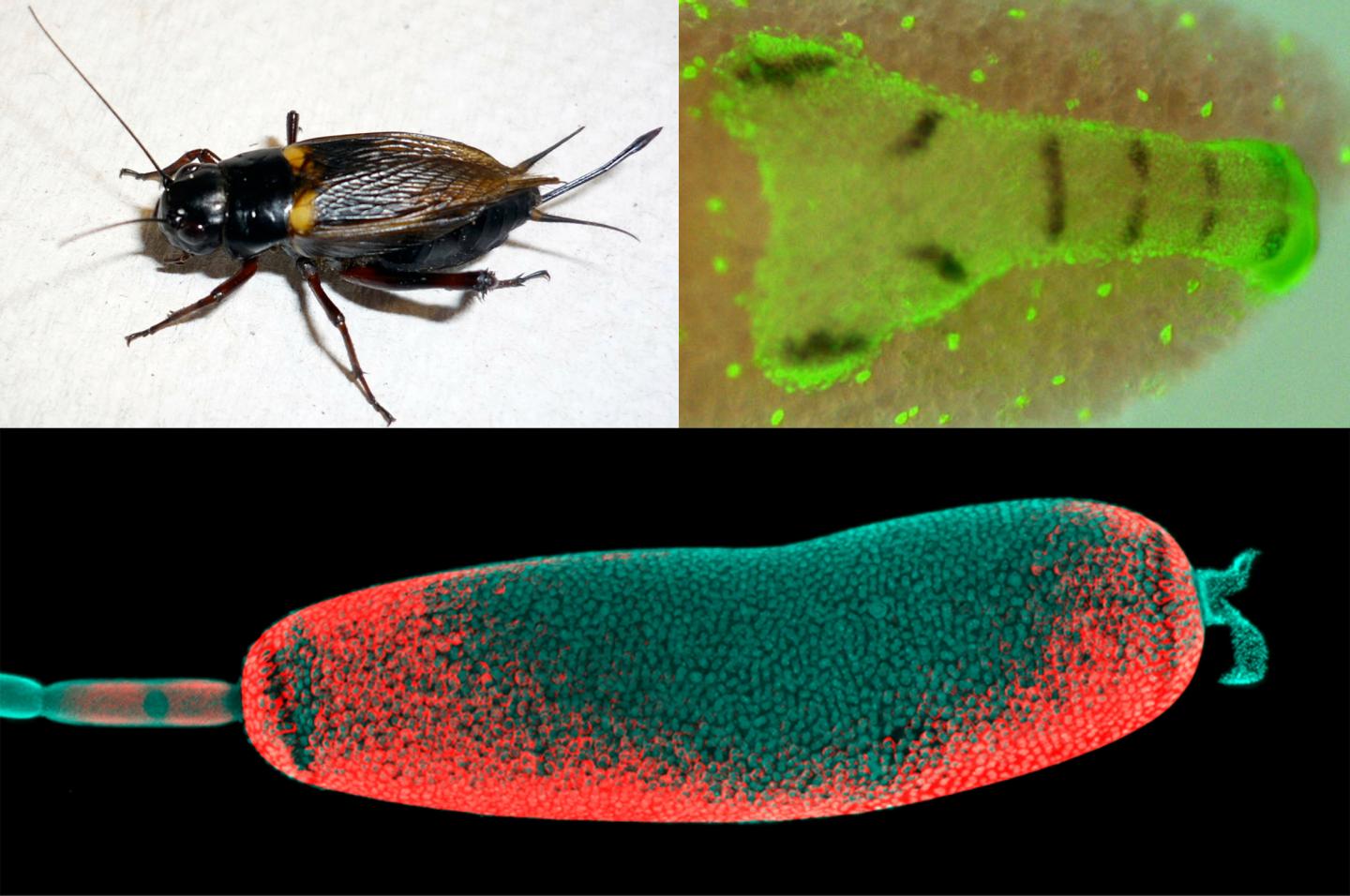
Certain signalling proteins, which are responsible for the development of innate immune function in almost all animals are also required for the formation of the dorsal-ventral (back-belly) axis in insect embryos. A new study by researchers from the University of Cologne’s Institute of Zoology suggests that the relevance of these signalling proteins for insect axis formation has increased independently several times during evolution. For example, the research team found similar evolutionary patterns in the Mediterranean field cricket as in the fruit fly Drosophila, although the two insects are only very distantly related and previous observations suggested different evolutionary patterns. The new findings show that the evolution of axis formation in insects was actually much more complex than previously thought. The study has been published in eLife.

Signalling proteins play an important role in the early development of embryos. They are secreted by animal cells to influence the formation of other cells. The primary function of the so-called Toll signalling pathway is in the defence against pathogens (innate immune response). In insects, it is also involved in the division of the insect body along the dorsal-ventral body axis. Since the immune function has been found in almost all animals, but the axis formation function has only been found in insects, scientists wondered about the evolutionary history of this new role. Moreover, depending on the insect species, the significance of Toll for developmental processes differs. While axis formation in the fruit fly and flour beetle depend substantially on Toll, representatives of distantly related species, such as the wasp Nasonia and the milkweed bug Oncopeltus, rely more heavily on other signalling pathways. ‘Surprisingly, we found that the Toll signalling pathway plays a significant role in an insect that is separated by almost 400 million years from the species we studied so far,’ said Professor Dr Siegfried Roth from the Institute of Zoology. ‘The new study suggests that there might be several instances in which Toll independently acquired important functions in insect axis formation. For future studies, this means that our system allows us to explore mechanisms of parallel evolution.’

###

Media Contact
Siegfried Roth
[email protected]

Related Journal Article

http://dx.doi.org/10.7554/eLife.68287

Tags: BiologyEvolutionZoology/Veterinary Science
Share12Tweet8Share2ShareShareShare2

Related Posts

Ion Channels Within Cells Actively Remodel the Cytoskeleton — Biology

Ion Channels Within Cells Actively Remodel the Cytoskeleton

May 14, 2026
Apical Polar Ring Crucial in Plasmodium Blood Stage — Biology

Apical Polar Ring Crucial in Plasmodium Blood Stage

May 14, 2026

Cryo-ET Reveals Physcomitrium Patens Plasmodesmata Structure

May 14, 2026

“‘Last Titan’: Discovery of Southeast Asia’s Largest Dinosaur Unveiled”

May 14, 2026
Please login to join discussion

POPULAR NEWS

  • Research Indicates Potential Connection Between Prenatal Medication Exposure and Elevated Autism Risk

    842 shares
    Share 337 Tweet 211
  • New Study Reveals Plants Can Detect the Sound of Rain

    729 shares
    Share 291 Tweet 182
  • Salmonella Haem Blocks Macrophages, Boosts Infection

    62 shares
    Share 25 Tweet 16
  • Breastmilk Balances E. coli and Beneficial Bacteria in Infant Gut Microbiomes

    57 shares
    Share 23 Tweet 14

About

We bring you the latest biotechnology news from best research centers and universities around the world. Check our website.

Follow us

Recent News

α-Synuclein Fibrils Trigger LRRK2, Disrupt Synapses

Synchronous Climbing Fibers Drive Cerebellar Learning Signals

FAU’s CA-AI Awarded $2.2M U.S. Air Force Grant to Advance Next-Generation Autonomous Systems

Subscribe to Blog via Email

Enter your email address to subscribe to this blog and receive notifications of new posts by email.

Join 82 other subscribers
  • Contact Us

Bioengineer.org © Copyright 2023 All Rights Reserved.

Welcome Back!

Login to your account below

Forgotten Password?

Retrieve your password

Please enter your username or email address to reset your password.

Log In
No Result
View All Result
  • Homepages
    • Home Page 1
    • Home Page 2
  • News
  • National
  • Business
  • Health
  • Lifestyle
  • Science

Bioengineer.org © Copyright 2023 All Rights Reserved.