A USC-led experimental study of surgically removed human brain tissue found that older adults with epilepsy tended to have more abnormal immature astroglia in the hippocampus, and that higher numbers of these cells were associated with poorer fluid intelligence. Researchers examined specimens from 29 people with mesial temporal lobe epilepsy, a condition that can involve seizures and cognitive decline, and compared the abundance of immature astroglia with each participant’s performance on tests of reasoning and other cognitive functions. The results show an association within this patient group, not proof that the cells caused the cognitive differences or that the same pattern occurs in the general population.
The finding offers a cell-level clue about age-related changes in the ability to solve new problems. Fluid intelligence was assessed as part of a broader series of cognitive tests administered before surgery, covering reasoning, memory, attention, language and fine motor coordination. After surgery, researchers used microscopy to identify and count immature astroglia in selected areas of the hippocampus, a brain region involved in learning and memory. Older patients generally had more of the abnormal cells, while greater cell numbers were also associated with lower fluid-intelligence scores. The investigators described the work as one of the first studies to associate astroglial abundance with human cognition.
Astroglia have traditionally been viewed primarily as support cells that help maintain a healthy environment around neurons and support their communication. Their role in cognition has received less attention than that of neurons and has often been investigated through animal models or indirect measures such as gene activity. The new research differs by examining human tissue directly and quantifying the presence of immature astroglia. “We found that older patients tended to have more abnormal immature astroglia—and that higher numbers of these cells were also associated with poorer performance on tests of fluid intelligence,” said first author Aswathy Ammothumkandy, PhD, of the USC Stem Cell lab.
The research was made possible by the unusual availability of tissue removed during surgery to treat severe, drug-resistant seizures caused by mesial temporal lobe epilepsy. The operation yielded hippocampal tissue from 29 patients, allowing the team to pair cellular observations with cognitive testing conducted beforehand. This design provided a rare opportunity to study individual cells in a human brain and compare them with measured reasoning performance. The approach also illustrates why the findings should be interpreted as an association: the small, selected surgical population had epilepsy, and the investigators did not show that removing or changing the cells would alter cognition.
Non-invasive tools commonly used to study brain function, including electroencephalography and magnetic resonance imaging, generally do not resolve individual cells well enough for this type of cell-count analysis. Microscopic examination can reveal cellular features in detail, but tissue from living people is rarely available for research outside specialized clinical circumstances. Here, the integration of clinical care, cognitive assessment, surgery and laboratory analysis gave researchers access to matched biological and behavioral information. The participants’ epilepsy and the surgical context remain central limitations on how broadly the results can be generalized, even though the study was supported in part by the National Institutes of Health and published in Frontiers in Cellular Neuroscience.
Mesial temporal lobe epilepsy can involve seizures and cognitive decline, making the population clinically relevant but also distinctive. The researchers said the findings could have implications beyond epilepsy, and they emphasized that aging affects everyone. “Aging is something we’re all familiar with and all impacted by—it’s a matter of when, not if,” said co-corresponding author Michael Bonaguidi, PhD, who leads the USC Stem Cell lab. “What this study provides is a new therapeutic target that could someday help us slow down or potentially even reverse age-related declines in our ability to solve new problems.” The statement identifies a proposed research direction rather than a demonstrated treatment.
No drug, procedure or clinical intervention was tested in the study, and the researchers emphasized that further work is needed to determine whether abnormal immature astroglia contribute directly to cognitive decline. The data also do not establish that the cells are a cause of the age-related pattern; they could be a marker, a consequence, or part of a broader process involving epilepsy, aging and brain function. The authors’ suggestion that astroglia could represent a target for preserving cognition should therefore be understood as a hypothesis for future investigation, not an available treatment or an established clinical strategy. The scope of the evidence is especially limited because all participants were people undergoing surgery for severe, drug-resistant seizures.
Ammothumkandy is now investigating molecular differences among immature astroglia that might reveal possible drug targets. By comparing cells from people with epilepsy with control samples, she aims to identify features that distinguish abnormal cells and explore ways to restore them to a healthier state. Another possible avenue for future investigation is neuromodulation, which uses electrical or magnetic stimulation to alter nervous-system activity. The broader goal is to understand whether healthy or abnormal astroglial states might become accessible therapeutic targets for cognitive conditions, including accelerated age-related decline in people with epilepsy. These proposed approaches are described in the release as directions for research rather than interventions validated in the present experiment.
Charles Liu, MD, PhD, director of the USC Neurorestoration Center and a co-author of the study, said the work could benefit patients while informing wider questions about brain function. “Understanding processes like cognitive decline, which can be accelerated in people with epilepsy, could help us improve these patients’ lives while also shedding light on broader questions about brain function that affect us all,” Liu said. The authors also proposed that astroglia could be a shared target for cognitive decline and seizure control, based partly on previous work by the team. The present experiment, however, directly evaluated the relationship between immature astroglial abundance, age and fluid intelligence; it did not test seizure outcomes or show that targeting astroglia would improve either cognition or seizures.
For now, the most defensible conclusion is that abnormal immature astroglia become more prevalent with age in the hippocampus of this surgical epilepsy cohort and are associated with weaker performance on tests of fluid intelligence. The study supplies direct human-tissue evidence that warrants further investigation into why these cells accumulate, what molecular changes define their abnormal state and whether they actively impair reasoning. It does not establish a general-population trend, a direct causal mechanism or an available therapy. Instead, it identifies a specific cellular feature for additional investigation, with the eventual aim of determining whether modifying astroglial biology could protect cognitive function or support better control of epilepsy. The findings are strongest as an association in the 29-person surgical sample and should not yet be read as proof that abnormal immature astroglia drive age-related cognitive decline in people without epilepsy.
Subject of Research: Associations between immature hippocampal astroglia, age and fluid intelligence in adults with epilepsy
Article Title: Immature brain support cells may be linked to human age-related cognitive decline
Article References: Immature brain support cells may be linked to human age-related cognitive decline. Original publication (Bibliographic details unavailable.)
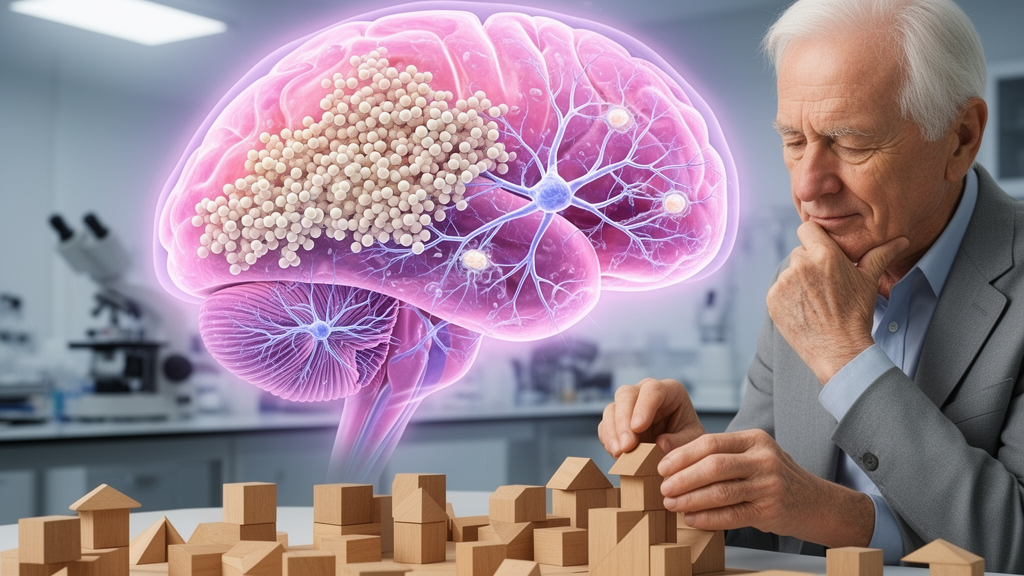
Image Credits: AI Generated
DOI: Not provided
Keywords: astroglia, fluid intelligence, cognitive decline, hippocampus, epilepsy, brain tissue, aging, USC, human brain, cellular neuroscience, Immature, brain
News Source: Cassandra Pierce. (October 21, 2026). Immature brain support cells linked to poorer reasoning in older adults. Scienmag.