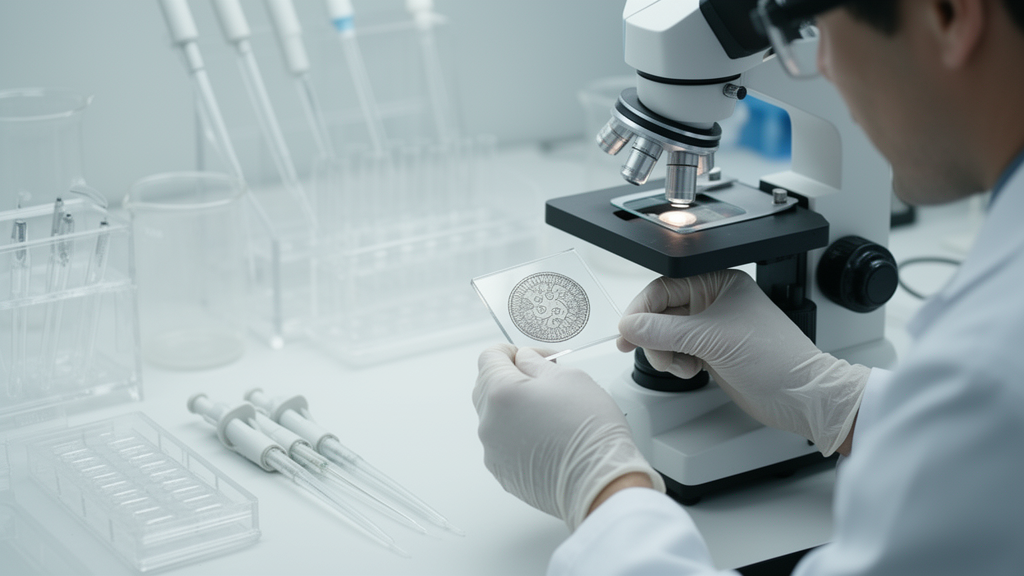
A controlled laboratory study found that a selected combination of digestion, centrifugation and washing conditions improved the recovery and preservation of diatom assemblages in materials used for forensic testing. Experiments involving pooled natural water samples and human lung tissue showed that the optimized workflow increased diatom recovery from 16.45% to 41.00% for acid digestion and from 80.87% to 84.42% for enzymatic digestion, while maintaining assemblage composition comparable to that of the reference water samples.
The research examined routine parameters that had received limited attention despite being involved in nearly all diatom-testing methods. Investigators evaluated digestion temperature and duration, centrifugation force and duration, washing frequency, and the volume of residual pellet retained after each centrifugation. Their aim was to determine how these routine variations affect the number of diatoms recovered and the integrity of the recovered assemblage, both of which matter for the standardization of forensic diatom testing used in drowning diagnosis and site inference.
The study used controlled spiking experiments and assessed procedural performance through diatom recovery rates and four assemblage-based indicators: Bray–Curtis dissimilarity, Jaccard similarity, Spearman’s rank correlation and replicate dispersion. Together, these measures evaluated how closely processed assemblages resembled reference samples and how consistently replicate results were dispersed, rather than relying only on the total number of diatoms recovered.
The best-performing combination tested consisted of heating at no more than 80 °C for no more than 60 minutes, centrifugation at 3,000 rpm, equivalent to 1,313×g, for five minutes, and one washing cycle with 500 µL retained after centrifugation. Under these conditions, acid digestion yielded a recovery rate of 41.00%, compared with 16.45% under the comparison procedure. Enzymatic digestion began at a higher recovery rate of 80.87% and increased to 84.42%. The optimized extraction workflow also maintained assemblage composition at levels comparable to the reference water samples.
These findings indicate that digestion method alone does not determine the material available for forensic analysis; details such as heating, centrifugation, washing and residual volume can also affect recovery and assemblage preservation. The authors therefore propose that routine laboratory parameters be incorporated into standardization efforts for forensic diatom testing. The results remain bounded by the study’s controlled scope, which included pooled natural water samples and human lung tissue rather than the full range of samples encountered in routine forensic investigations, and the supplied report does not establish performance across every case or sample type.
Subject of Research: Effects of routine laboratory parameters on diatom recovery and assemblage preservation in forensic testing
Article Title: Effects of routine laboratory parameter variations on diatom preservation: Implications for the standardization of forensic diatom testing
Article References: Qiu, H., Yu, L., Yin, M., Zhao, Y., Zhou, L., He, X., Huang, P., & Zhang, J. (2026). Effects of routine laboratory parameter variations on diatom preservation: Implications for the standardization of forensic diatom testing. International Journal of Legal Medicine. https://doi.org/10.1007/s00414-026-04052-0
Image Credits: AI Generated
DOI: 10.1007/s00414-026-04052-0
Keywords: forensic diatom testing, diatom recovery, acid digestion, enzymatic digestion, sample preservation, centrifugation, laboratory standardization, drowning diagnosis, assemblage composition, controlled laboratory study, Effects, routine
News Source: Ophelia Keating. (October 21, 2026). Controlled lab study improves diatom recovery in forensic testing. Scienmag.