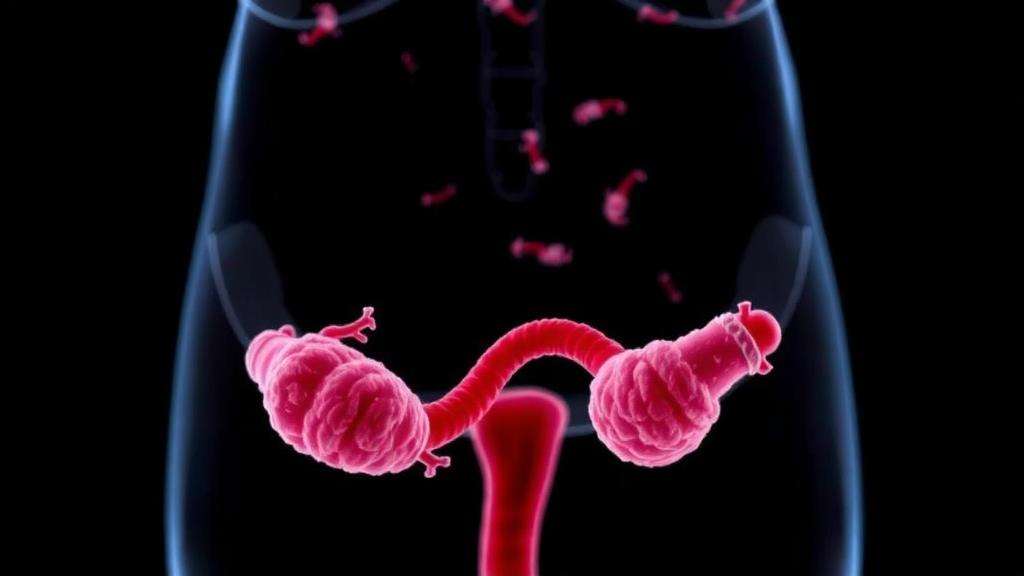
Polycystic ovary syndrome, or PCOS, is one of the most common endocrine disorders on the planet, affecting an estimated 8 to 13 percent of women of reproductive age. Yet despite decades of research, most treatments still target individual symptoms—irregular cycles, excess hair growth, infertility—rather than the tangled web of underlying causes. A new narrative review published in Reproductive Sciences argues that a surprising player deserves far more attention: the trillions of microbes living in the gut. The review, authored by Shruti and Kanchan Bala of the ISF College of Pharmacy in India, synthesizes evidence that disruptions in the gut microbiota, known as dysbiosis, may sit at the heart of the insulin resistance and hormone excess that define the syndrome, and that repairing the gut ecosystem could become a genuinely new therapeutic frontier.
The central concept the authors develop is what they call the gut-insulin axis. In a healthy gut, the intestinal lining acts as a carefully regulated barrier, allowing nutrients to pass into the bloodstream while keeping bacterial products out. When the microbial community becomes imbalanced, this barrier integrity is compromised. Fragments of bacterial cell walls, particularly lipopolysaccharide, or LPS, leak into circulation, a condition known as metabolic endotoxemia. These molecules are detected by Toll-like receptor 4, or TLR4, on immune and metabolic cells, which activates the inflammatory transcription factor NF-kB. The result is chronic, low-grade inflammation that interferes with insulin signaling in muscle, liver, and fat tissue, worsening insulin resistance—a hallmark of PCOS that affects a majority of patients and drives both metabolic disease and ovarian dysfunction.
The mechanistic detail in the review goes considerably deeper than the leaky-gut model alone. One key pathway involves short-chain fatty acids, or SCFAs, the beneficial metabolites that gut bacteria produce when they ferment dietary fiber. SCFAs such as butyrate, propionate, and acetate nourish colonocytes, strengthen the intestinal barrier, and modulate immune responses and glucose homeostasis. In PCOS, the review notes, SCFA-producing bacteria are often depleted, undermining these protective functions. Bile acid metabolism is another emerging piece of the puzzle. Gut microbes convert primary bile acids into secondary forms that activate two important receptors, FXR and TGR5, which influence glucose metabolism, energy expenditure, and inflammation. Altered bile acid pools in PCOS may therefore amplify metabolic dysfunction through these receptor pathways.
The review also highlights the neuroendocrine dimension of the gut-brain axis. Microbial metabolites and gut-derived hormones such as ghrelin, which is found at abnormally low circulating levels in women with PCOS according to meta-analytic evidence, participate in the regulation of appetite, insulin secretion, and reproductive hormone release. Experimental work in mouse models of PCOS has shown hyperactive LH pulses and elevated expression of kisspeptin and neurokinin B in the arcuate nucleus of the hypothalamus, the neural circuitry that governs ovulation. Because gut microbes can modulate these neuroendocrine signals, the authors argue that dysbiosis may contribute directly to the anovulation and hyperandrogenism that characterize the syndrome, not merely to its metabolic complications.
Among the most striking lines of evidence are microbial metabolites beyond SCFAs. The tryptophan-kynurenine pathway, which bacteria help regulate, shows abnormal activation in women with PCOS, with potential consequences for mood, immune function, and ovarian physiology. Another metabolite, agmatine, has been implicated in metabolic and reproductive abnormalities. The review also discusses the estrobolome, the collection of gut genes that metabolize estrogens, linking microbial composition to the broader hormonal milieu. Together, these findings sketch a picture in which the gut microbiome acts as a biochemical factory whose output—fatty acids, bile acids, amino acid derivatives, and hormone-modulating enzymes—shapes nearly every endocrine system disturbed in PCOS.
Perhaps the strongest causal evidence comes from fecal microbiota transplantation experiments. In preclinical studies, germ-free mice that received fecal material from women or animals with PCOS went on to develop metabolic disorders and ovarian dysfunction themselves, effectively inheriting the disease phenotype through their microbes. Conversely, transplantation of lean-donor feces has been shown to improve insulin sensitivity in human metabolic syndrome, with the response depending on the recipient’s baseline microbiota. These experiments, the review emphasizes, move the field beyond mere correlation: they demonstrate that an imbalanced microbiota is sufficient to reproduce key features of PCOS, establishing dysbiosis as a plausible driver rather than a passive bystander.
This mechanistic framework opens the door to a growing arsenal of microbiome-targeted interventions. Dietary strategies come first: increasing fiber and resistant starch feeds SCFA-producing bacteria and strengthens the gut barrier. Clinical trials of prebiotics, such as resistant dextrin, have improved metabolic parameters and androgen levels in women with PCOS. Probiotic supplementation, including a study of Bifidobacterium lactis V9 that appeared to regulate sex hormone secretion through the gut-brain axis, has shown benefits for hormonal profiles, inflammation, and oxidative stress markers. Synbiotics, which combine live microbes with their preferred substrates, have improved anthropometric measures, lipid profiles, and metabolic status in randomized trials. Inulin supplementation in animal models improved both metabolism and ovarian function, and curcumin was shown in mice to suppress TLR4/MyD88/NF-kB signaling while reducing intestinal permeability—directly targeting the inflammatory cascade the review places at the center of the disease.
Pharmacotherapy also intersects with the microbiome in ways that are only now being appreciated. Metformin, the most widely used insulin-sensitizing drug in PCOS, has been shown in animal studies to lower glucose partly by attenuating endotoxemia and enhancing insulin signaling, effects that may be mediated through microbial changes. Newer agents are entering the picture as well: the SGLT2 inhibitor empagliflozin improved metabolic parameters in a randomized study of PCOS patients, and bariatric procedures such as sleeve gastrectomy have been shown to reshape both the fecal microbiota and SCFA content in rat models of the syndrome. Even intermittent fasting, currently being tested in combination with probiotics in randomized trials, may act partly through microbial mechanisms. The unifying implication is that many existing treatments may already be working, in part, through the gut.
Looking forward, the authors chart a course toward individualized, microbiome-based medicine for PCOS. Standardized biomarkers of dysbiosis, combined with artificial intelligence tools capable of integrating microbiome, metabolomic, and clinical data, could eventually allow clinicians to identify which patients carry a gut-driven form of the disease and match them to the interventions most likely to help. Recent work has even explored bacterial extracellular vesicles as diagnostic and therapeutic agents. The review is candid that this vision remains aspirational: human trials are heterogeneous, many studies are small, and narrative reviews by their nature synthesize rather than systematically grade evidence. But the convergence of mechanistic plausibility, causal animal data, and encouraging early clinical results gives the gut-insulin axis unusual momentum.
If the framework holds up under larger, rigorously controlled trials, the implications for millions of women could be profound. PCOS is currently managed as a constellation of symptoms treated with contraceptives, anti-androgens, and insulin sensitizers, with fertility concerns and unmet clinical needs persisting from the patient’s perspective. A therapy that restores gut barrier integrity, rebalances microbial metabolites, and damps the LPS-TLR4-NF-kB inflammatory pathway would instead address a root cause, potentially improving metabolic health, endocrine balance, and reproductive outcomes simultaneously. The gut, long dismissed as a mere digestive tube, is emerging as an endocrine organ in its own right—and for women with PCOS, it may hold one of the most promising keys to treatment developed in decades.
Subject of Research: The role of gut microbiota dysbiosis and the gut-insulin axis in the pathogenesis and treatment of polycystic ovary syndrome
Article Title: The Gut-Insulin Axis in Polycystic Ovary Syndrome: A Narrative Review of Gut Dysbiosis, Inflammation, and Emerging Therapeutic Strategies
Article References: Shruti, & Bala, K. (2026). The Gut-Insulin Axis in Polycystic Ovary Syndrome: A Narrative Review of Gut Dysbiosis, Inflammation, and Emerging Therapeutic Strategies. Reproductive Sciences. https://doi.org/10.1007/s43032-026-02220-6
Image Credits: AI Generated
DOI: 10.1007/s43032-026-02220-6
Keywords: polycystic ovary syndrome, gut microbiota, dysbiosis, insulin resistance, hyperandrogenism, intestinal barrier, inflammation, short-chain fatty acids, bile acids, probiotics, fecal microbiota transplantation, metformin
News Source: Morgan Morrow. (October 7, 2026). How Gut Bacteria May Drive Insulin Resistance in Polycystic Ovary Syndrome. Scienmag.