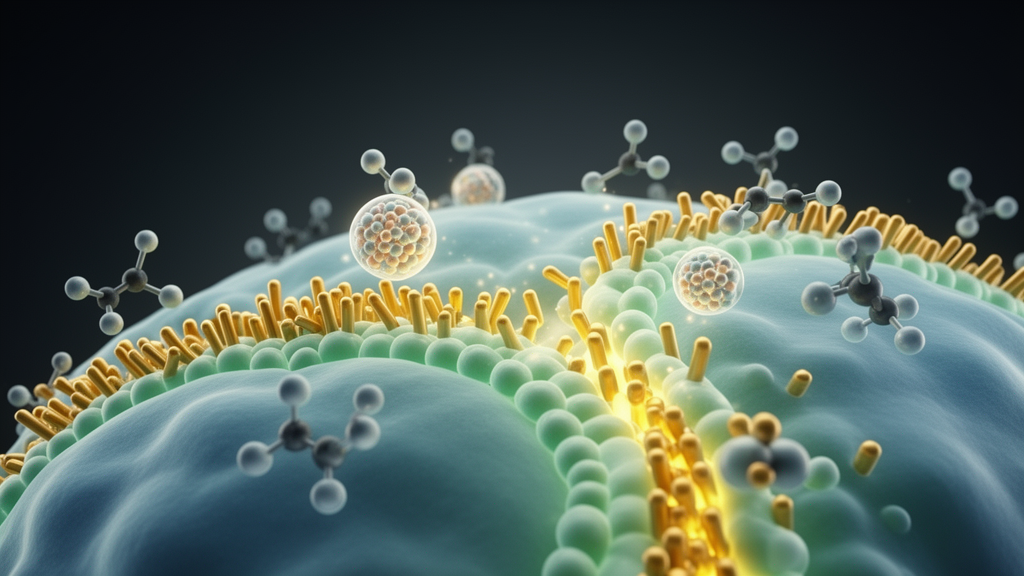
Nanotechnology is no longer just a materials science discipline, according to a wide-ranging review and perspective published in Bioscience Nanotechnology. Written by Kasinathan Kaviyarasu, the article argues that engineered nanomaterials should be understood as foundational biological tools, capable of interacting directly with living systems at the nanometer scale where proteins, nucleic acids, membranes and viruses naturally operate. The unifying concept is the bio-nano interface: the dynamic boundary where engineered particles meet biomolecules, cells, microbial communities and entire ecosystems.
The central claim is that regardless of composition, size or intended application, nanoparticles are subject to a shared set of interfacial processes, including biomolecular adsorption, cellular recognition, membrane interactions, intracellular trafficking, immune modulation and biological adaptation. These processes collectively define what the author calls the biological identity of a nanomaterial, and ultimately determine its performance as a diagnostic, therapeutic, antimicrobial or regenerative agent. Framing the field this way, the review contends, allows researchers to compare lipid carriers, polymeric particles, metallic nanoparticles and biomimetic platforms within a single systematic framework rather than treating each as an isolated technological solution.
Scale is the first pillar of the argument. Biological machinery operates at dimensions where antibodies measure roughly 10 to 15 nanometers, transcription factors 5 to 20 nanometers, ribosomes about 30 nanometers and microtubules 25 nanometers in diameter. Lipid nanoparticles designed for mRNA delivery, at 60 to 100 nanometers, exploit internalization pathways similar to those used by viral vectors, while quantum dots of 2 to 10 nanometers are smaller than many protein complexes and can act as sensitive optical probes with minimal disruption of native processes. This dimensional congruence, the review stresses, is the foundation for interactions that bulk materials simply cannot achieve.
The second pillar is the set of emergent physicochemical properties that appear only at the nanoscale. Quantum confinement gives semiconductor nanocrystals size-tunable, highly photostable fluorescence suited to real-time tracking and multiplexed bioimaging. Surface plasmon resonance in gold nanospheres and nanorods produces intense, tunable light absorption and scattering, underpinning colorimetric biosensors and localized photothermal therapies. Superparamagnetic iron oxide nanoparticles respond only to external magnetic fields, preventing aggregation under physiological conditions and enabling their use as magnetic resonance imaging contrast agents and hyperthermia actuators. Yet the review is equally candid about the constraints: quantum dot biocompatibility and signal variability, and SPION aggregation and biodistribution variability, continue to limit clinical translation.
The third pillar is engineering precision. Particles between 10 and 100 nanometers tend to show prolonged circulation, shape influences uptake kinetics, and surface charge governs electrostatic interactions with membranes and proteins. Surface functionalization allows researchers to attach antibodies, peptides, aptamers, polyethylene glycol stealth coatings and payloads ranging from drugs to genes and radiosensitizers. But the review identifies a fundamental complication: once introduced into biological fluids, nanoparticles rapidly acquire a dynamic biomolecular corona of proteins and lipids that can mask the original engineered surface, altering cellular recognition, biodistribution and payload delivery. Particles optimized under controlled laboratory conditions may therefore behave very differently in vivo, a limitation the author describes as central to the field.
Historical milestones anchor the argument in clinical reality. The 1995 approval of Doxil, a PEGylated liposomal doxorubicin, demonstrated reduced cardiotoxicity and improved pharmacokinetics in humans. Quantum dots commercialized in the late 1990s and early 2000s transformed cellular imaging and single-particle tracking. Most visibly, lipid nanoparticle-enabled mRNA vaccines deployed globally during the COVID-19 pandemic validated LNPs as safe and effective non-viral vectors, opening applications the review suggests could extend to protein replacement therapy and CRISPR-Cas9 gene editing.
The applications survey is broad. In microbiology, gold nanoparticle aggregation assays offer rapid, low-cost colorimetric detection of pathogens, proteins and nucleic acids, while magnetic nanoparticles concentrate bacteria and viruses from complex samples to improve diagnostic sensitivity. Against antimicrobial resistance, silver, copper oxide and zinc oxide nanoparticles disrupt membranes, generate reactive oxygen species and interfere with nucleic acid replication, targeting multiple cellular components simultaneously in ways that reduce the likelihood of resistance emerging. Engineered nanoparticles can also penetrate biofilms, whose dense extracellular polymeric matrices make conventional antibiotics and disinfectants ineffective, using enzymatic degradation, electrostatic interactions and localized reactive oxygen generation to destabilize these structures.
Biomimetic platforms receive particular attention as the field’s frontier. Extracellular vesicles such as exosomes, at 30 to 150 nanometers, carry intrinsic homing capabilities and low immunogenicity but face challenges in scalable production, cargo loading and batch consistency. Cell membrane-coated nanoparticles inherit surface markers from their parent cells; red blood cell membrane coatings present CD47 to avoid macrophage clearance and prolong circulation, while cancer cell membrane coatings promote homotypic targeting of originating tumor cells. Virus-like particles, already proven in hepatitis B and HPV vaccines, offer highly ordered multivalent architectures but raise immunogenicity and manufacturing questions. Each platform, the review concludes, involves trade-offs between biological sophistication and scalability, reproducibility and regulatory feasibility.
Safety receives equally serious treatment. The review argues that nanosafety must be treated as an integrated design constraint rather than a downstream evaluation, noting that nanoparticle exposure can modulate gene expression, alter signaling pathways and influence immune and microbial communities even without immediate cytotoxicity. Environmentally, released nanoparticles may aggregate, dissolve or transform, and metal-based particles such as silver and copper could disrupt beneficial microbial populations through ion release. The proposed answer is a safe-by-design paradigm combining biodegradable materials, zwitterionic and biomimetic surface coatings, multi-scale assessment from molecules to ecosystems, and computational modelling including machine learning to predict biological responses before extensive experimental validation.
The closing outlook points toward intelligent, adaptive nanosystems. Artificial intelligence is already being used to predict biomolecular corona formation, cellular uptake and toxicity profiles, and deep learning has been applied to optimize lipid nanoparticle formulations for nucleic acid delivery. Synthetic biology convergence, DNA origami, protein nanocages and living nanofactories blur the line between living and non-living systems, while closed-loop theragnostic platforms aim to diagnose, treat and monitor response simultaneously. The review is careful, however, to catalogue the translational barriers that remain: reproducibility of synthesis, corona-driven unpredictability, chronic exposure risks, regulatory frameworks built for conventional pharmaceuticals, and AI models limited by inconsistent datasets. Its conclusion is that nano-enabled biology will succeed only where materials science, biology, computation and regulation advance together, aligned with biological complexity, safety and sustainability.
Subject of Research: Bio-nano interfaces in nano-enabled biological systems
Article Title: Bio–nano interfaces in nano-enabled biological systems: advances, emerging technologies, and future perspectives
Article References: Kaviyarasu, K. (2026). Bio–nano interfaces in nano-enabled biological systems: advances, emerging technologies, and future perspectives. Bioscience Nanotechnology, 2(1), Article 18. https://doi.org/10.1186/s44331-026-00025-7
Image Credits: AI Generated
DOI: 10.1186/s44331-026-00025-7
Keywords: nanotechnology, bio-nano interface, biomolecular corona, lipid nanoparticles, quantum dots, antimicrobial resistance, safe-by-design, biomimetic nanomaterials, biosensing, extracellular vesicles, nanotoxicology, artificial intelligence
News Source: Gregory Coleman. (October 29, 2026). How Bio–Nano Interfaces Are Rewriting the Rules of Living Systems. Scienmag.