Every successful fertilization depends on a moment of molecular precision: a sperm cell must sense that it has arrived in the right place, at the right temperature, and in the right chemical environment before it can deliver its cargo. At the heart of that decision sits CatSper, the cation channel of sperm, a calcium channel found only in sperm cells and essential for male fertility across the animal kingdom. A new study published in PLOS Biology by Billy Zhao, Shweta Bhagwat, Juan Ferreira, Kiersten M. Ruff, Dilip K. Swain, Rohit V. Pappu, Celia M. Santi, Ziao Fu, and Polina V. Lishko now offers the most detailed mechanistic account yet of how CatSper integrates two of its key activating signals, rising temperature and alkaline pH, into a single coordinated response. The answer, the researchers report, lies in clusters of histidine amino acids that act as temperature-sensitive molecular switches linking neighboring channels into a synchronized array.
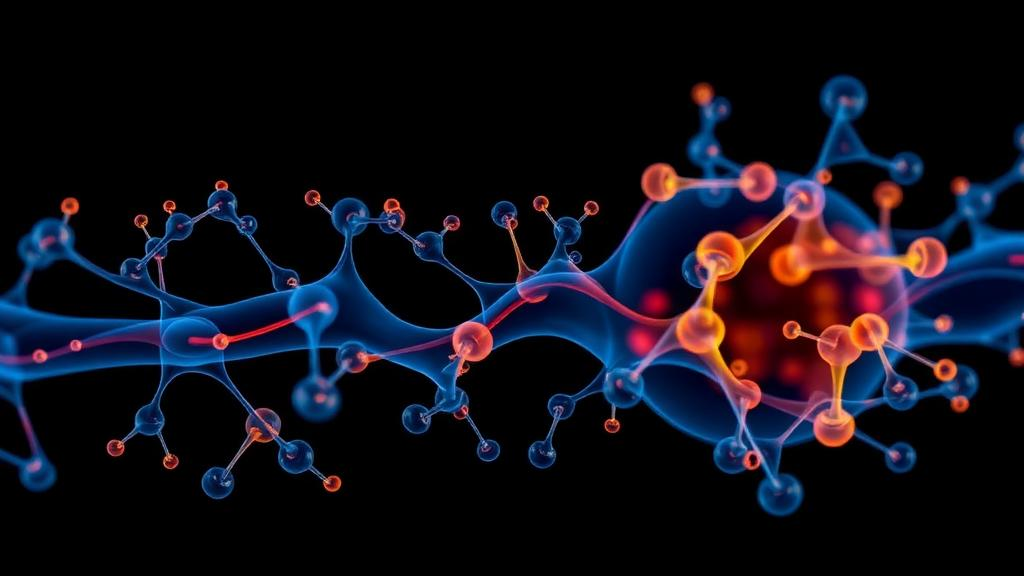
CatSper is not an ordinary ion channel. It is an unusually elaborate molecular machine composed of roughly fifteen different protein subunits, arranged not as isolated channels scattered across the sperm membrane but as zigzag supramolecular arrays running along the flagellum, the tail that propels the sperm. The channel opens in response to three physiological cues at once: intracellular alkalinization, membrane depolarization, and elevated temperature. Only when these stimuli converge does the channel generate the calcium influx that triggers hyperactivated motility, the vigorous, whip-like swimming pattern sperm need to penetrate the egg’s protective layers. For years, however, the structural basis of this multi-signal integration remained obscure, largely because the channel’s sheer complexity and its organization into higher-order assemblies made it difficult to study with conventional structural biology approaches.
The research team attacked the problem from an evolutionary angle. Rather than focusing on a single organism, they carried out comparative genomic analyses spanning 47 species, from organisms that fertilize externally in cool water to mammals whose fertilization occurs internally at body temperature. The logic was straightforward: if temperature and pH sensitivity are tuned to the conditions under which each species fertilizes, then the protein sequences responsible for that sensitivity should bear the fingerprints of evolutionary adaptation. That is precisely what they found. The length of the N-terminal region of CatSper1, one of the pore-forming subunits, and its degree of enrichment in histidine residues both correlated strongly with species-specific fertilization temperatures. Species that fertilize at warmer temperatures tended to carry CatSper1 variants with longer, more histidine-rich N-termini, suggesting that the channel’s thermal sensitivity has been actively sculpted by natural selection.
Histidine is a peculiar amino acid with a chemical personality ideally suited to sensing the environment. Its side chain has a pKa close to physiological pH, meaning it flips between a protonated, positively charged state and a neutral, deprotonated state within the narrow range of conditions sperm encounter during their journey. This switchability makes histidine residues exquisitely sensitive to both acidity and heat, since elevated temperature shifts the equilibrium toward deprotonation. Biophysicists have long exploited this property to design synthetic pH- and temperature-responsive materials, and coiled-coil proteins rich in histidine are known to disassemble as temperatures rise. The new study proposes that CatSper has co-opted this same physical chemistry for a biological purpose: converting thermal and chemical cues into mechanical forces that reshape the channel assembly.
To visualize where these histidine switches might sit within the channel’s architecture, the team turned to AlphaFold3-based structural modeling combined with evolutionary sequence-structure analyses. The models revealed conserved clusters of histidines displayed on the surface of the CatSper1 N-terminus, positioned exactly where adjacent CatSper assemblies would be expected to make contact with one another within the zigzag array. Strikingly, this predicted contact interface lies close to the dominant voltage-sensing module of the channel, the region responsible for detecting changes in membrane potential. In other words, the interface through which neighboring channels communicate is physically wired to the machinery that governs channel gating, providing a plausible structural route by which inter-channel interactions could influence when and how strongly the channels open.
The model that emerges from these findings is one of cooperative, temperature-dependent coupling. At lower temperatures, the histidine residues at the contact interfaces remain protonated and charged, favoring electrostatic interactions that hold neighboring CatSper complexes in a particular relative orientation. As temperature rises, deprotonation of these histidines alters the charge landscape, weakening or reshaping the contacts and allowing the assemblies to rearrange. This thermally driven reorganization, the authors propose, functionally couples neighboring CatSper complexes within the supramolecular array, promoting synchronized activation across the flagellum. Alkalinization during capacitation, the maturation process sperm undergo in the female reproductive tract, would further shift histidine protonation states, meaning that pH and temperature converge on the same chemical switch rather than acting through entirely separate pathways.
Crucially, the team did not stop at computational prediction. They tested the model functionally using mouse sperm, employing electrophysiology to measure CatSper currents directly and calcium imaging to track the channel’s activity in living cells. Their experiments focused on the capacitation process, during which sperm undergo molecular changes that prepare them for fertilization. The researchers found that capacitation is associated with partial removal of the CatSper1 N-terminus, the very region carrying the histidine-rich clusters. When this N-terminal processing was manipulated, the consequence was selective: temperature-dependent activation of the channel was impaired, while other aspects of channel function were preserved. This dissociation is exactly what the histidine-switch model predicts, since removing the histidine-bearing interface should sever the thermal coupling between channels without dismantling the core pore and voltage-sensing machinery.
The findings carry implications that extend well beyond reproductive biology. CatSper is a validated target for contraceptive development, and a mechanistic understanding of how its temperature and pH sensitivity arise at the molecular level could guide the design of small molecules that disrupt the histidine-mediated interfaces, rendering sperm unable to mount the hyperactivated motility needed for fertilization. Conversely, defects in CatSper function are a known cause of male infertility, and the evolutionary correlation between histidine enrichment and fertilization temperature hints that environmental heat, a growing concern for fertility in a warming world, could interfere with the very switching mechanism the channel relies upon. The study also adds to a growing appreciation that supramolecular organization, the arrangement of individual proteins into higher-order assemblies, is not decorative but functional, endowing channels with collective behaviors that isolated molecules cannot achieve.
Methodologically, the work showcases a modern strategy for tackling intractable molecular machines. CatSper’s fifteen-subunit complexity and its membrane-embedded, flagellum-specific assembly have long resisted traditional structural determination. By combining phylogenetic comparison across dozens of species with AlphaFold3-based modeling and evolutionary sequence-structure analysis, then validating predictions with electrophysiology and calcium imaging in native sperm, the team extracted mechanistic insight from a system that has defied conventional approaches. The convergence of computational prediction and functional validation lends weight to the central claim: that a single amino acid, histidine, deployed in surface clusters at inter-channel contact points, serves as the physical link between the thermal and chemical worlds that sperm must navigate.
What remains to be resolved are the fine details of the mechanism. Direct structural visualization of the histidine-mediated contacts in their protonated and deprotonated states, and a quantitative account of how contact rearrangement translates into changes in channel gating, will likely require advances in cryo-electron microscopy and molecular dynamics simulations of the full assembly. The authors’ model also raises questions about how many neighboring channels must be coupled for synchronized activation to occur, and whether the zigzag geometry of the array optimizes this cooperativity along the flagellum. For now, the study stands as a compelling demonstration that evolution has engineered a thermosensor into the very architecture of the sperm calcium channel, using the humble histidine residue to ensure that when the moment of fertilization arrives, thousands of channels fire together rather than alone.
Subject of Research: The supramolecular mechanism by which histidine-mediated temperature and pH sensing activates the sperm calcium channel CatSper
Article Title: A histidine-mediated supramolecular mechanism links temperature and pH activation of the sperm channel CatSper
Article References: Zhao, B., Bhagwat, S., Ferreira, J., Ruff, K. M., Swain, D. K., Pappu, R. V., Santi, C. M., Fu, Z., & Lishko, P. V. (2026). A histidine-mediated supramolecular mechanism links temperature and pH activation of the sperm channel CatSper. PLOS Biology, 24(10), e3003776. https://doi.org/10.1371/journal.pbio.3003776
Image Credits: AI Generated
DOI: 10.1371/journal.pbio.3003776
Keywords: CatSper, sperm channel, calcium signaling, histidine, pH sensing, temperature activation, male fertility, supramolecular assembly, AlphaFold3, comparative genomics, electrophysiology, capacitation
News Source: Drew Townsend. (October 10, 2026). Histidine Clusters Reveal How Heat and pH Switch On the Sperm Channel CatSper. Scienmag.