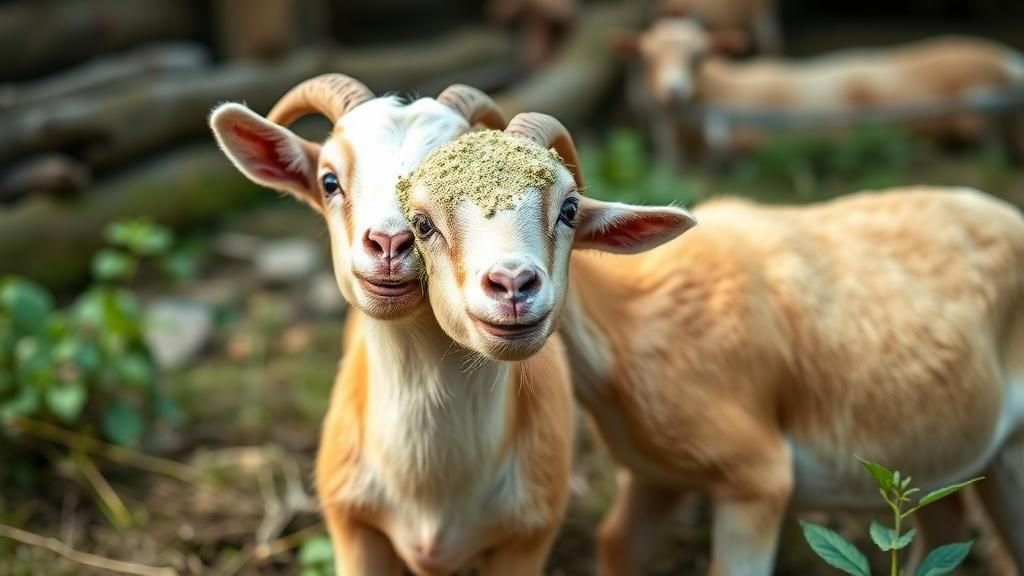
A staple of traditional Chinese medicine may hold the key to helping young goats survive one of the most stressful transitions of their early lives. In a study published in Molecular Biology Reports, researchers at the Institute of Subtropical Agriculture of the Chinese Academy of Sciences, working with colleagues from the Hunan Academy of Agricultural Sciences and the University of Agriculture Peshawar, report that a finely powdered preparation of Astragalus membranaceus root significantly reshapes the circulating immune profile of weaned black Xiangdong goat kids. The treatment, delivered simply as a daily oral supplement in the animals’ feed, raised blood concentrations of the complement regulator C4 binding protein, or C4bp, and increased levels of the antibody IgM, without provoking the inflammatory storm that often accompanies immune stimulation. The findings, the authors suggest, point toward a low-cost nutritional strategy for supporting livestock immunity during weaning, a period in which young ruminants are notoriously vulnerable to infection.
Weaning is a physiological crucible for goat kids. Abrupt separation from the dam, a sudden shift from milk to solid feed, and an immature rumen converge to create a window of heightened susceptibility to gastrointestinal and respiratory disease. Pre-weaning mortality remains a persistent problem in goat production systems worldwide, and producers have long sought alternatives to prophylactic antibiotics, whose use is increasingly restricted on animal welfare and antimicrobial resistance grounds. Astragalus membranaceus, known in Chinese pharmacopoeia as huangqi, has been used for centuries as an immunomodulatory tonic, and a substantial body of modern research attributes much of its bioactivity to polysaccharides that can influence dendritic cells, macrophages, and B lymphocyte function. What has been missing, however, is a rigorous, molecularly informed assessment of how the herb affects the peripheral immune system of young ruminants specifically.
The research team addressed that gap with a controlled feeding trial involving thirty-six black Xiangdong goat kids, all weaned at postnatal day 42 and weighing on average about 5.3 kilograms. The animals were randomly divided into two groups: a control group of sixteen kids receiving only a basal diet, and a treatment group of twenty kids receiving the basal diet supplemented with ten grams per day of ultrafine-grained Astragalus membranaceus powder, abbreviated UGAM. After an eight-day adaptation period, the supplementation phase ran from postnatal day 43 through day 78, giving the treatment roughly five full weeks of exposure. The choice of ultrafine grinding was deliberate. By reducing particle size dramatically, ultrafine processing increases the surface area available for digestion and absorption, potentially liberating more of the herb’s active polysaccharides and other constituents than conventional coarse powders would allow.
On day 78, the researchers drew blood from every animal and subjected the samples to a battery of immunological assays. They quantified seven complement proteins spanning the classical and regulatory arms of the cascade, C1q, C1r, C1s, C3, C4, C4bp, and Factor H, together with the three major immunoglobulin classes, IgA, IgG, and IgM, and a panel of six inflammatory cytokines including IL-1α, IL-1β, IL-6, IL-10, TNF-α, and IFN-γ. Complete peripheral blood cell profiles rounded out the picture. In a randomly selected subset of eleven control animals and sixteen treated animals, the team also measured hepatic expression of complement-related genes using reverse transcription quantitative PCR, capitalizing on the fact that the liver is the principal site of complement protein synthesis and an increasingly recognized hub of systemic innate immunity.
The results were strikingly specific. Serum concentrations of C4bp, a glycoprotein that acts as a major negative regulator of the classical and lectin complement pathways by accelerating the decay of C3 and C5 convertases and serving as a cofactor for Factor I-mediated cleavage of C4b, rose significantly in the treated animals. Crucially, this increase was mirrored at the transcript level: hepatic C4bp mRNA expression was also significantly elevated, with the serum protein and liver gene expression changes both reaching statistical significance at p less than 0.001. This concordance between circulating protein and hepatic messenger RNA suggests that the herb acts, at least in part, by transcriptionally upregulating complement regulatory machinery in the liver rather than merely altering protein clearance or distribution. Alongside the C4bp signal, the treated kids showed significantly higher circulating IgM, the phylogenetically oldest and first-response antibody class, produced early in immune responses by naive B cells.
Equally informative was what did not change. Levels of IgA and IgG, the other two immunoglobulin classes measured, remained statistically indistinguishable between the groups, as did all six inflammatory cytokines. This absence of cytokine elevation is arguably as important as the increases themselves. Many immunostimulatory feed additives work, when they work, by provoking a mild inflammatory response, which carries metabolic costs and risks of tissue damage if sustained. The UGAM-treated animals instead exhibited a pattern consistent with homeostatic tuning: an expanded complement regulatory capacity and a bolstered first-line humoral defense, achieved without activating pro-inflammatory or even broadly anti-inflammatory cytokine programs. The researchers interpreted this as evidence of engagement of the body’s homeostatic complement regulatory system rather than blunt immune activation.
To test whether the observed changes were genuinely linked to the treatment rather than artifacts of multiple comparisons, the team employed a multi-parameter statistical framework. In that analysis, UGAM supplementation emerged as independently and positively associated with C4bp levels, with a partial correlation coefficient of 0.74 and a p-value below 0.001, a robust effect size for a nutritional intervention in a livestock trial. Furthermore, a Mantel test comparing the overall correlation structures of the complement system and the immunoglobulin panel revealed significant concordance between the two modules, with a Mantel statistic of 0.36 and p equal to 0.001. This suggests that the complement and antibody arms of humoral immunity moved together in response to the intervention, consistent with the well-documented crosstalk between complement activation products and B cell responses, in which complement receptor engagement shapes antibody quality and magnitude.
The study builds on a growing literature exploring Astragalus preparations across livestock species. Previous work has documented improved growth performance, serum immunity, and antioxidant status in Tibetan sheep and finishing lambs supplemented with Astragalus root, enhanced intestinal health and gut microbiota profiles in broilers fed Astragalus-derived polysaccharides, and protective effects on mucosal immunity in immunosuppressed poultry. An earlier companion study by some of the same authors showed that ultra-ground Astragalus supplementation altered ileal microbiome composition and mucosal immune profiles in weaned goats, and the new work extends that picture to the systemic, liver-centered complement axis. Notably, several prior studies linked Astragalus polysaccharides to effects on NF-κB signaling and trained immunity pathways, providing plausible mechanistic scaffolding for the observed hepatic transcriptional changes, though the present study did not directly assay these signaling pathways.
The authors are appropriately measured about the limits of their evidence. Complement activity itself, as opposed to component concentrations, was not measured, and neither were plasma cell responses, downstream signaling events, or formal safety parameters, leaving the precise mechanisms behind the observed C4bp and IgM elevations hypothetical and requiring validation in future experiments. The treatment group was also larger than the control group, and hepatic gene expression was assessed in a subset rather than the full cohort. Nonetheless, the internal consistency of the findings, spanning protein, transcript, and multivariate correlation analyses, lends the central conclusion considerable weight. The trial was funded by China’s National Key Research and Development Program and the Natural Science Foundation of Guangxi, and the analysis code has been made publicly available on GitHub, an increasingly welcome transparency measure in animal science.
If replicated and extended, the implications extend beyond goat husbandry. The complement system sits at the intersection of innate and adaptive immunity, and pharmacological or nutritional modulation of its regulatory arm, particularly C4bp, is an active frontier in human medicine, with complement-targeting therapeutics advancing for conditions ranging from nephropathy to autoimmune disease. Demonstrating that a simple dietary herb powder can shift complement regulatory tone in a large animal model, without inflammatory side effects, offers a conceptual bridge between traditional herbal medicine and modern molecular immunology. For producers of black Xiangdong goats, a breed valued in subtropical China, the prospect of a ten-gram daily supplement that meaningfully supports humoral immunity through the perilous post-weaning weeks is an attractive one. The next step, the researchers indicate, will be to confirm the mechanisms, verify safety over longer durations, and determine whether the immunological gains translate into measurable improvements in disease resistance and survival under field conditions.
Subject of Research: Effects of oral ultrafine-grained Astragalus membranaceus supplementation on complement regulator C4bp and immunoglobulin responses in weaned goats
Article Title: Oral administration of ultrafine-grained Astragalus membranaceus enhances peripheral immunity in weaned black Xiangdong goats by upregulating the complement regulator C4bp and immunoglobulin responses
Article References: Liao, J., Sun, J., Gebeyew, K., Khan, N. A., & Liu, Y. (2026). Oral administration of ultrafine-grained Astragalus membranaceus enhances peripheral immunity in weaned black Xiangdong goats by upregulating the complement regulator C4bp and immunoglobulin responses. Molecular Biology Reports, 53(1), Article 1680. https://doi.org/10.1007/s11033-026-12883-8
Image Credits: AI Generated
DOI: 10.1007/s11033-026-12883-8
Keywords: Astragalus membranaceus, complement system, C4bp, immunoglobulins, IgM, weaned goats, ultrafine grinding, hepatic gene expression, innate immunity, humoral immunity, livestock nutrition, Xiangdong goats
News Source: William Thompson. (October 10, 2026). Ancient Chinese Herb Powder Rides to the Rescue of Weaning-Stressed Goat Kids. Scienmag.