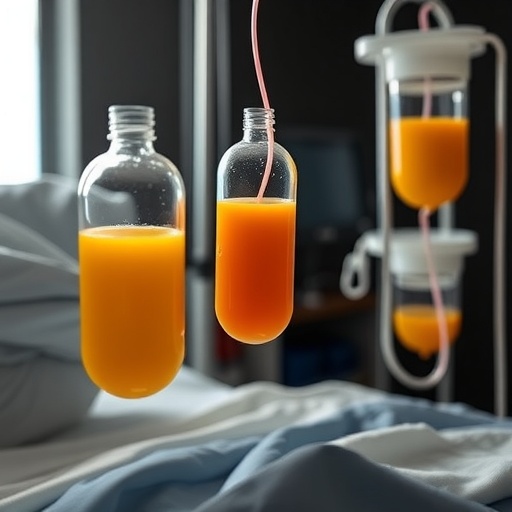
Intravenous Vitamin C: A Potential Game-Changer in Trauma Care?
In a compelling systematic review published recently in BMJ Military Health, researchers have brought to light promising, though preliminary, evidence suggesting that high doses of intravenous vitamin C may significantly impact the outcomes of trauma patients. Trauma, a leading cause of mortality worldwide, initiates a cascade of complex physiological responses that critically affect patient survival and recovery. This review synthesizes existing studies indicating that vitamin C infusion could reduce mortality rates, incidence of sepsis, and organ failure, while also shortening stays in intensive care and the hospital overall.
Vitamin C, or ascorbic acid, is a vital micronutrient renowned for its antioxidant properties and role in collagen synthesis, immune function, and endothelial integrity. During critical illness and trauma, the body’s stores of vitamin C are rapidly depleted, potentially compromising its recovery mechanisms. The rationale for therapeutic vitamin C administration rests on its multifaceted biological actions: it supports endothelial barrier function, stabilizes blood pressure through vasopressor effects, and neutralizes reactive oxygen species that cause cellular damage. These effects collectively could mitigate the pathological processes that drive morbidity and mortality following severe injury.
Despite such biological plausibility, the clinical application of high-dose intravenous vitamin C in trauma care has remained largely exploratory. This systematic review aimed to clarify the therapeutic value by scouring the literature for studies examining adult trauma patients treated with high-dose IV vitamin C, evaluating endpoints including 30-day mortality, sepsis incidence, organ dysfunction scores, and hospitalization length. The review’s temporal scope stretched through to the end of 2025, reflecting a comprehensive search that yielded 108 potentially relevant studies.
From this extensive pool, only six studies involving 5,171 patients met criteria for inclusion in the meta-analysis. Of these, three were randomized controlled trials—the gold standard for clinical investigation—and three were observational in nature. Despite methodological heterogeneity, the aggregated data revealed a notable association between intravenous vitamin C therapy and improved patient outcomes. Specifically, there was a statistically significant reduction in mortality at 30 days post-hospital discharge, alongside decreased duration of intensive care unit and overall hospital stays.
Furthermore, four studies demonstrated diminished rates of sepsis among patients receiving vitamin C infusions. Sepsis, a severe dysregulated immune response to infection, is a major contributor to morbidity in trauma populations, making this finding particularly encouraging. Two studies additionally reported reduced incidence of multi-organ failure, a critical and often fatal complication in polytrauma patients. These outcomes collectively suggest that vitamin C may play a modulatory role in curbing the inflammatory and oxidative cascades that exacerbate tissue injury.
Yet, the researchers emphasize caution in interpreting these results due to significant limitations within the existing evidence base. The relatively small number of eligible studies, many of which employed observational designs susceptible to bias, diminishes the certainty of the findings. Variability was noted in patient cohorts, dosing regimens, timing of administration, and concomitant therapies, which also complicated direct comparisons across studies. Notably, no studies isolated vitamin C as a monotherapy; it was invariably administered alongside other interventions, making it difficult to attribute observed benefits solely to vitamin C.
The review also highlights an important gap: the lack of investigation into the optimal timing for vitamin C administration in trauma. Given the dynamic progression of critical illness, early intervention might be crucial to harness the full therapeutic potential of antioxidants like vitamin C. Without consensus on when to initiate treatment, clinicians face uncertainty in applying these findings pragmatically.
Methodological heterogeneity further clouds the interpretation of results. Diverse outcome measures, ranging from mortality to organ dysfunction scoring systems like APACHE II and SOFA, as well as differences in clinical settings and patient severity, contribute to inconsistent data synthesis. These factors underscore the need for well-designed, adequately powered randomized controlled trials to define precise protocols, including dosing strategies, timing, and patient selection criteria for vitamin C therapy.
Despite these caveats, the review proposes that even modest improvements in mortality, sepsis, or organ failure rates could justify considering high-dose intravenous vitamin C in trauma care, especially in operational environments confronted with resource constraints or high patient acuity, such as military conflict zones. The translational potential is compelling: vitamin C is inexpensive, readily available, and has a well-established safety profile when administered intravenously.
The authors advocate for trauma-specific, rigorous clinical investigations to establish definitive evidence and optimize use parameters for intravenous vitamin C in critical care settings. Such research avenues could ultimately inform guidelines, enabling incorporation of vitamin C into standardized trauma resuscitation protocols.
This systematic review serves as a critical step forward in exploring adjuvant therapies to improve trauma outcomes. While not definitive, it catalyzes a re-examination of vitamin C’s role beyond nutritional supplementation toward a targeted pharmacologic intervention aimed at reducing the global burden of trauma-related morbidity and mortality.
Subject of Research: People
Article Title: A systematic review on the role of high-dose vitamin C in trauma patients
News Publication Date: 30-Jun-2026
Web References: http://dx.doi.org/10.1136/military-2026-003285
Keywords: Vitamin C, Intravenous injections, Trauma, Sepsis, Organ failure, Intensive care, Antioxidants, Critical illness, Mortality, Clinical trials
Tags: antioxidant therapy in critical illnesshigh-dose intravenous vitamin C in trauma careintravenous vitamin C and sepsis reductiontherapeutic use of ascorbic acid in traumavitamin C and organ failure preventionvitamin C clinical applications in trauma recoveryvitamin C depletion in critical illnessvitamin C effects on vasopressor stabilityvitamin C for immune function in traumavitamin C impact on trauma patient mortalityvitamin C infusion in intensive care unitsvitamin C role in endothelial integrity