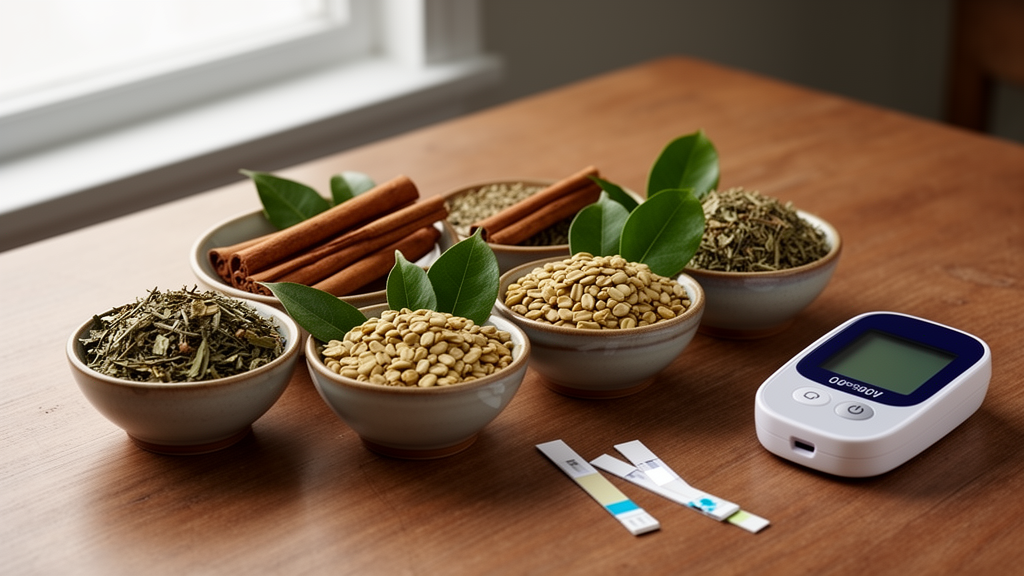
Herbal products such as berberine, curcumin, fenugreek and Gymnema sylvestre may modestly lower blood sugar in people with type 2 diabetes, but the evidence behind these widely promoted remedies remains far weaker than most patients realise, according to a critically appraised narrative review published in Clinical Phytoscience. The review, which synthesised English-language clinical evidence published between January 2020 and 12 August 2026, concludes that while several botanical interventions produced statistically significant reductions in HbA1c in pooled analyses, none of the current evidence supports replacing established diabetes pharmacotherapy.
The strongest headline number comes from berberine, an isoquinoline alkaloid found in plants of the genera Berberis and Coptis. A 2021 meta-analysis of 46 randomised controlled trials reported a mean reduction in HbA1c of 0.73 percentage points, alongside reductions in fasting plasma glucose of 0.86 mmol/L and two-hour postprandial glucose of 1.26 mmol/L. Yet the review’s author cautions that many of the underlying trials were small, short-term studies in which blinding and allocation procedures were not consistently robust. The pooled estimate is therefore best read as a signal of potential adjunctive efficacy, not proof that berberine matches conventional drugs.
Formulation matters as much as the headline effect. A separate 2024 meta-analysis of nine trials involving 547 participants who used whole-plant Berberis vulgaris or Berberis integerrima preparations found a considerably smaller HbA1c reduction of 0.30 percentage points. Purified berberine and whole-plant extracts differ in constituent concentration, pharmacokinetics, quality control and regulatory status, so the two sets of results cannot be treated as interchangeable, the review stresses.
Curcumin, the principal curcuminoid of turmeric, shows a similar pattern. A 2024 meta-analysis of 18 randomised trials covering 1,382 participants reported reductions in fasting plasma glucose of 11.48 mg/dL and in HbA1c of 0.54 percentage points. Interpretation is complicated by the enormous diversity of products on the market: conventional turmeric powder, standardised curcuminoid extracts, piperine-containing combinations, phospholipid complexes and micellar formulations all produce different systemic exposures, because curcumin on its own has very low oral bioavailability. Pooling these pharmacologically distinct products into a single average effect may yield an estimate that applies to no actual commercial product.
Fenugreek seed, which contains soluble galactomannan fibre and the compound 4-hydroxyisoleucine, reduced fasting glucose and HbA1c by a weighted mean of 0.54 percentage points in a 2024 meta-analysis of 19 trials, with mild gastrointestinal symptoms the most consistently reported adverse effect. Gymnema sylvestre fared worse on quality grounds: a 2021 meta-analysis of 10 studies in 419 participants found glucose reductions but with very high statistical heterogeneity, with I-squared values between 80 and 99 percent, and many small or open-label trials. Evidence for bitter melon remains contradictory and of low to very low certainty according to a 2025 GRADE-adherent meta-analysis of 25 trials, while a 2023 dose-response meta-analysis of cinnamon found no significant overall effect on fasting glucose or HbA1c. An overview of 25 meta-analyses identified aloe vera leaf gel and psyllium fibre among interventions with the largest pooled HbA1c point estimates, but with wide confidence intervals and heterogeneous products and populations.
The most important interpretive anchor is a 2025 umbrella review that applied AMSTAR 2 and GRADE methodology to the whole field. It found moderate-to-high certainty of evidence only for turmeric and ginger; several other interventions were backed by low or very low certainty despite statistically significant effects in individual analyses. This discrepancy, the review argues, is precisely why statistical significance alone should never be used to rank herbal therapies: a significant HbA1c reduction in a heterogeneous pool of small trials is not the same as high-certainty, clinically actionable evidence.
Safety and interaction risks add a further layer of caution. Berberine has the strongest direct pharmacokinetic interaction evidence: in a controlled human study, repeated administration reduced the activity of the drug-metabolising enzymes CYP2D6, CYP2C9 and CYP3A4, indicating potential to alter exposure to co-administered medicines, and it has also been investigated as a modulator of P-glycoprotein. Curcumin can modulate drug-metabolising enzymes and transporters in experimental systems, and enhanced-bioavailability formulations may raise systemic exposure. Fenugreek’s fibre-rich matrix may affect absorption and CYP3A substrate disposition, though direct human evidence is limited. The most immediate clinical concern for all these agents is additive glucose lowering when combined with insulin, sulfonylureas or other antihyperglycaemic medicines, which argues for medication reconciliation and closer glucose monitoring.
Product quality poses its own translational barrier. Chemical authentication studies have documented substantial variability among commercial herbal products, including substitution, undeclared ingredients and product-to-product differences. Plant species, chemotype, geographic origin, harvest time, extraction solvent and storage conditions can all change the final chemical profile, so a clinical trial using a defined extract does not establish the efficacy or safety of every supplement sold under the same botanical name. Regulatory status also varies widely, with some botanical products regulated as medicines and many others sold under looser food or supplement frameworks.
Perhaps the review’s sharpest warning concerns surrogate outcomes. HbA1c is a useful glycaemic measure, but a large meta-analysis of randomised trials found no valid surrogacy between HbA1c treatment effects and all-cause mortality. Improved HbA1c from an herbal product should therefore never be credited with preventing cardiovascular events, diabetic nephropathy, retinopathy or death unless those outcomes have been directly studied, which they have not in most herbal trials to date.
The review’s conclusion is deliberately conservative. Herbal interventions may be considered monitored adjuncts for selected patients who wish to use complementary approaches, but they should not replace guideline-directed pharmacotherapy. Progress, the author argues, depends on adequately powered, preregistered trials with longer follow-up, standardised and chemically quantified products, dedicated human interaction studies for berberine, curcumin and fenugreek, long-term surveillance for rare adverse effects, and outcome measures that extend beyond surrogate glycaemic indices.
Subject of Research: Clinical evidence for herbal interventions in the management of type 2 diabetes
Article Title: Herbal interventions for the management of type 2 diabetes mellitus: a narrative review of clinical evidence, mechanisms, and translational challenges
Article References: Mathpati, K. (2026). Herbal interventions for the management of type 2 diabetes mellitus: a narrative review of clinical evidence, mechanisms, and translational challenges. Clinical Phytoscience, 12(1), Article 23. https://doi.org/10.1186/s40816-026-00439-z
Image Credits: AI Generated
DOI: 10.1186/s40816-026-00439-z
Keywords: type 2 diabetes, herbal medicine, berberine, curcumin, fenugreek, HbA1c, meta-analysis, Gymnema sylvestre, bitter melon, cinnamon, herb-drug interactions, evidence certainty
News Source: Ophelia Keating. (October 29, 2026). Herbal Remedies Show Modest Blood Sugar Benefits in Type 2 Diabetes, Review Finds. Scienmag.