• HOME
  • NEWS
  • EXPLORE
    • CAREER
      • Companies
      • Jobs
    • EVENTS
    • iGEM
      • News
      • Team
    • PHOTOS
    • VIDEO
    • WIKI
  • BLOG
  • COMMUNITY
    • FACEBOOK
    • INSTAGRAM
    • TWITTER
Friday, April 17, 2026
BIOENGINEER.ORG
No Result
View All Result
  • Login
  • HOME
  • NEWS
  • EXPLORE
    • CAREER
      • Companies
      • Jobs
        • Lecturer
        • PhD Studentship
        • Postdoc
        • Research Assistant
    • EVENTS
    • iGEM
      • News
      • Team
    • PHOTOS
    • VIDEO
    • WIKI
  • BLOG
  • COMMUNITY
    • FACEBOOK
    • INSTAGRAM
    • TWITTER
  • HOME
  • NEWS
  • EXPLORE
    • CAREER
      • Companies
      • Jobs
        • Lecturer
        • PhD Studentship
        • Postdoc
        • Research Assistant
    • EVENTS
    • iGEM
      • News
      • Team
    • PHOTOS
    • VIDEO
    • WIKI
  • BLOG
  • COMMUNITY
    • FACEBOOK
    • INSTAGRAM
    • TWITTER
No Result
View All Result
Bioengineer.org
No Result
View All Result
Home NEWS Science News

Heartbeat could be used as password to access electronic health records

Bioengineer by Bioengineer
January 18, 2017
in Science News
Reading Time: 2 mins read
0
Share on FacebookShare on TwitterShare on LinkedinShare on RedditShare on Telegram
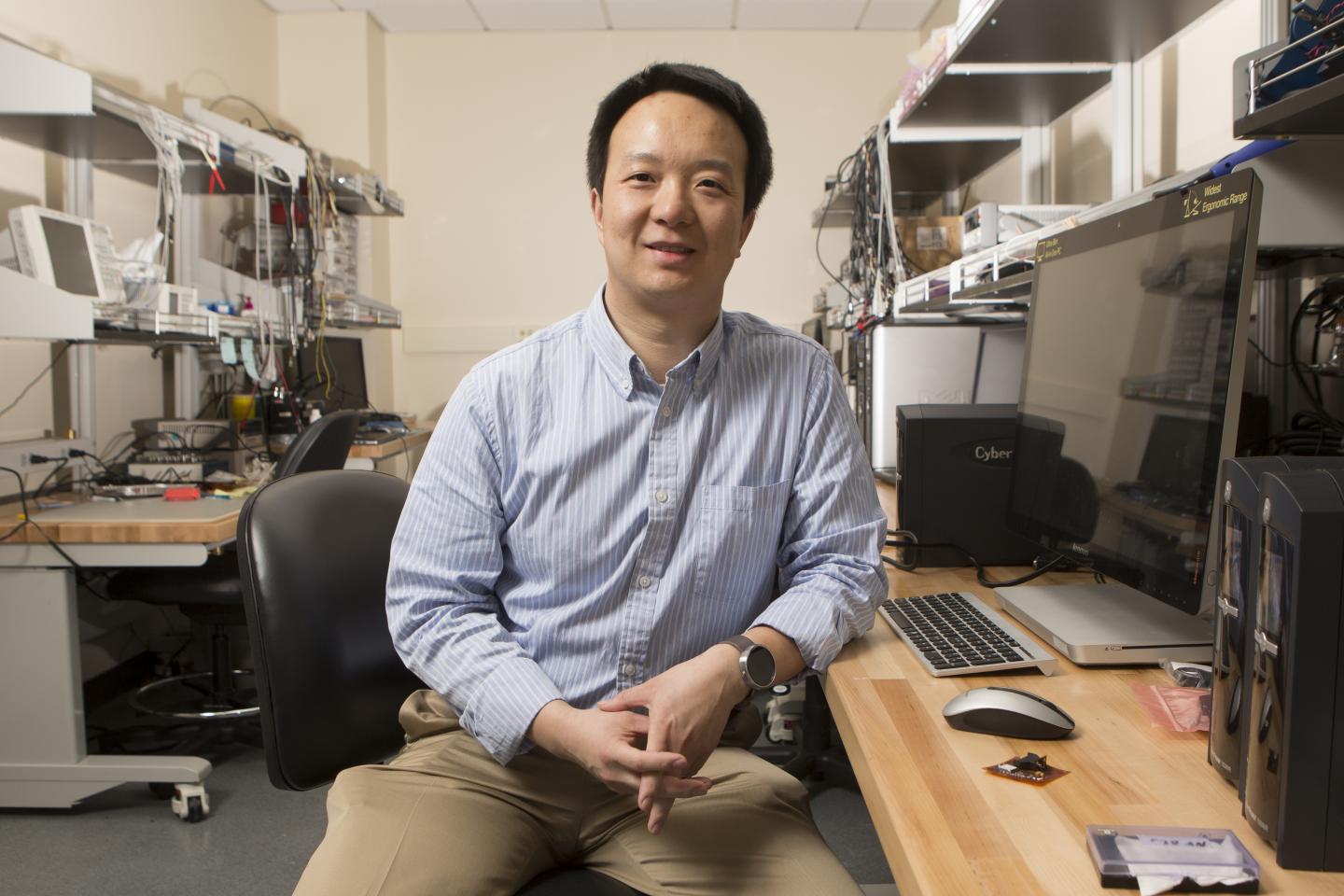
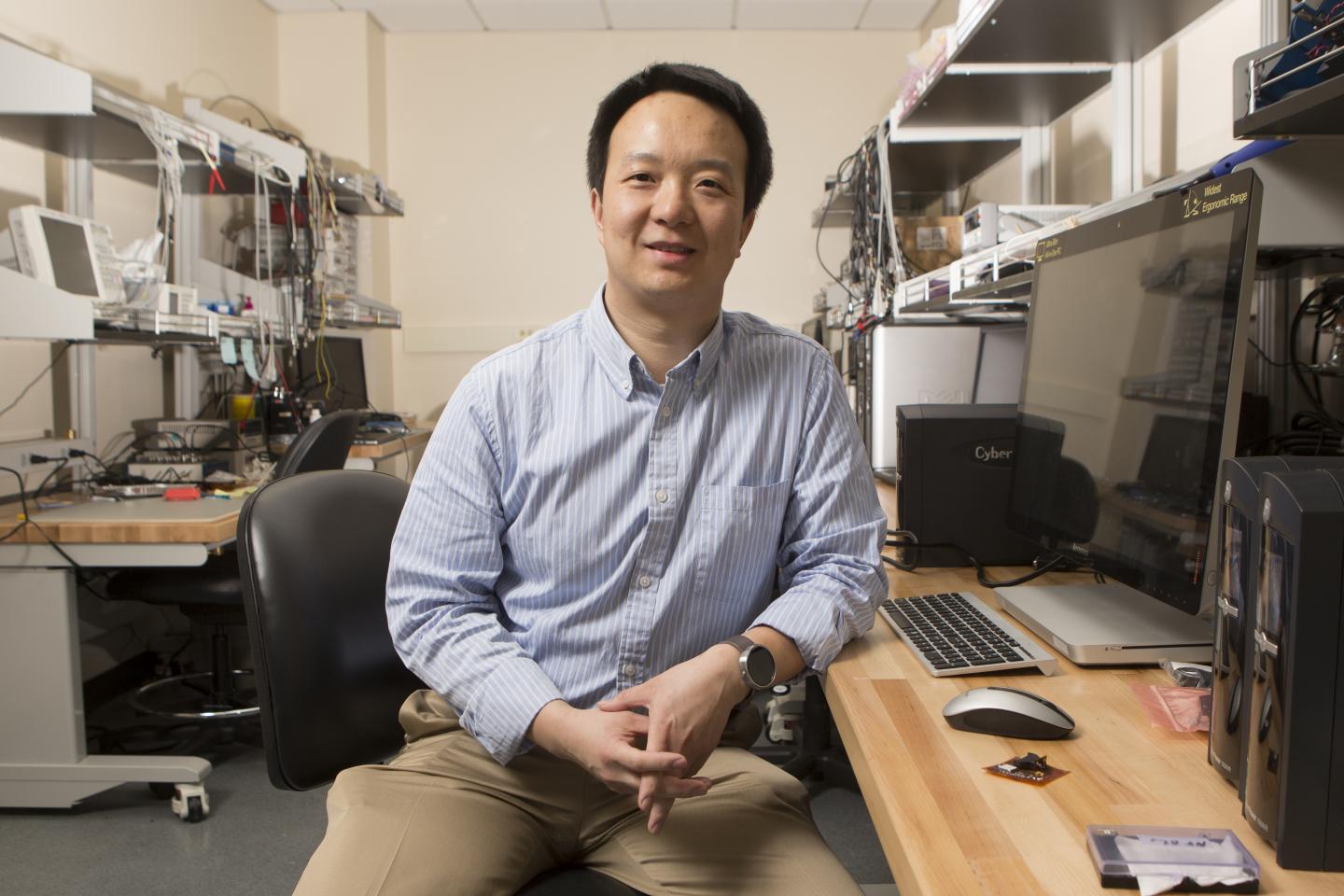
IMAGE

Credit: Binghamton University

BINGHAMTON, NY – Researchers at Binghamton University, State University of New York have devised a new way to protect personal electronic health records using a patient's own heartbeat.

"The cost and complexity of traditional encryption solutions prevent them being directly applied to telemedicine or mobile healthcare. Those systems are gradually replacing clinic-centered healthcare, and we wanted to find a unique solution to protect sensitive personal health data with something simple, available and cost-effective," said Zhanpeng Jin, assistant professor in the Department of Electrical and Computer Engineering at the Thomas J. Watson School of Engineering and Applied Science at Binghamton University. Jin is the co-author of a new paper titled "A Robust and Reusable ECG-based Authentication and Data Encryption Scheme for eHealth Systems."

Traditional security measures–like cryptography or encryption–can be expensive, time-consuming, and computing-intensive. Binghamton researchers encrypted patient data using a person's unique electrocardiograph (ECG)–a measurement of the electrical activity of the heart measured by a biosensor attached to the skin–as the key to lock and unlock the files.

"The ECG signal is one of the most important and common physiological parameters collected and analyzed to understand a patient's' health," said Jin. "While ECG signals are collected for clinical diagnosis and transmitted through networks to electronic health records, we strategically reused the ECG signals for the data encryption. Through this strategy, the security and privacy can be enhanced while minimum cost will be added."

Essentially, the patient's heartbeat is the password to access their electronic health records.

The identification scheme is a combination of previous work by Jin using a person's unique brainprint instead of traditional passwords for access to computers and buildings combined with cyber-security work from Guo and Chen.

"This research will be very helpful and significant for next-generation secure, personalized healthcare," said Jin.

Since an ECG may change due to age, illness or injury–or a patient may just want to change how their records are accessed–researchers are currently working out ways to incorporate those variables.

Assistant Professor Linke Guo and Associate Professor Yu Chen, along with PhD candidates Pei Huang and Borui Li, are co-authors of the paper.

The research was presented at The IEEE Global Communications Conference (GLOBECOM 2016) in Washington, D.C., in December 2016.

###

The work is supported by Binghamton University's Interdisciplinary Collaboration Grant (ICG) program.

Media Contact

Zhanpeng Jin
[email protected]
607-777-3363
@binghamtonu

http://www.binghamton.edu

############

Story Source: Materials provided by Scienmag
Share12Tweet8Share2ShareShareShare2

Related Posts

New Study Identifies Key Obstacles to Timely Head and Neck Cancer Care in Rural Communities

April 16, 2026

Sleep Deprivation Alters Gut Microbiota, Aggravating Colorectal Cancer Progression

April 16, 2026

Breakthrough Surgical Technique Alleviates Chronic Swelling in Legs and Arms

April 16, 2026

MIT Study Reveals Increased Youth Vulnerability to Carcinogen in Contaminated Water and Certain Medications

April 16, 2026
Please login to join discussion

POPULAR NEWS

  • Scientists Investigate Possible Connection Between COVID-19 and Increased Lung Cancer Risk

    61 shares
    Share 24 Tweet 15
  • Boosting Breast Cancer Risk Prediction with Genetics

    47 shares
    Share 19 Tweet 12
  • NSF funds machine-learning research at UNO and UNL to study energy requirements of walking in older adults

    99 shares
    Share 40 Tweet 25
  • Popular Anti-Aging Compound Linked to Damage in Corpus Callosum, Study Finds

    46 shares
    Share 18 Tweet 12

About

We bring you the latest biotechnology news from best research centers and universities around the world. Check our website.

Follow us

Recent News

New Study Identifies Key Obstacles to Timely Head and Neck Cancer Care in Rural Communities

Sleep Deprivation Alters Gut Microbiota, Aggravating Colorectal Cancer Progression

Breakthrough Surgical Technique Alleviates Chronic Swelling in Legs and Arms

Subscribe to Blog via Email

Enter your email address to subscribe to this blog and receive notifications of new posts by email.

Join 79 other subscribers
  • Contact Us

Bioengineer.org © Copyright 2023 All Rights Reserved.

Welcome Back!

Login to your account below

Forgotten Password?

Retrieve your password

Please enter your username or email address to reset your password.

Log In
No Result
View All Result
  • Homepages
    • Home Page 1
    • Home Page 2
  • News
  • National
  • Business
  • Health
  • Lifestyle
  • Science

Bioengineer.org © Copyright 2023 All Rights Reserved.