The European Union has abandoned its flagship plan to cut the use and risk of chemical pesticides by 50 percent by 2030, after a majority in the EU Parliament rejected the proposed Sustainable Use of Plant Protection Products Regulation as “too much and too early” and the European Commission withdrew the proposal in 2024. Yet the question of what such a reduction would actually cost farmers, consumers and the environment has not gone away. A new modelling study published in Agricultural and Food Economics provides the most detailed economy-wide answer yet, and its central message is striking: the damage of an uncompensated pesticide cut would be real but unevenly spread, while replacing hazardous products with emerging low-risk alternatives could erase more than half of the losses.
Unlike the partial equilibrium models used in earlier assessments, a CGE model captures economy-wide interactions and feedback effects, tracing how a shock to one sector ripples through prices, trade, land markets and national income. The authors also claim a first: no previous study has used a CGE model to capture the heterogeneous impacts of hazardous pesticide reduction and substitution across all EU Member States.
To make pesticides visible to the model at all, the researchers first had to disaggregate the pesticide sector from the broader chemical sector in the model’s social accounting matrix, which is based on the GTAP database version 11 with a 2017 benchmark year. They followed an approach previously used to separate fertilizers, reallocating trade flows from the BACI international trade database, converting FAOSTAT pesticide use tonnages into monetary values, and rebalancing the accounts. The resulting database comprises 123 sectors and 144 commodities. One acknowledged shortcoming is that household-level pesticide consumption, such as in home gardens, is set to zero, but since agriculture accounts for 80 to 90 percent of pesticide use, the authors consider this acceptable.
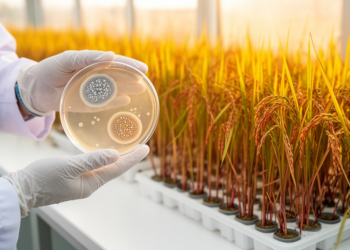
The study simulated two scenarios. In the uncompensated scenario, hazardous pesticide use is reduced by up to 50 percent between 2025 and 2030 and held at that level until 2050, with no replacement, producing yield and production losses. Because CAPRI model estimates suggest about 40 percent of pesticides used in the EU are of hazardous origin, a 50 percent cut in hazardous products translates into roughly a 20 percent equivalent reduction in total pesticide use. Hazardous products were defined using the PAN International List of Highly Hazardous Pesticides, which covers 396 substances flagged against 20 health or environmental hazard criteria. In the compensated scenario, hazardous pesticides are gradually replaced by low-risk alternatives while yields are maintained, modelled through double-stranded RNA (dsRNA) biopesticides that follow an S-shaped adoption curve reaching the 50 percent target by 2050.
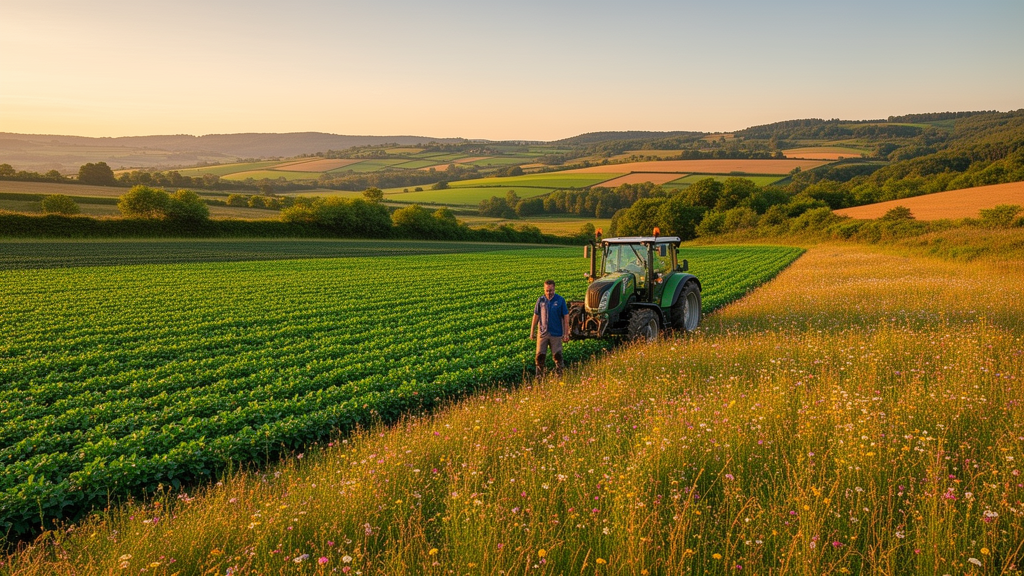
The uncompensated scenario delivers a measurable hit to European agriculture. Compared with the baseline, the agri-food sector loses $5,606 million in production, about 1.5 percent overall, with cereals down $1,548 million and fruits and vegetables down $1,280 million. Exports fall by $2,167 million, led by cereals at $946 million, while imports rise by roughly $2 billion to fill the gap. Consumption contracts by a comparatively modest $25.2 million, with fruits and vegetables accounting for 76 percent of that decline. Market prices climb by an average of 1 percent across the sector, reaching 1.5 percent for fruits and vegetables, 1.8 percent for cereals and 2 percent for oilseeds. To sustain output with less chemical help, the sector would need an additional 3,540 square kilometres of farmland, an area comparable to Cornwall in the United Kingdom.
At the aggregate EU level the macroeconomic consequences are negligible: GDP falls by $338 million, just 0.001 percent of EU GDP. The real story lies in the distribution. Because pesticide expenditures make up only about 5 percent of agricultural production costs at EU level but exceed 10 percent in countries such as Latvia, Lithuania, Hungary and Slovakia, the burden lands unevenly. Cereal production in Lithuania could drop by up to 23 percent, with Latvia at minus 13.3 percent and Croatia at minus 8.9 percent. Fruits and vegetables could fall by more than 10 percent in Slovakia, Slovenia, Ireland and Lithuania. In the oilseed sector, Slovenia faces a 15.3 percent decline, Croatia 13 percent, Slovakia 9.6 percent and Hungary 9.2 percent. Yields fall by up to 13 percent for the overall agri-food sector, 22 percent for grain, 12 percent for fruits and vegetables and 14 percent for oilseeds, depending on the country.
The compensated scenario changes the picture dramatically. The three dsRNA-based products examined target the Colorado potato beetle, powdery mildew and the two-spotted spider mite, affecting crops from tomatoes and cucumbers to maize, apples and grapes. These products are not yet commercially available on the EU market, with projected market entry between 2026 and 2027 pending regulatory approval. Because they cost more per hectare than the hazardous products they replace, for example 18 euros versus 16 euros per hectare for one product, effective pesticide productivity falls by about 5.3 percent on average by 2050. Even so, the substitution preserves enough pest control to keep yields and production largely intact. Production declines by $2,043 million, only 36 percent of the uncompensated loss, while consumption and export falls shrink to $7.2 million and $720 million respectively, and price and land-use pressures remain below half of Scenario 1 levels. The GDP decline of $677 million, or 0.003 percent of EU GDP, is still negligible.
Substitution also pays off where farmers are most exposed. Compared with the uncompensated cut, adopting low-risk alternatives raises production volumes by up to 15.1 percent across agri-food sectors, 31.2 percent in grain, 11.1 percent in fruits and vegetables and 13.7 percent in oilseeds, with the largest gains in Lithuania, Ireland, Cyprus, Latvia and Slovenia, precisely the countries hit hardest by the ban. Beyond the market effects, the researchers monetized the human health and biodiversity costs of pesticide use, deriving a unit cost of 1.143 euros per kilogram of active ingredient in 2017 values, adjusted from earlier estimates using consumer price inflation. By this accounting, cutting hazardous pesticide use by 50 percent generates annual benefits of 22.4 million euros in Europe by 2050, concentrated in France at 5.2 million euros, Spain at 4.3 million, Germany and Italy at 3.2 million each and Poland at 1.8 million, reflecting their extensive agricultural land and pesticide volumes.
Normalized per square kilometre of cultivated land, the ranking shifts toward the EU15: the Netherlands leads with 17.0 euros per square kilometre in annuitized benefits at a 3 percent discount rate, followed by Italy at 11.6, Belgium and Luxembourg at 9.4, Germany at 8.2 and France at 7.7 euros. The trade-offs can be stark at national level: for each euro of pesticide use cost reduced, EU27 GDP falls by 42 euros on average, with the steepest negative ratios in Slovenia at minus 2,089 euros, Croatia at minus 1,149 and Ireland at minus 958, while Estonia gains 609 euros, Portugal 428 and Lithuania 350 per euro saved, owing to trade impacts and market-balancing mechanisms that reallocate resources toward other sectors.
The authors are careful about the limits of their analysis. The compensated scenario models only dsRNA biopesticides, chosen because quantitative cost and efficacy data were available from industrial stakeholders, and serves as a proxy for a broader toolkit that includes integrated pest management, crop rotation, resistant varieties, precision agriculture and other low-risk products such as microbials, botanical substances and semiochemicals, none of which could be parameterized here. The dsRNA products target a limited set of pests and crops, so extending the results across all crop types required broader assumptions, and the findings should be interpreted with caution. Still, the policy implications are pointed: one-size-fits-all implementation would fail vulnerable Member States, streamlined approval and market incentives for low-risk alternatives could ease the transition, and targeted support and training would help farmers maintain yields and profitability. As the EU’s February 2025 Vision for Agriculture and Food acknowledges, farmers already face a shrinking toolbox as older products lose authorization faster than new ones arrive, and this study suggests that closing that gap with low-risk substitutes is the difference between a costly shock and a manageable transition.
Subject of Research: Economy-wide modelling of the impacts of reducing hazardous pesticide use in the EU and substituting it with low-risk alternatives
Article Title: Impacts of hazardous pesticide reduction in Europe
Article References: Jin, Y., Godinho, J., Smeets Kristkova, Z., N. Walker, A., Cingiz, K., Van Meijl, H., & Wesseler, J. (2026). Impacts of hazardous pesticide reduction in Europe. Agricultural and Food Economics, 14(1), Article 77. https://doi.org/10.1186/s40100-026-00525-3
Image Credits: AI Generated
DOI: 10.1186/s40100-026-00525-3
Keywords: pesticides, EU agriculture, MAGNET model, computable general equilibrium, dsRNA biopesticides, food security, crop yields, Farm to Fork, trade impacts, land use, biodiversity, agricultural economics
News Source: Alan Morgan. (October 28, 2026). Halving Hazardous Pesticides in Europe Would Reshape Farms, Trade and Land Use. Scienmag.