


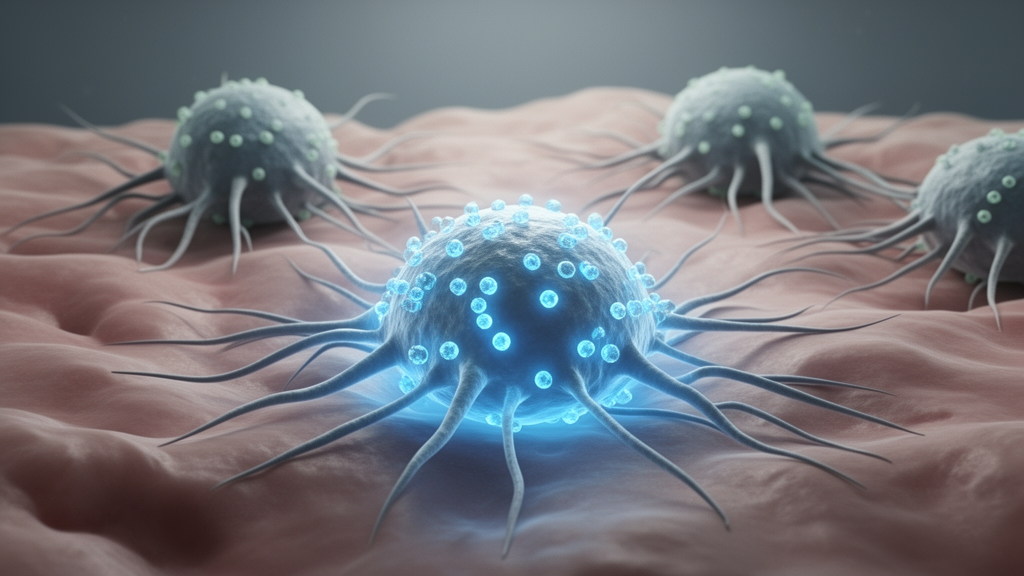
Cannabinoid receptor 1 (CB1R) appears to act as a brake on the aggressive behavior of rheumatoid arthritis synovial cells, according to a laboratory study published in BMC Rheumatology. Researchers found that CB1R was expressed at significantly higher levels in synovial tissue from rheumatoid arthritis (RA) patients than in tissue from osteoarthritis (OA) patients, and that manipulating this receptor changed how RA fibroblast-like synoviocytes (RA-FLSs) proliferate, migrate, invade, and drive blood vessel formation in cell culture.
The team began by analyzing differentially expressed genes in datasets from RA and OA patients to identify candidate targets. They then confirmed CB1R expression levels in clinical samples using immunohistochemistry and western blotting. With the higher RA expression established, they moved to in vitro experiments on RA-FLSs, using CB1R inhibitors, agonists, and overexpression plasmids to test what the receptor does when its activity is turned down or up.
The results pointed in a consistent direction. When CB1R was inhibited, RA-FLS cells showed enhanced proliferation, migration, and invasion, and the cells promoted angiogenesis more strongly. CB1R antagonism also increased secretion of VEGF, IL-6, RANKL, MMP3, and MMP9 by the synoviocytes. Overexpressing CB1R or treating the cells with a CB1R agonist produced the opposite effects, reducing these inflammatory and tissue-remodeling outputs.
Western blot analysis offered a possible mechanism. CB1R negatively regulated the phosphorylation levels of p-PI3K, p-Akt, and p-ERK, suggesting that the receptor’s effects in RA-FLSs involve the PI3K/Akt and MAPK signaling pathways. In practical terms, the study’s key points state that CB1R is highly expressed in RA synovium, that it restrains the proliferation, migration, and invasion capacity of RA-FLSs, that it inhibits synoviocyte-induced angiogenesis by reducing VEGF secretion, and that it regulates TNF-α-induced inflammation through the PI3K/Akt and MAPK/ERK pathways.
The authors frame the work as highlighting CB1R’s significant regulatory role in RA-FLSs and providing a basis for further in vivo investigation. Because the findings come from patient tissue comparisons and cell culture experiments rather than animal models or human trials, they establish an association and a mechanistic signal in this system, not a demonstrated treatment effect. RA causes persistent inflammation and joint damage and currently has no definitive cure, which motivates the search for new therapeutic targets; this study adds CB1R signaling as a candidate worth testing in living systems, while leaving questions about efficacy and safety unanswered.
Subject of Research: The role of cannabinoid receptor 1 in rheumatoid arthritis synovial fibroblast behavior and PI3K/Akt signaling
Article Title: Cannabinoid receptor 1 inhibits synovial fibroblast proliferation, invasion, and angiogenesis through the PI3K/Akt signaling pathway
Article References: Wang, T., Li, H., Cui, J., Shen, Q., Yang, Y., & Hu, H. (2026). Cannabinoid receptor 1 inhibits synovial fibroblast proliferation, invasion, and angiogenesis through the PI3K/Akt signaling pathway. BMC Rheumatology. https://doi.org/10.1186/s41927-026-00653-9
Image Credits: AI Generated
DOI: 10.1186/s41927-026-00653-9
Keywords: cannabinoid receptor 1, rheumatoid arthritis, synovial fibroblasts, PI3K/Akt pathway, MAPK/ERK, angiogenesis, VEGF, inflammation, cell culture study, BMC Rheumatology, Cannabinoid, receptor
News Source: Drew Townsend. (October 29, 2026). Cannabinoid Receptor 1 Curbs Synovial Fibroblast Growth and Invasion in Rheumatoid Arthritis Cells. Scienmag.



