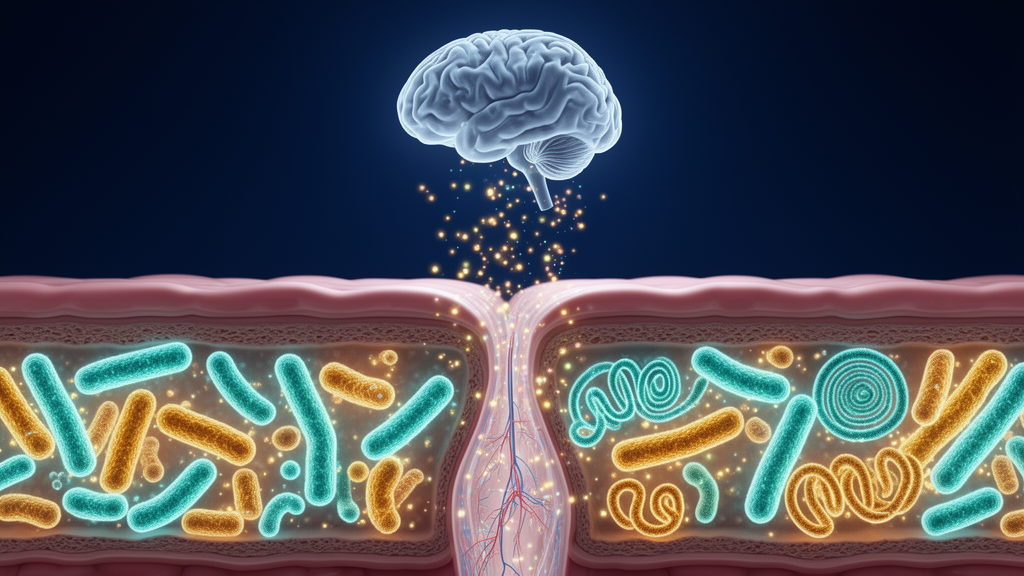
Alzheimer’s disease is increasingly being studied through the lens of the gut, and a new review published in Frontiers in Microbiology pulls together the multi-omics evidence linking intestinal microbes to the biology of the most common dementia. The analysis, led by researchers at the Central Hospital Affiliated to Shenyang Medical College in China, evaluates studies that combine gut microbial sequencing with metabolomics, inflammatory markers, brain imaging, cerebrospinal fluid or blood biomarkers, and cognitive testing. Its central message is carefully calibrated: several recurring microbiome-linked signatures are now well documented in human cohorts, but none has been validated for clinical use, and causal evidence remains incomplete.
The review identifies a set of recurring axes that appear again and again across independent studies. Bile acid transformation by gut bacteria has been associated with cognitive impairment, amyloid and tau biomarker status, neuroimaging measures, and dementia-related outcomes in several targeted metabolomics analyses, supporting what the authors call a gut-liver-brain metabolic hypothesis. Trimethylamine N-oxide, a microbiota-related metabolite of choline and carnitine, has been reported at higher levels in cerebrospinal fluid from people with mild cognitive impairment and Alzheimer’s dementia and was linked to markers of amyloid, tau, and neuronal injury. Short-chain fatty acids form a third axis, with fecal concentrations tied to mild cognitive impairment, amyloid deposition, and longitudinal biomarker trajectories. Inflammatory readouts such as lipopolysaccharide-binding protein, which reflects exposure to bacterial cell wall products, have shown genotype-dependent associations with clinical dementia ratings and memory performance.
Yet the authors are emphatic that these associations do not prove directionality. Bile acids are strongly confounded by diet, liver function, medications, and metabolic comorbidity. Lipopolysaccharide-binding protein is not specific to Alzheimer’s disease and can rise with infection, metabolic disease, or a leaky intestinal barrier. Many of the foundational studies are cross-sectional, meaning they capture a single moment in time and cannot distinguish whether microbial changes contribute to disease or merely reflect it. Reverse causation, frailty, and medication exposure all remain live alternative explanations.
Technological resolution has improved markedly since the field’s early days. First-generation studies relied on 16S ribosomal RNA sequencing of stool, which established that fecal community structure differs between clinically diagnosed Alzheimer’s patients, people with mild cognitive impairment, and cognitively unimpaired controls, but which cannot reliably distinguish closely related species or resolve strain-level variation. That limitation partly explains why individual taxa reported across cohorts have not been fully consistent. Shotgun metagenomics, which sequences microbial DNA beyond the 16S locus, now links taxa to gene families and functional pathways. In the Wisconsin Microbiome in Alzheimer’s Risk Study, shallow shotgun metagenomics showed that Alzheimer’s dementia and cognitively unimpaired groups differed in both composition and inferred function, with signals partly replicated in a larger Alzheimer Gut Microbiome Project validation cohort. The study reported enrichment of several Bacteroidetes-related features and depletion of several Firmicutes-related features, with functional analyses connecting species-anchored pathway differences to cerebrospinal fluid biomarkers of amyloid, tau, neurodegeneration, synaptic injury, and glial activation.
Species-level resolution matters because organisms within the same genus can behave in opposite ways. A 2025 shotgun metagenomic study in mild cognitive impairment found species signatures associated with amyloid burden, plasma phosphorylated tau 181, neurodegeneration, and cognition, while showing that species within genera such as Bacteroides and Ruminococcus did not behave uniformly. Notably, Akkermansia muciniphila was associated with lower amyloid burden. The review also stresses that the compartment sampled shapes interpretation: fecal metabolites reflect luminal production, plasma metabolites approximate systemic exposure after absorption and hepatic processing, and cerebrospinal fluid metabolites sit closer to the brain but may not identify their microbial source. A recent paired feces-and-plasma multi-omics analysis reported that fecal metabolic changes may appear earlier than plasma changes, and that microbes, metabolites, and inflammatory cytokines jointly track cognitive impairment stages, though larger longitudinal validation is needed.
On interventions, the review grades the evidence honestly and finds it highly uneven. Sodium oligomannate, an oligosaccharide derived from brown algae, stands alone in having been tested in a 36-week multicenter, randomized, double-blind, placebo-controlled phase 3 trial in mild-to-moderate Alzheimer’s dementia, with the Alzheimer’s Disease Assessment Scale-Cognitive Subscale as the primary endpoint. Systematic-review evidence concludes it may improve cognitive scores versus placebo, but that additional larger and higher-quality randomized trials, external replication, and longer follow-up are still required to establish durability, generalizability, and responder biology. Other oligosaccharides, including chitosan oligosaccharides and human milk oligosaccharides such as 2′-fucosyllactose, show promise in animal models of amyloid pathology and cognition but currently lack direct human Alzheimer’s evidence.
Probiotic research in Alzheimer’s disease remains small and heterogeneous. A 12-week double-blind randomized trial reporting improved Mini-Mental State Examination scores later received an expression of concern, so its findings should be treated as hypothesis-generating. Other trials have combined probiotics with selenium, tested specific strains such as Lactobacillus rhamnosus HA-114 and Bifidobacterium longum R0175 against placebo, or assessed Bifidobacterium breve MCC1274 in suspected mild cognitive impairment using cognitive tests and MRI-derived brain atrophy measures. These studies supply human biomarker data but do not establish disease modification. Synbiotics, which pair live strains with fermentable substrates, have shown early signals, including a randomized trial of Bifidobacterium animalis subsp. lactis with inulin, while mechanistic work on microbiome-derived indole-3-lactic acid reducing amyloid pathology through aryl hydrocarbon receptor signaling remains at the preclinical stage.
Gut-restricted antimicrobials illustrate both the appeal and the hazard of the approach. Rifaximin is minimally absorbed and stays in the intestinal lumen, and mechanistic studies show it activates detoxification programs through the pregnane X receptor and dampens inflammatory signaling in intestinal models. A pilot open-label study in probable Alzheimer’s disease found that three months of rifaximin was associated with reduced serum neurofilament light and increased fecal Firmicutes, suggesting biological activity but not definitive clinical efficacy. The review warns that antimicrobial exposure may also deplete short-chain fatty acid-producing bacteria and alter microbial bile acid transformation, so future studies must measure metabolites and inflammatory markers alongside bacterial composition. Fecal microbiota transplantation carries even heavier safety constraints: direct human efficacy evidence in Alzheimer’s disease consists mainly of case-level observations and feasibility frameworks, and US Food and Drug Administration safety communications have warned about serious infections and hospitalizations from pathogen transmission through investigational fecal transplant products.
Dietary interventions occupy a middle ground. In mild cognitive impairment, a modified Mediterranean-ketogenic diet produced changes in gut microbiome features and short-chain fatty acids associated with cerebrospinal fluid Alzheimer’s biomarkers, and a pilot crossover study in older adults at risk found the diet associated with increased cerebrospinal fluid amyloid beta 42, decreased tau, and increased cerebral perfusion and ketone-body uptake in a subsample. The PROMOTe randomized controlled trial reported cognitive improvement after a prebiotic intervention in older adults, though its relevance to Alzheimer’s-specific disease modification remains uncertain. The authors note that coordinated biomarker change in dietary trials strengthens mechanistic hypotheses but does not by itself demonstrate disease modification.
The review’s conclusion is a call for disciplined next steps rather than premature clinical adoption. No microbiome biomarker is currently validated for clinical use in Alzheimer’s disease, and precision subtyping based on microbial profiles should be treated as a stratification hypothesis rather than a validated classification system. Future trials should define microbial, metabolite, immune, and brain biomarker endpoints in advance, control for diet, medication, bowel habit, frailty, comorbidity, and apolipoprotein E genotype, and validate candidate signatures across independent cohorts before microbiome profiles are used for screening or treatment selection. Until then, the gut-brain axis in Alzheimer’s disease remains one of the most intriguing, and most unfinished, stories in dementia research.
Subject of Research: Gut microbiome signatures and microbiome-targeted intervention evidence in Alzheimer's disease research
Article Title: Microbiome-targeted strategies for Alzheimer’s disease: multi-omics signatures, mechanistic links, and intervention evidence
Article References: Huang, X., Zhang, X., & Zhu, Q. (2026). Microbiome-targeted strategies for Alzheimer’s disease: multi-omics signatures, mechanistic links, and intervention evidence. Frontiers in Microbiology, 17, Article 1828118. https://doi.org/10.3389/fmicb.2026.1828118
Image Credits: AI Generated
DOI: 10.3389/fmicb.2026.1828118
Keywords: Alzheimer's disease, gut microbiome, metabolomics, bile acids, short-chain fatty acids, TMAO, shotgun metagenomics, probiotics, sodium oligomannate, fecal microbiota transplantation, neuroinflammation, prebiotics
News Source: Cassandra Pierce. (October 29, 2026). Gut Microbiome Signals Track Alzheimer’s Disease, but Treatments Remain Experimental. Scienmag.