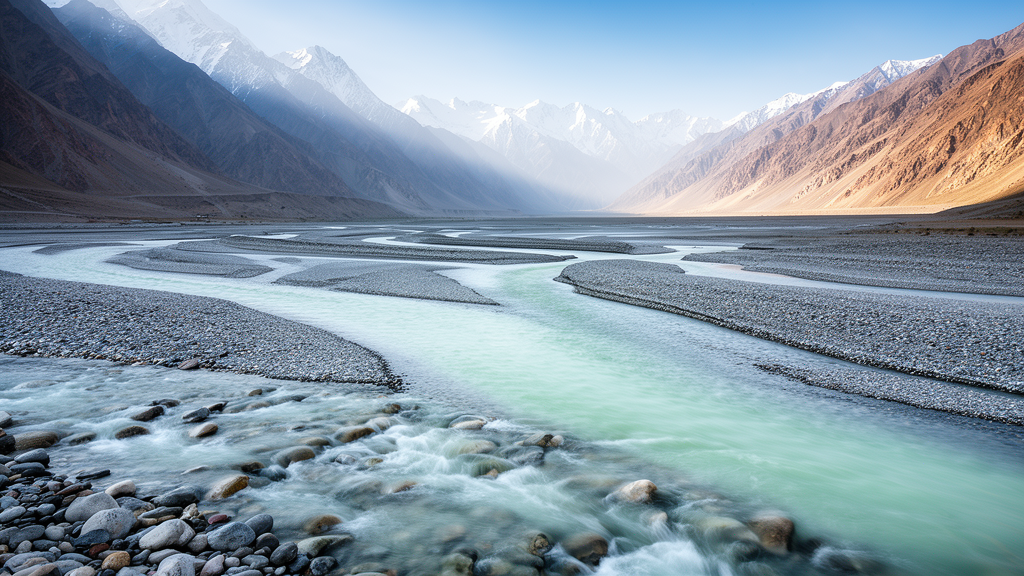
Researchers collected river water samples across the Qilian Mountains in 2024 to track the spatiotemporal distribution and toxicity potential of PAHs.
The team found that in July, PAH concentrations peaked at altitudes of 2500 to 3500 metres, a pattern the researchers attribute to the combined influence of glacial meltwater and local emissions. This seasonal signal was not uniform across the region. In the endorheic river basins, which drain internally and have no outlet to the sea, average PAH concentrations and concentrations of particulate-bound PAHs were significantly lower in October than in July. The exorheic Datong River basin showed the opposite seasonal pattern, with higher values in October.
Fourteen PAHs were detected in the water samples. The proportion of high-molecular-weight PAHs, those with more than four rings, was lower in October than in July, suggesting a shift in the composition of the pollution load between the two seasons. Fugacity analysis indicated that particulate-bound PAHs were supersaturated in terms of adsorption, and diagnostic ratios of PAH isomers pointed to coal and biomass combustion as the dominant sources of the contamination.
The behaviour of the pollutants differed markedly between seasons. In July, PAHs in the river water tended to adsorb onto suspended particulate matter, while vegetation had an intercepting effect on the accumulation of riverine PAHs.
Toxicity assessment revealed a clear seasonal and altitudinal pattern. In July, the toxic equivalency quantity values of PAHs reached their peak at altitudes of 2500 to 3500 metres and at 1000 to 1500 metres in the endorheic river basin, with particulate-bound PAHs being the main contributor to that toxicity. The overall risk posed by PAHs was lower in October than during the July peak.
Based on these findings, the researchers conclude that control measures are needed to reduce the elevated concentrations and risks of particulate-bound PAHs in the endorheic river basins during the wet season. The study, published in Environmental Geochemistry and Health, was led by Zhaofu Hu with colleagues including Shichang Kang, Hua Tao and Kun Wang, and appeared as an original research paper in volume 48 of the journal.
Subject of Research: Seasonal distribution and toxicity of polycyclic aromatic hydrocarbons in glacier-fed river basins of the Qilian Mountains
Article Title: Glacier meltwater increases the spatiotemporal variability and toxicity potentials of polycyclic aromatic hydrocarbons in the river basins of the Qilian Mountains
Article References: Hu, Z., Kang, S., Tao, H., Wu, X., Li, Q., Du, W., Xue, Y., Yan, F., & Wang, K. (2026). Glacier meltwater increases the spatiotemporal variability and toxicity potentials of polycyclic aromatic hydrocarbons in the river basins of the Qilian Mountains. Environmental Geochemistry and Health, 48(17), Article 671. https://doi.org/10.1007/s10653-026-03569-y
Image Credits: AI Generated
DOI: 10.1007/s10653-026-03569-y
Keywords: glacier meltwater, polycyclic aromatic hydrocarbons, Qilian Mountains, river basins, water pollution, particulate-bound PAHs, toxic equivalency quantity, coal combustion, biomass combustion, seasonal variation, glacier retreat, Environmental Geochemistry and Health
News Source: Violet Maxwell. (October 29, 2026). Glacier meltwater reshapes PAH pollution patterns in Qilian Mountain rivers. Scienmag.