


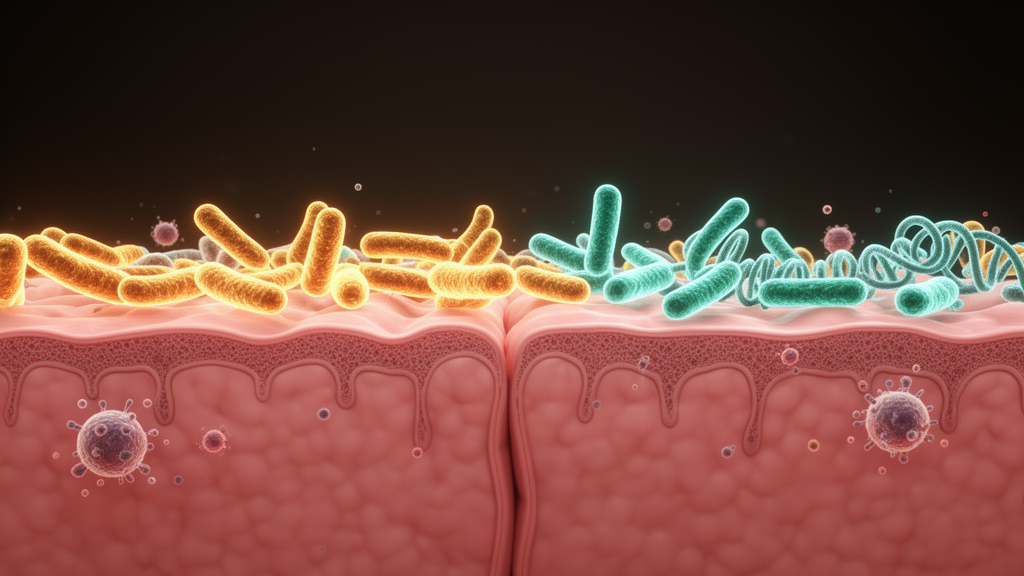
Researchers have combined genetic and transcriptomic analyses to identify gut microbial taxa that appear associated with ulcerative colitis, and have nominated two genes, PHLPP2 and SLC10A2, as candidate biomarkers for the disease. The study, published in AMB Express, used Mendelian randomization to test whether genetically influenced variation in gut microbiota is linked to the inflammatory bowel condition, which currently lacks curative treatments.
Ulcerative colitis is a prevalent chronic inflammatory bowel disease, and gut microbiota dysbiosis is thought to participate in its pathogenesis. However, the genetically supported associations between specific microbial taxa and the disease, and the molecular mechanisms behind them, have remained unclear. To address this, the team drew on genome-wide association study summary data and applied Mendelian randomization, a technique that uses genetic variants as instruments to probe potential causal-style associations, to identify gut microbial taxa showing genetically supported associations with ulcerative colitis.
That analysis flagged 11 gut microbial taxa as potentially associated with the disease. The researchers then predicted related microbial metabolites and their target genes, and obtained differentially expressed genes from transcriptomic datasets of ulcerative colitis patients. By intersecting these differentially expressed genes with UC-related genes and metabolite target genes, they narrowed the field to 44 candidate genes. Several of the implicated microbial metabolites showed favorable druggability profiles when the team evaluated druggability and toxicity.
Machine learning was then applied to screen candidate biomarkers, followed by nomogram validation, Gene Set Enrichment Analysis, immune infiltration analysis, molecular docking and molecular dynamics simulations. This pipeline identified PHLPP2 and SLC10A2 as candidate biomarkers, both of which were significantly downregulated in ulcerative colitis. A nomogram built on these markers showed high discriminatory performance for distinguishing UC patients from healthy controls in the study data.
The two candidate biomarkers were found to be closely involved in immune and metabolic pathways, and their expression correlated with macrophage polarization and neutrophil infiltration. Molecular docking and molecular dynamics simulations provided in silico support for potential interactions between the candidate biomarkers and the microbial metabolites, suggesting a possible route through which gut microbial products might influence host gene activity in the disease.
The authors emphasize that the study provides genetic evidence supporting associations between gut microbiota taxa and ulcerative colitis, and nominates PHLPP2 and SLC10A2 as candidate biomarkers whose roles may be mediated through immune-metabolic crosstalk. Because the findings rest on summary-level genetic data, transcriptomic datasets and computational modeling rather than direct experiments in patients, they are framed as a basis for further biomarker validation and mechanistic investigation, offering insights into the pathogenesis of ulcerative colitis rather than immediate clinical applications.
Subject of Research: Genetic and transcriptomic analysis of gut microbiota associations with ulcerative colitis
Article Title: Gut microbiota and ulcerative colitis: a transcriptomic and Mendelian randomization study
Article References: Li, J., Zhang, T., Qin, T., Wang, Y., Zhai, Q., Mao, X., & Liu, W. (2026). Gut microbiota and ulcerative colitis: a transcriptomic and Mendelian randomization study. AMB Express. https://doi.org/10.1186/s13568-026-02120-7
Image Credits: AI Generated
DOI: 10.1186/s13568-026-02120-7
Keywords: ulcerative colitis, gut microbiota, Mendelian randomization, transcriptomics, biomarkers, PHLPP2, SLC10A2, microbial metabolites, machine learning, molecular docking, inflammatory bowel disease, microbiota
News Source: Juliet Wilcox. (October 29, 2026). Genetic study links gut microbes to ulcerative colitis and flags two biomarkers. Scienmag.



