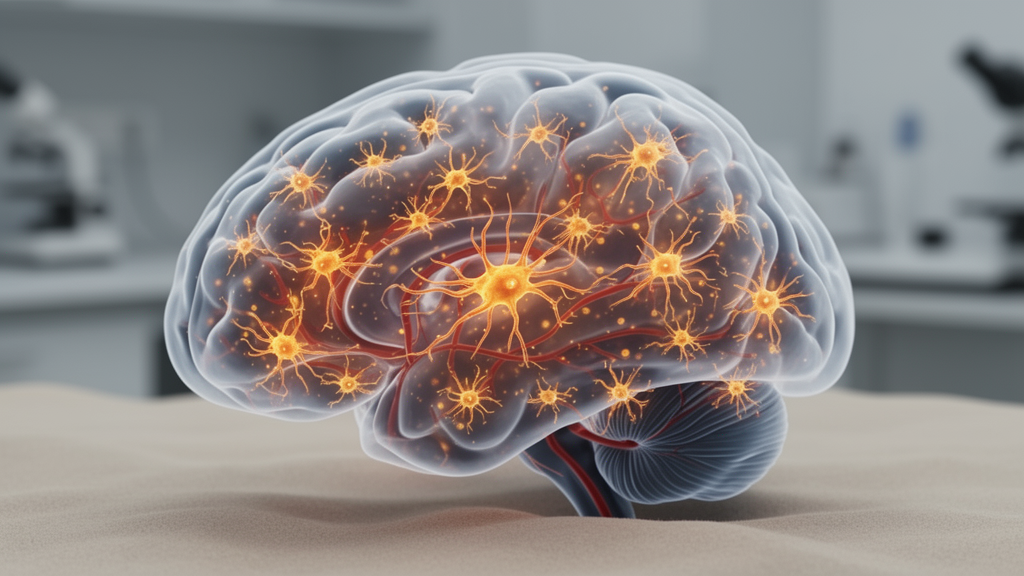
Scientists at Stanford University have identified a single gene that acts as a molecular gatekeeper for one of the most ambitious ideas in modern neuroscience: replacing the brain’s resident immune cells with healthy ones grown from transplanted blood stem cells. The gene, called Elp1, turns out to be essential for blood stem cells to commit to the myeloid lineage and colonize the brain, a finding that could reshape how researchers design cell therapies for neurological disease.
The work, published in Nature by a team led by Marius Wernig, tackles a long-standing bottleneck in the field of microglia replacement. Microglia are the brain’s own macrophages, and in several devastating genetic disorders they carry the same disease-causing mutations as the rest of the body. Over the past two decades, researchers have shown that hematopoietic stem and progenitor cell transplantation can repopulate the brain with donor-derived, microglia-like cells, effectively swapping out a diseased brain immune system for a healthy one. Recent studies have demonstrated that this strategy can correct deficiencies in mouse models of conditions ranging from lysosomal storage diseases to Alzheimer’s-related pathology, and clinical momentum has been building.
Yet a fundamental question has remained unanswered: which molecules inside a blood stem cell tell it to become a brain-bound myeloid cell rather than a red blood cell, a platelet, or a lymphocyte? The answer has been elusive largely because primary hematopoietic stem cells are vanishingly rare, making large-scale genetic experiments practically impossible. A typical mouse yields only a handful of true long-term repopulating stem cells, nowhere near enough for the tens of thousands of parallel gene perturbations a modern CRISPR screen demands.
The Stanford team circumvented this obstacle with a clever twist. They used cultured hematopoietic stem and progenitor cells, or cHSPCs, which can be expanded ex vivo using protocols originally developed for non-conditioned transplantation. The researchers established that these cultured cells retain two critical abilities: they can be genetically manipulated with CRISPR tools, and after transplantation they can differentiate into myeloid cells and repopulate the microglial niches of the brain. In other words, the expansion process does not destroy the properties that matter most for brain cell therapy.
With a workable cell source in hand, the team needed a way to watch myeloid differentiation happen in a dish. They found it in an unexpected place: primary neonatal astrocytes, the star-shaped support cells of the brain, carried strong signals capable of inducing myeloid specification of the cultured stem cells in vitro. When the stem cells were plated onto these astrocyte feeder layers, they proliferated, extended processes, and matured into cells that closely resembled brain myeloid cells. This co-culture system gave the researchers a controllable, scalable window into a process that normally unfolds deep inside living tissue.
That window opened onto an unprecedented genetic survey. The team screened roughly 20,000 individual genetic perturbations in the primary hematopoietic progenitors, asking which genes, when disabled, blocked or boosted the glia-induced transformation into myeloid cells. The screen returned genes involved in cell signalling, cell cycle control, mitochondrial function, and protein translation, painting a broad molecular portrait of the differentiation program. Among the hits, one gene stood out: Elp1, a subunit of the elongator acetyltransferase complex.
Elp1 is not an obscure player. The elongator complex helps modify transfer RNAs, a step that fine-tunes how efficiently particular codons are translated into protein, and mutations in Elp1 cause familial dysautonomia, a severe hereditary disorder of the autonomic and sensory nervous systems. Elongator mutations have also been linked to medulloblastoma and other neurodevelopmental syndromes. The new study adds an unexpected chapter to that story: Elp1 appears to suppress the unfolded protein response during myeloid specification. When Elp1 was knocked out, differentiating cells mounted a stress response from the endoplasmic reticulum, the cellular compartment where newly made proteins fold into shape, and the cells failed to generate myeloid progeny efficiently.
Crucially, the team showed that Elp1 is essential for the generation but not the maintenance of myeloid cells. In transplantation experiments, loss of Elp1 impaired the ability of donor cells to seed the brain with new myeloid populations, yet myeloid cells that had already differentiated and engrafted could survive after Elp1 was deleted later. This temporal distinction matters therapeutically: it suggests that the gene’s role is confined to a vulnerable window early in differentiation, and that established brain myeloid cells do not continuously require it. The researchers also confirmed the finding in human cells, showing that ELP1 knockout in human cord blood CD34-positive cells impaired myeloid repopulation in astrocyte co-cultures, indicating the mechanism is conserved across species.
Beyond the biology of a single gene, the study delivers a platform. By proving that expanded cultured stem cells can serve as a substrate for unbiased genetic interrogation of brain myeloid differentiation, the researchers have created a tool that others can use to systematically map the molecular logic of brain immune cell formation. The datasets generated in the study, including mouse sequencing data deposited in the Gene Expression Omnibus and proteomic data in the ProteomeXchange repository, are publicly available, lowering the barrier for follow-up work. The screen’s catalog of regulators, spanning signalling, cell cycle, mitochondrial function, and translation, provides a rich starting list for anyone seeking to improve the efficiency of microglia replacement.
The implications reach toward the clinic. If brain cell therapies based on hematopoietic transplantation are to become reliable treatments, researchers will need to understand and possibly engineer the differentiation program that donor cells follow. Knowing that Elp1 guards differentiating myeloid cells against proteotoxic stress suggests that manipulating this pathway, perhaps pharmacologically, could boost engraftment efficiency or protect engineered cells during the stressful journey from culture dish to brain parenchyma. It also raises a caution: any genetic engineering of donor stem cells must preserve Elp1 function, or the therapy may fail before it begins. As microglia replacement moves closer to human trials for diseases that currently have few options, this study supplies both a warning and a roadmap, revealing one of the molecular switches that determines whether transplanted blood stem cells can truly rebuild the brain’s immune defenses.
Subject of Research: Role of the Elp1 gene in hematopoietic stem cell myeloid differentiation and brain microglia repopulation
Article Title: Elp1 is required for myeloid differentiation and brain repopulation
Article References: Mader, M. M.-D., Li, W., Scavetti, A., Yoo, Y., Neumayer, G., Han, K., Shibuya, Y., Haney, M., Wyss-Coray, T., George, L., Lefcort, F., Bassik, M., Nakauchi, H., Wilkinson, A. C., & Wernig, M. (2026). Elp1 is required for myeloid differentiation and brain repopulation. Nature. https://doi.org/10.1038/s41586-026-11112-3
Image Credits: AI Generated
DOI: 10.1038/s41586-026-11112-3
Keywords: Elp1, microglia replacement, hematopoietic stem cells, CRISPR screen, myeloid differentiation, unfolded protein response, elongator complex, neuroimmunology, astrocytes, cell therapy, familial dysautonomia, brain repopulation
News Source: Juliet Wilcox. (October 16, 2026). Gene Found That Lets Transplanted Blood Stem Cells Rebuild the Brain’s Immune Defenses. Scienmag.