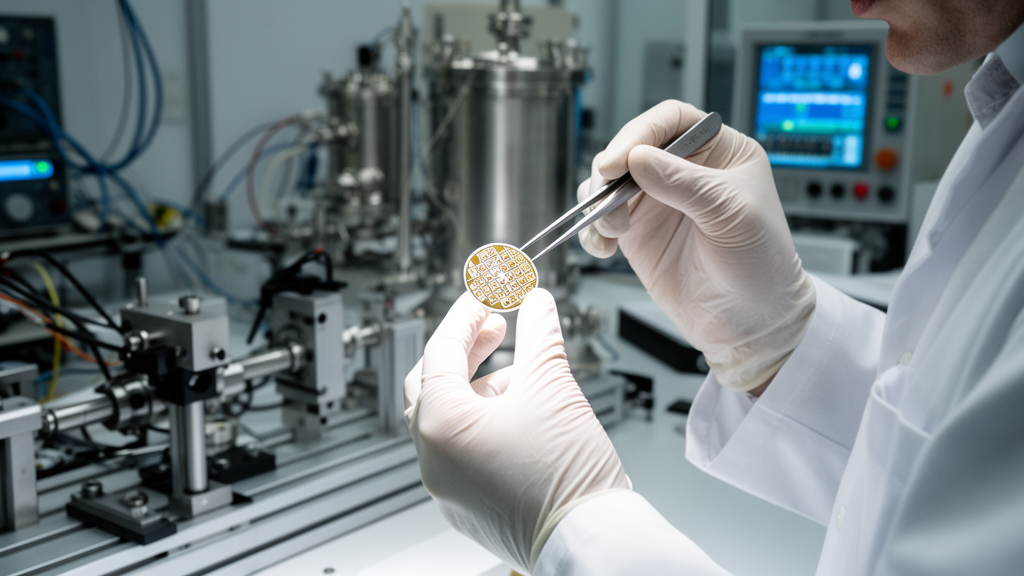
Deep beneath the surface of some of the world’s most demanding physics experiments, a quiet revolution in sensing technology is taking shape. The National Scientific Commission 5, known as CSN5, of Italy’s Istituto Nazionale di Fisica Nucleare (INFN) has spent decades building the instruments that make particle physics possible. Now, a new collection of twelve peer-reviewed studies published in Frontiers in Sensors reveals just how far these technologies have traveled, from the heart of collider detectors to the treatment rooms of cancer clinics and the frontiers of quantum measurement.
CSN5 occupies a peculiar and powerful position within the Italian research landscape. Unlike commissions devoted purely to fundamental physics, it is chartered with applied, technological, and interdisciplinary research, with advanced sensing and detection as its central pillar. This mandate places it at the junction where the brutal requirements of experimental particle physics meet the practical needs of medicine, environmental monitoring, security, and space science. The logic is straightforward: detectors built to survive the radiation fields of a hadron collider are, almost by definition, among the most robust and precise sensing devices humans know how to make. Technologies conceived for fundamental experiments routinely find second lives in hospitals, satellites, and industrial settings.
Among the most striking contributions to the collection is work on oriented-crystal electromagnetic calorimetry. In conventional calorimeters, incoming high-energy particles generate showers of secondary particles as they cascade through dense material. When particles are aligned with the crystal axes of certain materials, a phenomenon known as channeling dramatically accelerates shower development, allowing compact crystals to do the work of much bulkier detectors. The INFN team pursued this concept through an extensive research and development program, progressing from single-crystal studies to the construction of a full matrix of lead tungstate, or PWO, crystals. The result points toward compact, high-performance calorimeters particularly suited to collider experiments, beam-dump facilities, and high-energy gamma-ray astrophysics, where every centimeter of detector volume comes at a premium.
Timing and radiation hardness emerge as recurring themes throughout the collection. A comprehensive review examines the development of Low-Gain Avalanche Diodes, or LGADs, and thin silicon diodes for particle therapy. These solid-state detectors offer dramatically superior sensitivity and timing capabilities compared to the gas ionization chambers that have long served as the workhorses of clinical beam monitoring. The implications extend from beam commissioning to dosimetry in ultra-high dose rate radiotherapy, the so-called FLASH regime, and spatially fractionated techniques where dose is delivered in patterns designed to spare healthy tissue. The work illustrates a tight synergy between detector physics, electronics development, and clinical requirements, a collaboration that INFN has cultivated deliberately.
Pushing the LGAD concept further, the CSN5 eXFlu project has produced ultra-thin sensors with an active thickness of just 15 micrometers, roughly a fifth the width of a human hair. At this scale, charge carriers traverse the device so quickly that exceptional timing resolutions become possible, while the thin active volume inherently resists radiation damage that would degrade thicker sensors. The demonstrated performance positions these devices as leading candidates for future high-precision timing applications, both in fundamental physics experiments where particle trajectories must be resolved with picosecond precision and in applied environments characterized by extreme radiation levels.
Medical applications receive further attention through a review of silicon carbide detectors for advanced dosimetry. Silicon carbide’s wide bandgap, the energy gap between its valence and conduction bands, makes it extraordinarily tolerant to radiation and thermally stable, properties that conventional dosimetric materials struggle to match. The survey covers detector architectures and experimental results spanning photon, proton, and carbon-ion radiotherapy, as well as FLASH treatment techniques. As radiotherapy evolves toward ever more demanding dose rates and particle species, the physical robustness of silicon carbide positions it as a serious alternative for the next generation of clinical dosimeters.
Looking toward future collider experiments, another contribution addresses the challenge of four-dimensional tracking, capturing both the spatial position and precise arrival time of particles passing through a detector. The review highlights three-dimensional silicon sensors, in which electrode columns penetrate the sensor bulk rather than sitting on its surface, as meeting key performance criteria for spatial and temporal resolution under unprecedented radiation levels. Achieving this performance requires careful co-design of sensors and readout electronics alongside advanced fabrication techniques, an integrated approach that INFN has championed across its detector programs.
Beyond traditional semiconductors, the collection showcases novel materials and unconventional approaches. A mini-review examines polysiloxane-based scintillators, flexible polymers that emit light when struck by ionizing radiation. These materials combine radiation hardness, mechanical flexibility, and chemical versatility, with emerging applications ranging from neutron detection to real-time dose monitoring in proton therapy. Recent advances in photocurable and 3D-printable formulations mean researchers can now print custom scintillator geometries, dramatically expanding the design space of polymer-based radiation sensors and opening possibilities for detectors shaped to fit specific anatomical or experimental constraints.
The ARCADIA collaboration contributes advances in fully-depleted CMOS monolithic sensors, devices that integrate sensing and electronics on a single chip of silicon. By combining fast charge collection, low power consumption, and embedded processing, these sensors address the needs of high-rate particle and photon detection, with applications spanning time-of-flight measurements to X-ray imaging. Meanwhile, the ASIX analog spectral imager for X-rays pushes imaging performance in a different direction, adopting an ultra-low-noise, fully analog, asynchronous readout architecture to overcome the charge-sharing limitations inherent to small-pixel devices. The technology demonstrator targets simultaneous high spatial and energy resolution for demanding applications in synchrotron science, materials research, and soft X-ray astrophysics.
The collection also ventures into quantum territory. One article describes integrated optics for generating squeezed vacuum states in lithium-niobate waveguides, compact and robust sources that reduce quantum noise below classical limits in one quadrature of an optical field. Such sources could enhance precision measurements, including gravitational-wave detection, and represent a promising platform for future quantum sensing. Rounding out the collection, miniaturized tissue-equivalent proportional counters developed at the INFN National Laboratories of Legnaro enable microdosimetry in hadron therapy environments, linking physical dose to biological effectiveness at the cellular scale, while INFN’s activities within the international Medipix4 collaboration advance next-generation hybrid pixel detectors based on Timepix4 and Medipix4 application-specific integrated circuits, promising enhanced spatial, temporal, and energy resolution across a broad range of applications. Together, these twelve contributions paint a picture of a research community whose sensor innovations ripple outward from fundamental physics into medicine, space science, and quantum technology, confirming that the instruments built to catch the faintest signals from the universe are also among the most transformative tools for life on Earth.
Subject of Research: Particle and radiation sensor technologies developed within INFN's CSN5 commission, spanning silicon detectors, scintillators, dosimetry, and quantum sensing
Article Title: Editorial: Particle and radiation sensors developed at INFN-CSN5
Article References: Adriani, O., Guidi, V., & Quaranta, A. (2026). Editorial: Particle and radiation sensors developed at INFN-CSN5. Frontiers in Sensors, 7, Article 1814474. https://doi.org/10.3389/fsens.2026.1814474
Image Credits: AI Generated
DOI: 10.3389/fsens.2026.1814474
Keywords: INFN, particle detectors, radiation sensors, LGAD, silicon carbide, dosimetry, radiotherapy, CMOS sensors, quantum sensing, scintillators, X-ray imaging, microdosimetry
News Source: Katie Riggs. (October 16, 2026). How Italian Detector Labs Are Quietly Rewriting the Future of Radiation Sensing. Scienmag.