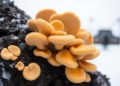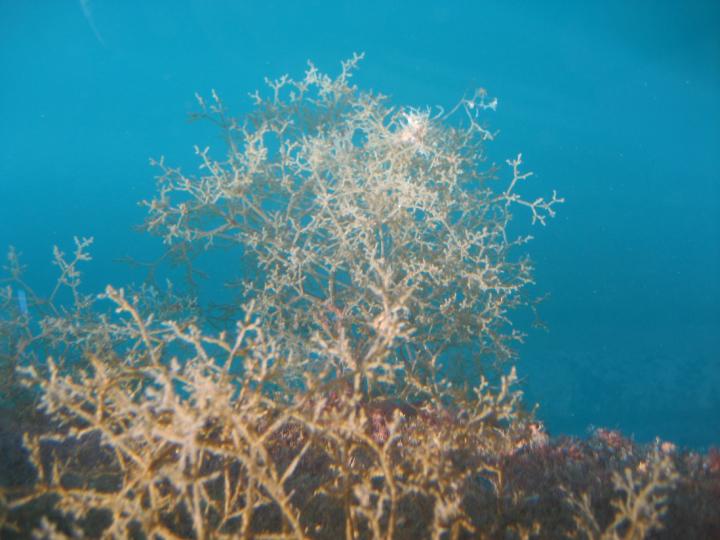
Credit: Dan Minchin/Marine Organism Investigations
Over 50 non-native species have found their way to the Galápagos Islands, almost 10 times more than scientists previously thought, reports a new study in Aquatic Invasions published Thursday, March 28.
The study, a joint effort of the Smithsonian Environmental Research Center, Williams College, and the Charles Darwin Foundation, documents 53 species of introduced marine animals in this UNESCO World Heritage Site, one of the largest marine protected areas on Earth. Before this study came out, scientists knew about only five.
“This increase in alien species is a stunning discovery, especially since only a small fraction of the Galápagos Islands was examined in this initial study,” said Greg Ruiz, a co-author and marine biologist with the Smithsonian Environmental Research Center.
“This is the greatest reported increase in the recognition of alien species for any tropical marine region in the world,” said lead author James Carlton, an emeritus professor of the Maritime Studies Program of Williams College-Mystic Seaport.
The Galápagos lie in the equatorial Pacific, roughly 600 miles west of Ecuador. Made famous by Charles Darwin’s visit in 1835, the islands have long been recognized for their remarkable biodiversity. But with their fame, traffic has spiked. In 1938, just over 700 people lived on the Galápagos. Today, more than 25,000 people live on the islands, and nearly a quarter-million tourists visit each year.
Carlton and Ruiz began their study in 2015, with Inti Keith of the Charles Darwin Foundation. They conducted field surveys on two of the larger Galápagos Islands: Santa Cruz and Baltra, where they hung settlement plates from docks one meter underwater to see what species would grow on them. They also collected samples from mangrove roots, floating docks and other debris and scoured the literature for previous records of marine species on the islands.
The team documented 48 additional non-native species in the Galápagos. Most of them (30) were new discoveries that could have survived on the islands for decades under the radar. Another 17 were species scientists already knew lived on the Galápagos but previously thought were native. One final species, the bryozoan Watersipora subtorquata, was collected in 1987 but not identified until now.
Sea squirts, marine worms and moss animals (bryozoans) made up the majority of the non-native species. Almost all of the non-natives likely arrived inadvertently in ships from tropical seas around the world. Some of the most concerning discoveries include the bryozoan Amathia verticillata–known for fouling pipes and fishing gear and killing seagrasses–and the date mussel Leiosolenus aristatus, which researchers have already seen boring into Galápagos corals.
“This discovery resets how we think about what’s natural in the ocean around the Galápagos, and what the impacts may be on these high-value conservation areas,” Carlton said.
To reduce future invasions, the Galápagos already have one of the most stringent biosecurity programs in the world. International vessels entering the Galápagos Marine Reserve may anchor in only one of the main ports, where divers inspect the vessel. If the divers find any non-native species, the vessel is requested to leave and have its hull cleaned before returning for a second inspection.
Still, the authors say, the risks remain high. The expansion of the Panama Canal in 2015 may bring the Indo-Pacific lionfish–a major predator in the Caribbean–to the Pacific coast of Central America. Once there, it could make its way to the Galápagos, where the likelihood of its success would be very high. Another possible arrival is the Indo-Pacific snowflake coral, which has already caused widespread death of native corals on the South American mainland.
###
After publication, the study will be available at http://www.
Media Contact
Kristen Minogue
[email protected]
Related Journal Article
http://dx.