• HOME
  • NEWS
  • EXPLORE
    • CAREER
      • Companies
      • Jobs
    • EVENTS
    • iGEM
      • News
      • Team
    • PHOTOS
    • VIDEO
    • WIKI
  • BLOG
  • COMMUNITY
    • FACEBOOK
    • INSTAGRAM
    • TWITTER
Thursday, October 29, 2026
BIOENGINEER.ORG
No Result
View All Result
  • Login
  • HOME
  • NEWS
  • EXPLORE
    • CAREER
      • Companies
      • Jobs
        • Lecturer
        • PhD Studentship
        • Postdoc
        • Research Assistant
    • EVENTS
    • iGEM
      • News
      • Team
    • PHOTOS
    • VIDEO
    • WIKI
  • BLOG
  • COMMUNITY
    • FACEBOOK
    • INSTAGRAM
    • TWITTER
No Result
View All Result
Bioengineer.org
No Result
View All Result
Home NEWS Science News Biology

Four Simulation Tools Put Astrocyte Calcium Signaling to the Test

by
October 28, 2026
in Biology
Reading Time: 2 mins read
0
Four Simulation Tools Put Astrocyte Calcium Signaling to the Test

Four Simulation Tools Put Astrocyte Calcium Signaling to the Test

Share on FacebookShare on TwitterShare on LinkedinShare on RedditShare on Telegram

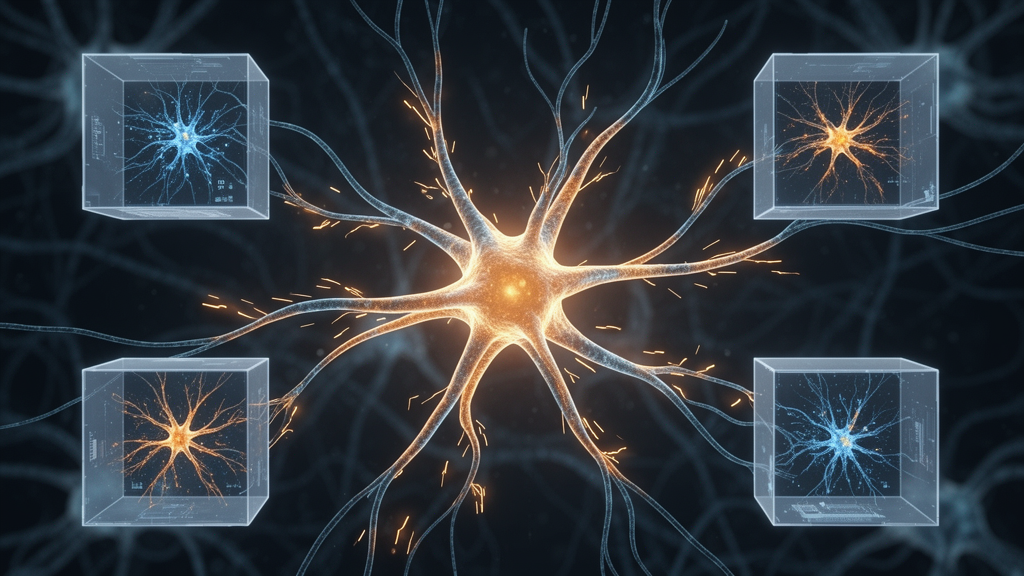
A new study in PLOS Computational Biology systematically compares four open-access simulation platforms—MCell, STEPS, NeuroRD, and NEURON—originally built for modeling neurons, to see how well they handle reaction–diffusion processes in glial cell geometries.

Researchers led by Laura Keto and Tiina Manninen implemented equivalent calcium diffusion and calcium–calmodulin reaction–diffusion models across a range of spatial domains in each tool. The test cases spanned simple shapes such as cylinders and rectangular cuboids, as well as biologically realistic astroglial morphologies reconstructed from electron microscopy data, including mouse Bergmann glia and cortical astrocytes from both mouse and human tissue. Matching kinetic parameters and diffusion constants were used across all platforms so that differences in output could be attributed to the tools and the geometries rather than to inconsistent model setups.

The central result is reassuring for the field: all four simulators produced overall consistent results for the systems examined, indicating that each can reliably capture diffusion and reaction–diffusion dynamics in both simplified and complex geometries. This means modelers can, in principle, trust the core physics as implemented in any of these environments when studying intracellular signaling.

But the study also delivered a striking biological insight. The structural heterogeneity of branchlets from human astrocytes and mouse Bergmann glia gave rise to distinct calcium signaling patterns, demonstrating that fine-scale morphology critically shapes astroglial dynamics. In other words, the detailed branching architecture of these cells is not just decorative—it actively determines how calcium signals propagate, so simulation frameworks must capture it accurately.

Beyond the biology, the comparison revealed notable differences among the tools in geometry representation, implementation strategies, computational cost, and usability. By highlighting the trade-offs between geometric fidelity, flexibility, and computational expense, the authors offer practical guidance for researchers choosing a platform for modeling intracellular biochemical processes.

Subject of Research: Comparing simulation platforms for modeling calcium reaction–diffusion dynamics in astroglial cell geometries

Article Title: Modeling reaction–diffusion processes in simplified to complex astroglial branchlet geometries using different simulation tools

Article References: Keto, L., Seppälä, S., Ndubuaku, D., Mäki, A., Mäki-Marttunen, T., Linne, M.-L., & Manninen, T. (2026). Modeling reaction–diffusion processes in simplified to complex astroglial branchlet geometries using different simulation tools. PLOS Computational Biology, 22(10), e1014878. https://doi.org/10.1371/journal.pcbi.1014878

Image Credits: AI Generated

DOI: 10.1371/journal.pcbi.1014878

Keywords: astrocytes, calcium signaling, reaction–diffusion, computational modeling, MCell, STEPS, NeuroRD, NEURON, Bergmann glia, electron microscopy, simulation tools, neuroscience

News Source: Cassandra Pierce. (October 28, 2026). Four Simulation Tools Put Astrocyte Calcium Signaling to the Test. Scienmag.


Tags: AstrocytesBergmann gliaCalcium signalingcomputational modelingelectron microscopyMCellNEURONNeuroRDNeurosciencereaction-diffusionsimulation toolsSTEPS
Share12Tweet7Share2ShareShareShare1

Related Posts

MicroRNAs May Link Exercise to Kidney Protection, Review Finds

MicroRNAs May Link Exercise to Kidney Protection, Review Finds

October 29, 2026
Moringa Leaf Extract in Drinking Water Boosts Feed Efficiency in Chahua Chickens

Moringa Leaf Extract in Drinking Water Boosts Feed Efficiency in Chahua Chickens

October 29, 2026

Captive Amur Tigers Show Age-Specific Gut Microbes and Metabolism on the Same Diet

October 29, 2026

Disease Microenvironments May Reshape the Safety of Near-Infrared Theranostic Nanomaterials, Review Finds

October 29, 2026

POPULAR NEWS

  • Scoping review finds clinical supervision of radiography students in Africa lacks structure and training

    Scoping review finds clinical supervision of radiography students in Africa lacks structure and training

    29 shares
    Share 12 Tweet 7
  • Three Suicide Risk Subtypes Identified in Adolescents with Major Depression

    29 shares
    Share 12 Tweet 7
  • Adding a Skin Bilirubin Scan to Visual Jaundice Checks Cuts Costs in Clinics

    29 shares
    Share 12 Tweet 7
  • AI in public health remains pre-emergent in one Congolese health zone, study finds

    29 shares
    Share 12 Tweet 7

About

We bring you the latest biotechnology news from best research centers and universities around the world. Check our website.

Follow us

Recent News

Nursing decision support tool linked to lower neonatal hypoglycemia rates in hospital study

IVF Study Finds Progesterone-to-Oocyte Ratio Adds Little Beyond Its Parts

Mitochondrial Cleanup and a DNA Sensor May Team Up to Drive Stroke Inflammation

Subscribe to Blog via Email

Enter your email address to subscribe to this blog and receive notifications of new posts by email.

Join 85 other subscribers
  • Contact Us

Bioengineer.org © Copyright 2023 All Rights Reserved.

Welcome Back!

Login to your account below

Forgotten Password?

Retrieve your password

Please enter your username or email address to reset your password.

Log In
No Result
View All Result
  • Homepages
    • Home Page 1
    • Home Page 2
  • News
  • National
  • Business
  • Health
  • Lifestyle
  • Science

Bioengineer.org © Copyright 2023 All Rights Reserved.