• HOME
  • NEWS
  • EXPLORE
    • CAREER
      • Companies
      • Jobs
    • EVENTS
    • iGEM
      • News
      • Team
    • PHOTOS
    • VIDEO
    • WIKI
  • BLOG
  • COMMUNITY
    • FACEBOOK
    • INSTAGRAM
    • TWITTER
Tuesday, May 12, 2026
BIOENGINEER.ORG
No Result
View All Result
  • Login
  • HOME
  • NEWS
  • EXPLORE
    • CAREER
      • Companies
      • Jobs
        • Lecturer
        • PhD Studentship
        • Postdoc
        • Research Assistant
    • EVENTS
    • iGEM
      • News
      • Team
    • PHOTOS
    • VIDEO
    • WIKI
  • BLOG
  • COMMUNITY
    • FACEBOOK
    • INSTAGRAM
    • TWITTER
  • HOME
  • NEWS
  • EXPLORE
    • CAREER
      • Companies
      • Jobs
        • Lecturer
        • PhD Studentship
        • Postdoc
        • Research Assistant
    • EVENTS
    • iGEM
      • News
      • Team
    • PHOTOS
    • VIDEO
    • WIKI
  • BLOG
  • COMMUNITY
    • FACEBOOK
    • INSTAGRAM
    • TWITTER
No Result
View All Result
Bioengineer.org
No Result
View All Result
Home NEWS Science News Biology

First record of invasive shell-boring worm in the Wadden Sea means trouble for oyster

Bioengineer by Bioengineer
August 6, 2020
in Biology
Reading Time: 3 mins read
0
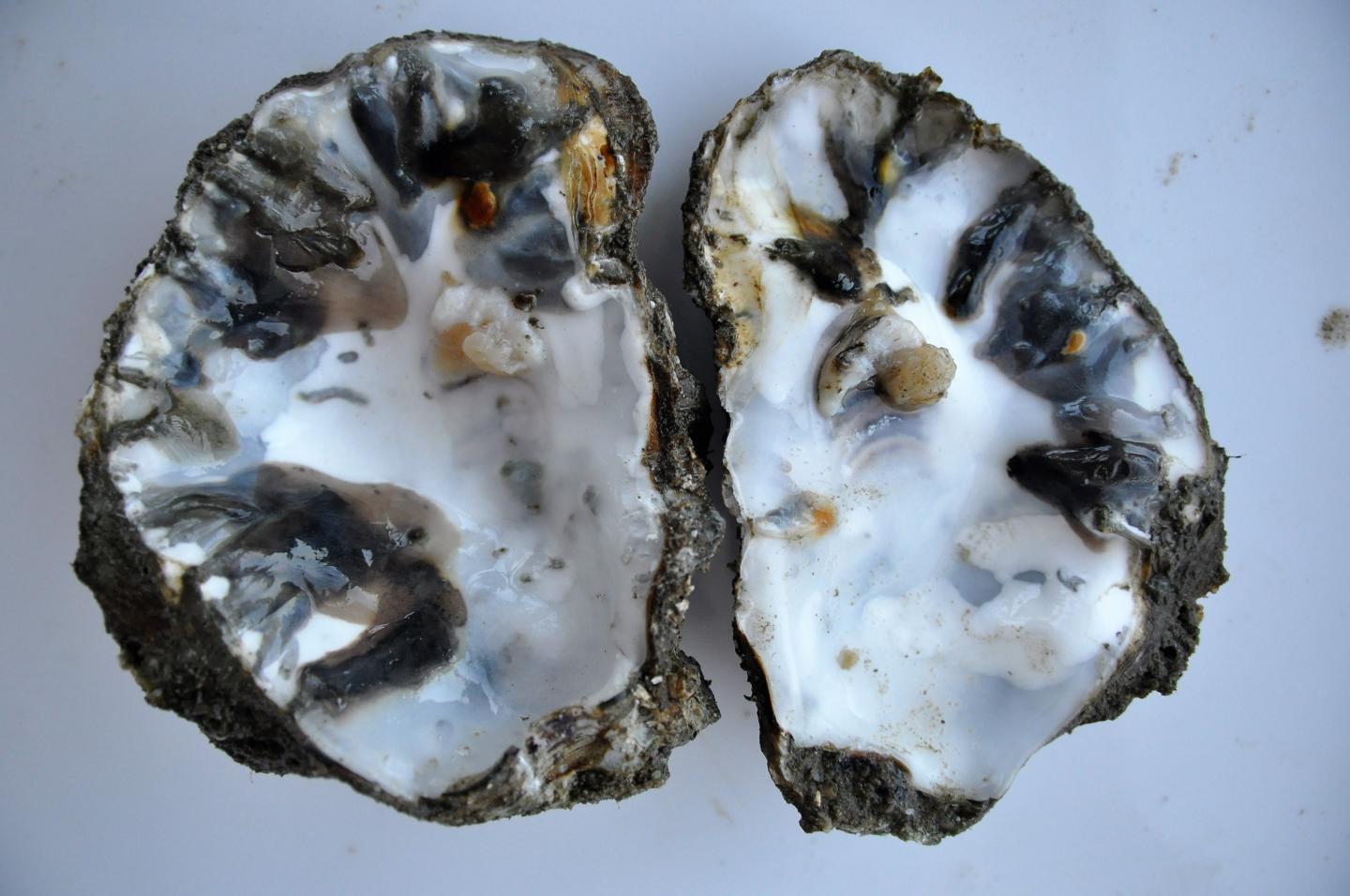
IMAGE
Share on FacebookShare on TwitterShare on LinkedinShare on RedditShare on Telegram

IMAGE

Credit: Dagmar Lackschewitz

In October 2014, the suspicion arose that the parasite worm Polydora websteri had found its way to the Wadden Sea. Following years of research, that suspicion has now been confirmed: the worm, that likely originates from the Asian Pacific, has arrived in European waters. Researchers from the German Alfred Wegener Institute (AWI) and the Royal Netherlands Institute for Sea Research (NIOZ), confirm in a publication in Marine Biodiversity, that they have found the shell-borer in oysters near Sylt and Texel and speculate that it is likely to have spread much further.

‘Trouble maker’ leaves oyster unsellable

The worm Polydora websteri is a known ‘trouble maker’ that causes mud blisters as it bores its way through an oyster’s shell, leaving the oyster vulnerable for predators in the wild, and unsellable on the market. Thieltges: ‘The worm manoeuvres between the inner and outer world of the oyster. It isn’t strictly speaking a parasite as it leaves the oyster’s body in peace, but by attacking its shell, it drains the energy of the oyster that now needs to focus on its repair.’ Wild populations of Pacific oysters, exotic species that were themselves introduced to the Wadden Sea ecosystem in the 1970s and ’80s, have till now been rather safe from predators. The worm might change this. The oysters might be weakened and their shell softened, making them easier prey for crabs and birds. On the long-term, this could mean a shift in the ecosystem.

While the worm might form a big threat to aquaculture farming, it is also likely that aquaculture itself acted as the primary vector of introduction. NIOZ researcher and co-author David Thieltges: ‘A large part of the invasive species in the marine ecosystem arrive with the import of commercial species and the transfer of farmed specimens between aquaculture sites.’ The worm’s favourite host, the Pacific oyster, is traded and cultured globally. By moving the oyster, the worm, though not -intended, becomes an international traveller as well. The researchers, including Thieltges and AWI-scientist Andreas Waser, found the first Polydora websteri in the direct vicinity of an oyster farm that imports juvenile oysters from a nursery in southern Ireland. Their travel path illustrates the global character of the trade. Thieltges and Waser: ‘This site of the first record was also the site with the highest infestation. We suspect that the arrival of the worm in the northern Wadden Sea may be related to the oyster imports.’

Here to stay and to be reckoned with

Once introduced, the further spread of invasive species can continue either via dispersal of larval stages or human-aided secondary vectors such as fouling on ship hulls. This may explain that the worm was also found during sampling at the Mokbaai on Texel, an island without oyster farms. Thieltges underlines, that it is unlikely that the worms found near Texel came from Sylt. ‘That they made their way from Sylt to Texel, along almost 500 kilometres of coastline, seems rather unlikely. We think there might be a different origin.’

An option would be that larval stages of the worms found in the Dutch Wadden Sea came from Zeeland where there is commercial oyster aquaculture. However, the team still needs to investigate whether the worm is already present in Zeeland as well.’ Thieltges: ‘Sampling at other places in the Netherlands and in Europe together with genetic research is now needed to establish the origin and distribution of the worm. We don’t know its exact origins yet, but we know that it’s here and that it is very likely to keep extending its range.’

###

Media Contact
Henriette de Waal
[email protected]

Original Source

https://www.nioz.nl/en/news/first-record-of-invasive-shell-boring-worm-in-the-wadden-sea-means-trouble-for-oyster

Related Journal Article

http://dx.doi.org/10.1007/s12526-020-01092-6

Tags: BiodiversityBiologyEcology/EnvironmentFisheries/AquacultureMarine/Freshwater BiologyParasitology
Share12Tweet8Share2ShareShareShare2

Related Posts

From Complexity to Clarity: Unraveling the “Topological Laws” Governing Cell Death — Biology

From Complexity to Clarity: Unraveling the “Topological Laws” Governing Cell Death

May 11, 2026
New Classification Framework Identifies Tumor-Associated Bacterial Effectors as Crucial Drivers of Tumor Biology and Immune Response — Biology

New Classification Framework Identifies Tumor-Associated Bacterial Effectors as Crucial Drivers of Tumor Biology and Immune Response

May 11, 2026

HIV-1 Strains Reveal Varied Paths to Antibody Escape

May 11, 2026

CRISPRi Screening Identifies Fungal-Specific Drug Targets

May 11, 2026
Please login to join discussion

POPULAR NEWS

  • Research Indicates Potential Connection Between Prenatal Medication Exposure and Elevated Autism Risk

    841 shares
    Share 336 Tweet 210
  • New Study Reveals Plants Can Detect the Sound of Rain

    728 shares
    Share 290 Tweet 182
  • Salmonella Haem Blocks Macrophages, Boosts Infection

    62 shares
    Share 25 Tweet 16
  • Breastmilk Balances E. coli and Beneficial Bacteria in Infant Gut Microbiomes

    57 shares
    Share 23 Tweet 14

About

We bring you the latest biotechnology news from best research centers and universities around the world. Check our website.

Follow us

Recent News

Humans and Zebra Finches Share Similar Speech Learning Techniques #ASA190

New Study Uncovers How Fungal Parasites Attack Strawberries and Raspberries

City of Hope Researchers to Present Groundbreaking Immunotherapy and Precision Medicine Advances Across Multiple Cancer Types at ASCO 2026

Subscribe to Blog via Email

Enter your email address to subscribe to this blog and receive notifications of new posts by email.

Join 82 other subscribers
  • Contact Us

Bioengineer.org © Copyright 2023 All Rights Reserved.

Welcome Back!

Login to your account below

Forgotten Password?

Retrieve your password

Please enter your username or email address to reset your password.

Log In
No Result
View All Result
  • Homepages
    • Home Page 1
    • Home Page 2
  • News
  • National
  • Business
  • Health
  • Lifestyle
  • Science

Bioengineer.org © Copyright 2023 All Rights Reserved.