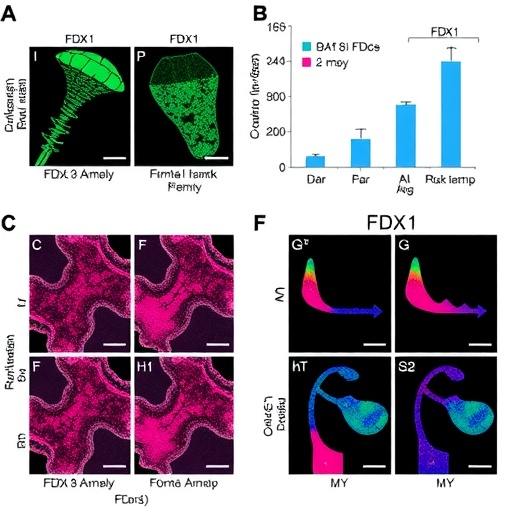
Recent advancements in cancer research have illuminated a previously underexplored area concerning the role of copper metabolism in malignancies. This innovative study presents findings that significantly enhance our understanding of cuproptosis, a newly described form of programmed cell death linked to copper homeostasis and its implications for tumor biology. The researchers have identified the gene FDX1 as a critical player in this process, particularly in the context of triple-negative breast cancer (TNBC), a subtype notoriously associated with aggressive disease progression and poor clinical outcomes.
As researchers continue to unravel the intricate molecular mechanisms underlying cancer, the focus on metal ion metabolism has gained significant traction. Copper, an essential trace element, influences multiple biological processes, including cell proliferation, apoptosis, and angiogenesis. However, its dysregulation can lead to oncogenic outcomes. Cuproptosis, the mechanism by which cells undergo death in response to copper overload, emerges as a vital component of this equation. FDX1, identified as a cuproptosis-related gene, has been linked to the malignant transformation of cells, demonstrating its potential as both a biomarker and therapeutic target in the fight against TNBC.
In triple-negative breast cancer, FDX1 expression is markedly elevated compared to normal breast tissue. This overexpression correlates with a stark increase in cell proliferation and metastatic potential. Using in vitro and in vivo models, the authors demonstrated that silencing FDX1 significantly reduced the cellular viability and migration of TNBC cells. These findings suggest that FDX1 not only promotes cancer progression but also offers a strategic entry point for therapeutic intervention aimed at curtailing TNBC aggressiveness.
The influence of FDX1 extends beyond just cell survival; it appears to play a crucial role in modulating the tumor microenvironment, particularly regarding immune evasion. The study reveals that increased levels of FDX1 can dampen the activity of immune cells, thereby fostering an immunosuppressive niche that facilitates tumor growth. This observation is particularly pertinent given the growing recognition of immunotherapy as a cornerstone of modern cancer treatment. The findings suggest a potential tactic whereby targeting FDX1 may enhance the effectiveness of immune checkpoint inhibitors in TNBC.
The interactions between FDX1 and the immune system underscore the complexity of tumor biology and its microenvironment. The research points to a dual role for FDX1; while it acts as a facilitator of cancer progression, it simultaneously disrupts the immune responses that could counteract tumor growth. By unveiling this relationship, researchers are provided with a novel understanding of how altering copper metabolism can impact immunogenicity within the tumor milieu.
The study’s methodology applied cutting-edge gene editing techniques to ascertain the functions of FDX1 in TNBC cells. CRISPR-Cas9 technology enabled precise manipulation of the gene, revealing the coordinated pathways that govern cuproptosis and its association with other oncogenic signals. The authors employed a range of biochemical assays to validate their findings, ensuring that the evidence is both robust and reproducible.
In addition to the in-depth molecular profiling, patient-derived xenografts (PDXs) were utilized to understand the clinical relevance of the findings. The use of PDX models, which preserve the genetic diversity of human tumors, provides a more reliable framework for testing potential therapeutic strategies. Through longitudinal studies, the research team monitored tumor growth and response to treatment interventions, paving the way for future clinical research that could translate lab-based discoveries into actionable therapies.
Moreover, the implications of this research extend into the realm of personalized medicine. By stratifying TNBC patients based on FDX1 expression levels, clinicians may be able to tailor more effective treatment plans that incorporate copper modulation strategies. Such precision in treatment could ultimately lead to improved patient outcomes, particularly in a landscape where TNBC remains a significant therapeutic challenge.
Furthermore, the exploration of cuproptosis as a therapeutic target raises important questions regarding the safety and efficacy of interventions that modify copper metabolism. As the research progresses into clinical trials, careful consideration must be paid to the implications of copper supplementation or chelation therapy, balancing therapeutic benefits against potential toxicity that may arise from altered copper homeostasis.
This groundbreaking research not only sheds light on the mechanisms driving triple-negative breast cancer but also enhances our understanding of the complex interplay between metal ions and tumor biology. As additional studies build upon these findings, the hope is to establish a new paradigm in cancer treatment that harnesses the power of cuproptosis and immunotherapy, potentially transforming the clinical landscape for TNBC patients.
In conclusion, the identification of FDX1 as a key player in cuproptosis offers exciting new avenues for research and therapy aimed at triple-negative breast cancer. By unraveling the intricate relationships between copper metabolism, tumor progression, and immune evasion, this study underscores the potential for innovative treatment strategies that could significantly improve outcomes in a patient population that has long been in need of effective solutions.
Ultimately, this contribution to the field foreshadows a promising future where manipulating metal ion homeostasis may play a pivotal role in combating cancer, heralding a new era in precision oncology that leverages the underlying metabolic vulnerabilities of tumors.
Subject of Research: The role of FDX1 in cuproptosis and its implications in triple-negative breast cancer.
Article Title: Cuproptosis-Related Gene FDX1 Induces Malignant Progression and Immune Suppression in Triple-Negative Breast Cancer.
Article References:
Sun, H., Chen, Q., Zhang, X. et al. Cuproptosis-Related Gene FDX1 Induces Malignant Progression and Immune Suppression in Triple-Negative Breast Cancer.
Biochem Genet (2025). https://doi.org/10.1007/s10528-025-11242-9
Image Credits: AI Generated
DOI:
Keywords: Cuproptosis, FDX1, triple-negative breast cancer, immune suppression, cancer progression.
Tags: aggressive subtypes of breast cancerbiomarkers in breast cancercancer research advancementscopper metabolism in malignanciescuproptosis and tumor biologyFDX1 gene in cancer progressionmolecular mechanisms of canceroncogenic outcomes of metal dysregulationprogrammed cell death mechanismsrole of copper in cancertherapeutic targets in TNBCtriple-negative breast cancer research